When you hear the word “Iris,” your mind likely jumps to the classic, frilly blooms that grace temperate gardens in late spring. But if you’ve been browsing a nursery in a warmer climate, you might have stumbled upon a plant labeled “African Iris” that looks strikingly different. While they share a similar name and a beautiful flower form, the African Iris and the Regular Iris are two distinct plants with different needs, origins, and botanical structures.
If you’re looking for a low-maintenance, ever-blooming plant for a sunny spot, or you’re curious about the botanical differences, here is everything you need to know.
Quick Comparison: African Iris vs. Regular Iris
| Feature | Regular Iris (Iris) | African Iris (Dietes) |
|---|---|---|
| Native Region | Northern Hemisphere (Europe, Asia, North America) | Southern Africa |
| USDA Zones | 3–9 (varies by type) | 8–11 |
| Growth Structure | Fleshy rhizomes (bearded) or bulbs/corms | Fibrous, clumping rhizomes |
| Foliage | Often deciduous (dies back in winter) | Evergreen in warm climates |
| Bloom Season | Short, intense spring/early summer bloom | Intermittent; year‑round in frost‑free areas |
| Flower Structure | Three upright petals (standards) + three falling petals (falls), often fused into a tube | Six free tepals, star‑shaped, no tubular base |
The Botanical Breakdown
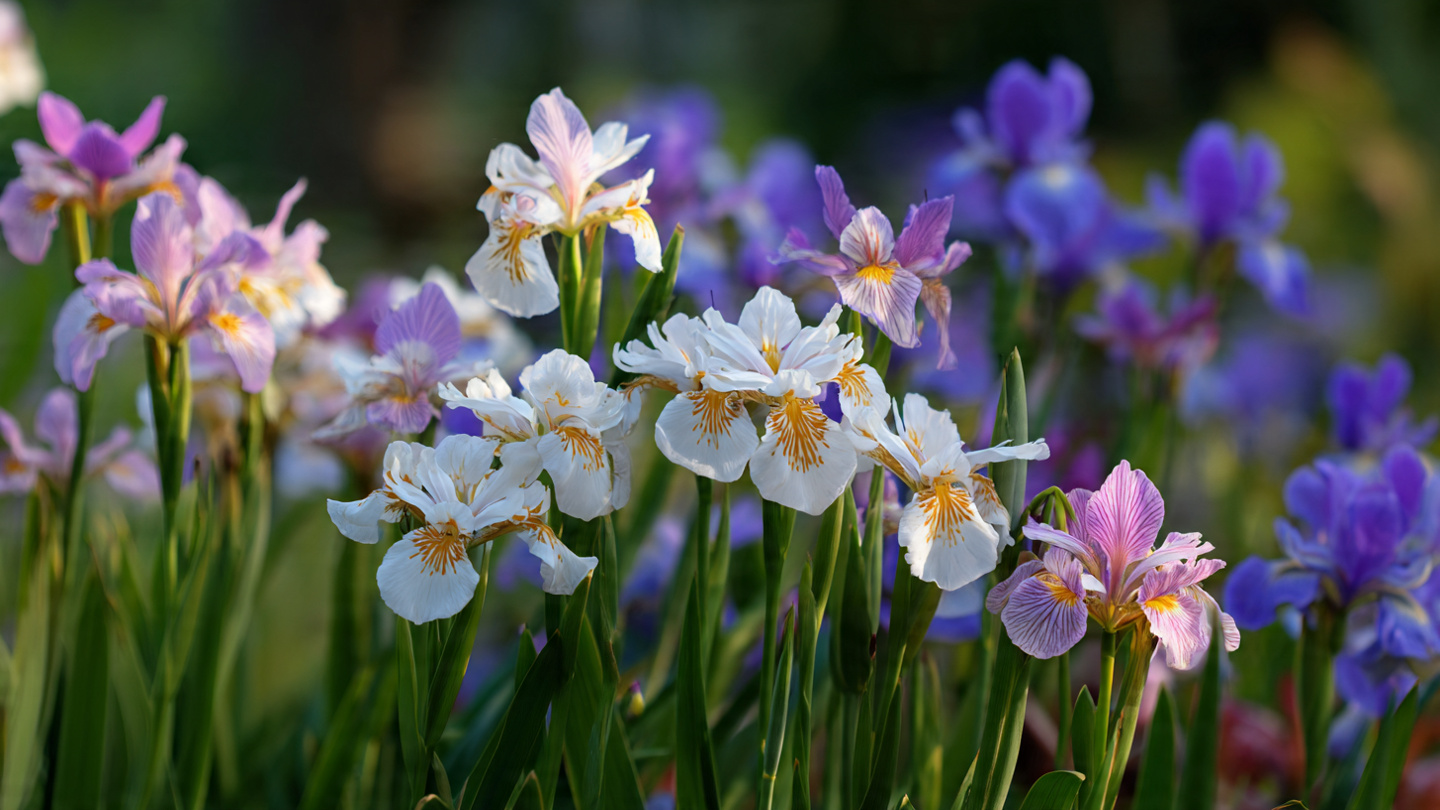
The most significant difference lies in their scientific classification. “Regular” irises belong to the genus Iris, a massive group containing hundreds of species ranging from bearded irises to Siberian and Japanese varieties.
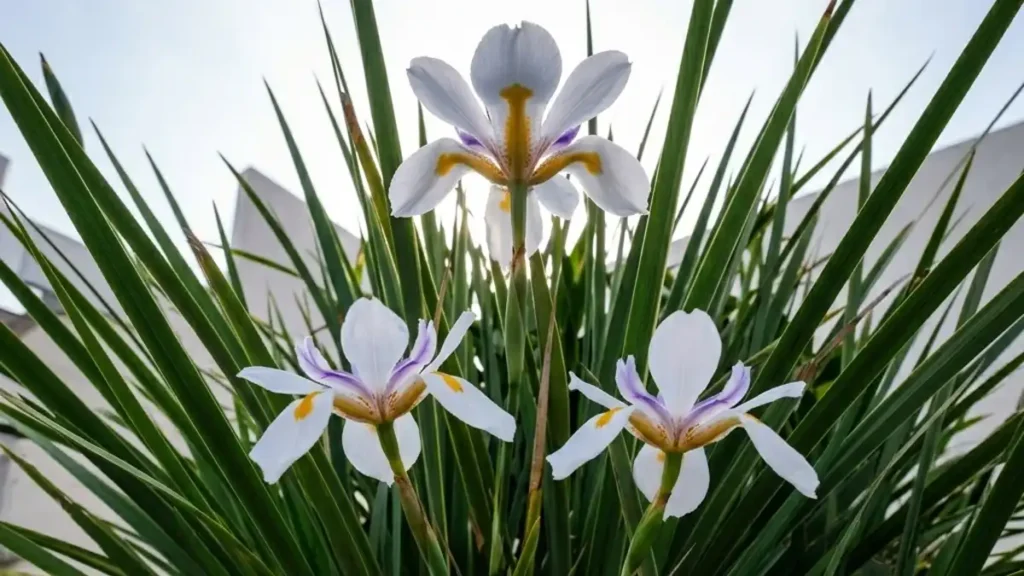
The African Iris, however, belongs to the genus Dietes. Specifically, the most common species are Dietes iridioides (often called the Fortnight Lily) and Dietes grandiflora. The name iridioides means “resembling an iris,” which nods to their visual similarities—but genetically and structurally, they are distinct.
Why “Fortnight Lily”?
Dietes iridioides earned the nickname “Fortnight Lily” because in its native habitat and ideal growing conditions, it tends to produce new flushes of blooms roughly every two weeks (a fortnight) during the growing season. This intermittent, reliable blooming pattern is one of its most endearing qualities for gardeners who want color without the “all at once” intensity of a traditional iris.
Native Roots: Africa vs. The Northern Hemisphere
This is a key differentiator in care. Regular irises are native primarily to the temperate regions of the Northern Hemisphere—think Europe, Asia, and North America. They thrive in environments with distinct seasons, often requiring a cold winter dormancy to bloom well the following spring.
African irises are native to Southern Africa. As a result, they are subtropical plants. They do not require a cold dormancy period and are incredibly heat‑ and drought‑tolerant. In fact, in USDA zones 8 through 11, they remain evergreen and bloom intermittently year‑round.
Growth Habit: Rhizomes vs. Bulbs/Corms
One of the most common points of confusion for new gardeners is how these plants grow. On gardening forums, a frequent question is, “I planted African Iris rhizomes, but they look different than my bearded iris rhizomes. Is that normal?”
The answer is yes.
- Regular Irises: These often grow from rhizomes (like Bearded Iris) or bulbs/corms (like Dutch Iris). Rhizomes are thick, fleshy structures that sit horizontally on or just below the soil surface.
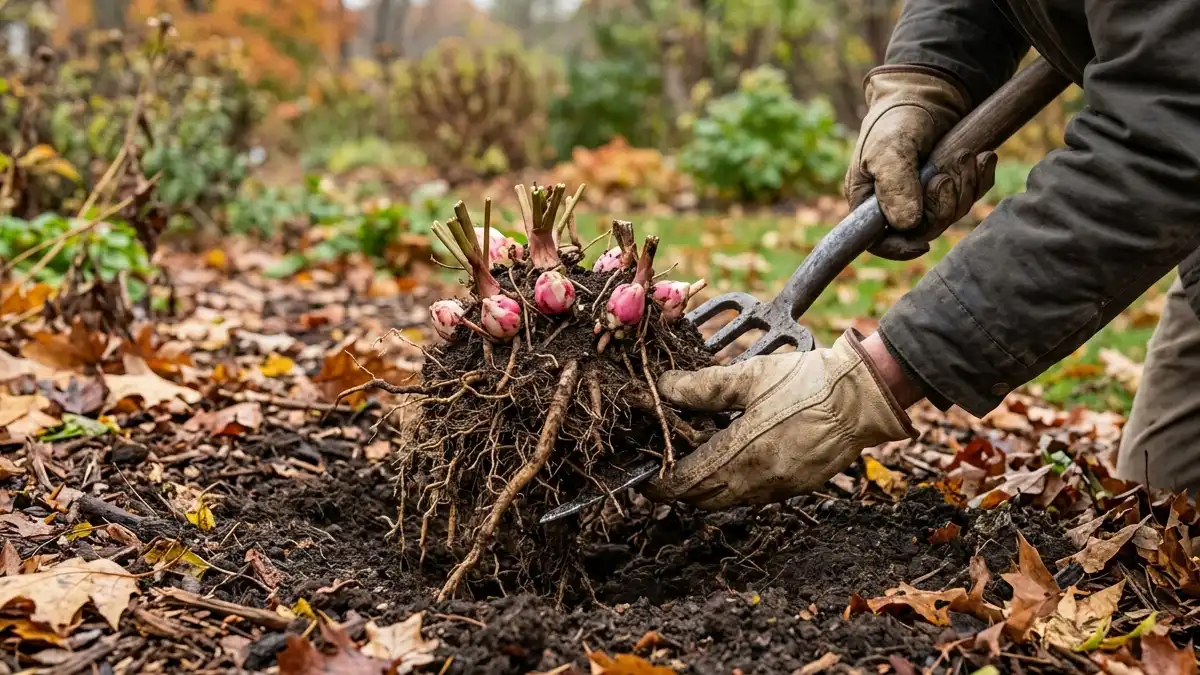
- African Iris (Dietes): While they also grow from rhizomes, these rhizomes are much smaller, fibrous, and tend to clump tightly together. They spread slowly to form dense grass‑like clumps rather than the fleshy “crawling” structure of a bearded iris.
A Note on Dividing
Bearded irises typically need division every 3–4 years to prevent overcrowding and rot. African irises are far less demanding, but after several years their clumps can become extremely tough and woody. When division is eventually needed, you may require a sharp spade or even a saw to cut through the dense root mass—a detail that surprises many home gardeners.
Flower Structure: The Tepal Test
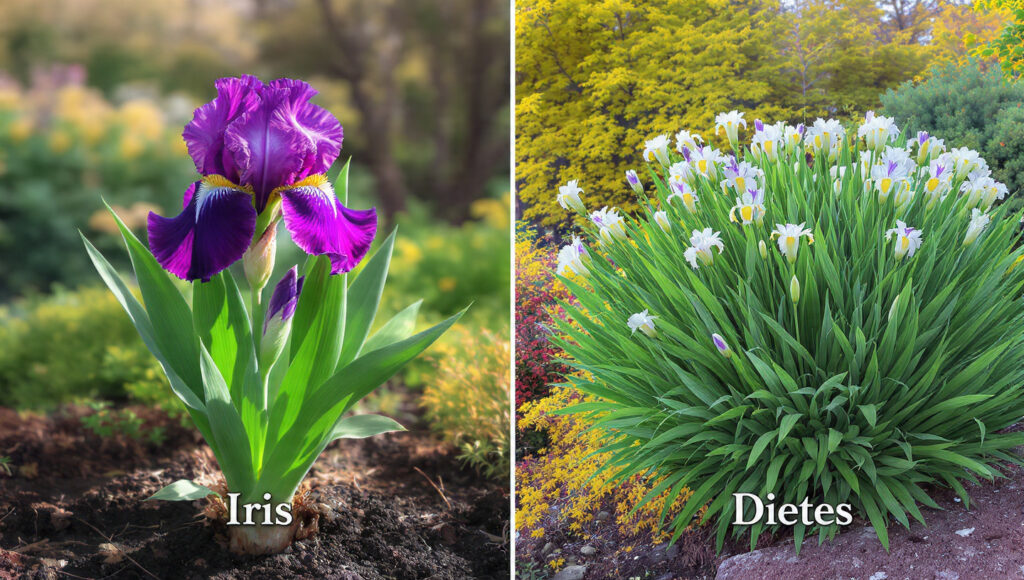
For the botany enthusiasts, the flower structure is where the distinction becomes undeniable. Dietes flowers have six free tepals that are not joined into a tube.
In a regular iris, the three upright petals (standards) and three falling petals (falls) are often fused at the base, creating a tubular structure. In African Iris, the six petals (which are actually tepals) are completely separate and spread out flat, resembling a star or a butterfly. Additionally, African Iris flowers are usually a simple palette of white with yellow and purple markings, each bloom lasting only one to two days, whereas regular irises offer a vast spectrum of colors with blooms that can last longer.
Care and Growing Conditions
If you are deciding which to plant, the choice usually comes down to your climate and maintenance preferences.
Regular Irises often require specific care routines. They need division every 3 to 4 years to prevent overcrowding and rot. They are prone to iris borers and require specific watering schedules depending on whether they are bearded (needing dry rhizomes) or Siberian (loving moisture).
African Irises are the “set it and forget it” option for warm climates. According to online gardening communities, they are praised for being:
- Drought‑tolerant once established.
- Pest‑resistant (deer and rabbits typically leave them alone).
- Low‑maintenance, though they do produce heavy seed pods that can weigh down the foliage and make the plant look messy if not occasionally deadheaded.
For specific details on pruning, propagating, and troubleshooting, you can refer to this detailed guide on White Purple African Iris Care Guide
Which One Should You Choose?
If you live in a region with harsh winters (Zones 1–6), you are likely limited to Regular Irises, though you can grow African Iris in pots and overwinter them indoors.
If you live in a warm, subtropical, or Mediterranean climate (Zones 8–11), the African Iris is a superior choice for adding structure to borders, mass plantings, or water‑wise gardens. Its sword‑like foliage remains tidy year‑round, providing texture even when it isn’t blooming. Just be prepared for the occasional seed‑pod cleanup if you prefer a manicured look.
General Care Principles
Regardless of which iris you choose, consistency in care is key. Whether you are dealing with the water‑loving Japanese Iris or the drought‑tolerant African variety, understanding the specific needs of your plant is crucial.
For a broader look at keeping your plants healthy across different species—from cacti to tropical plants—check out these Watering Tips for All Types of Plants to ensure you aren’t over‑ or under‑watering your new irises.
While the African Iris and the Regular Iris share a similar aesthetic appeal, they are worlds apart in terms of origin, genetics, and care. The African Iris (Dietes) is a resilient, evergreen clumping plant perfect for warm‑climate landscaping, while the true Iris offers unparalleled diversity and color for the traditional perennial border.
By understanding the distinction between the rhizome structure, the “fortnight” blooming habit, and the native origins, you can ensure you are providing the right environment for your plants to thrive.
Do you grow African Iris or traditional Iris in your garden? Share your experiences in the comments below!