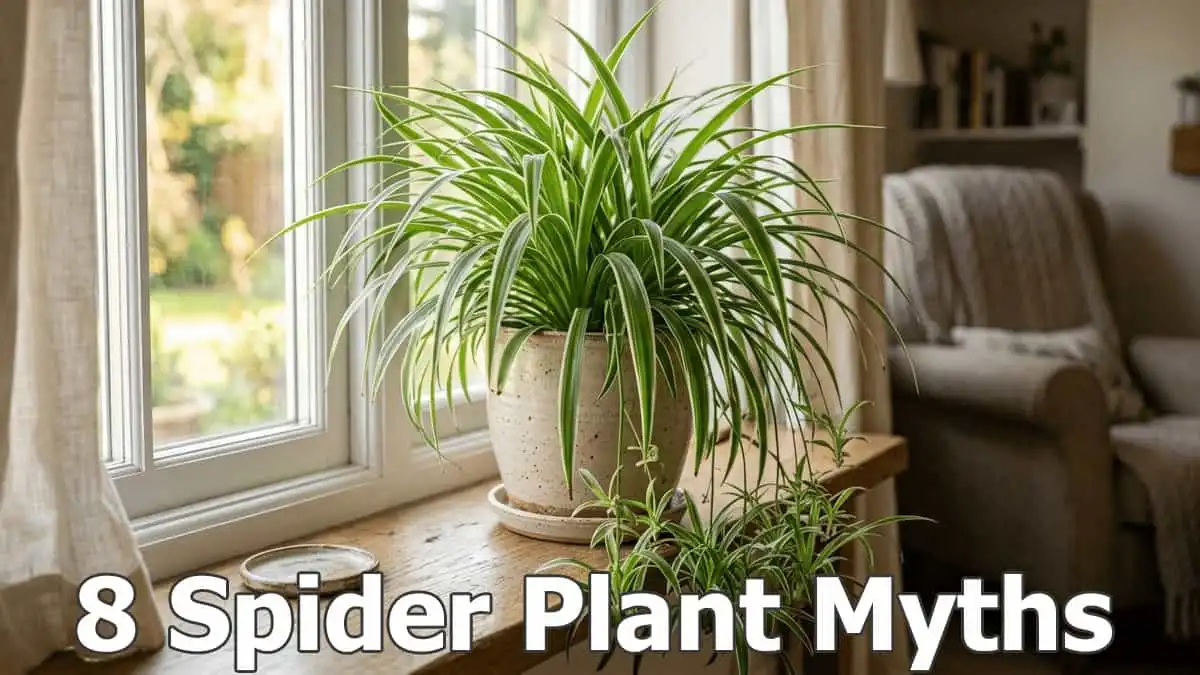
The Spider Plant (Chlorophytum comosum) is a beloved staple in homes around the world. Known for its arching, variegated leaves and tiny “babies” (spiderettes), it is often touted as the perfect plant for beginners. But despite its popularity, a surprising number of myths surround this hardy houseplant.
Are Spider Plants actually dangerous for pets? Do they really need to be root‑bound to thrive? Let’s dig into the soil of truth and debunk the 8 most common myths about Spider Plants.
Spider Plant Myths
Myth 1: Spider Plants Are Toxic to Pets
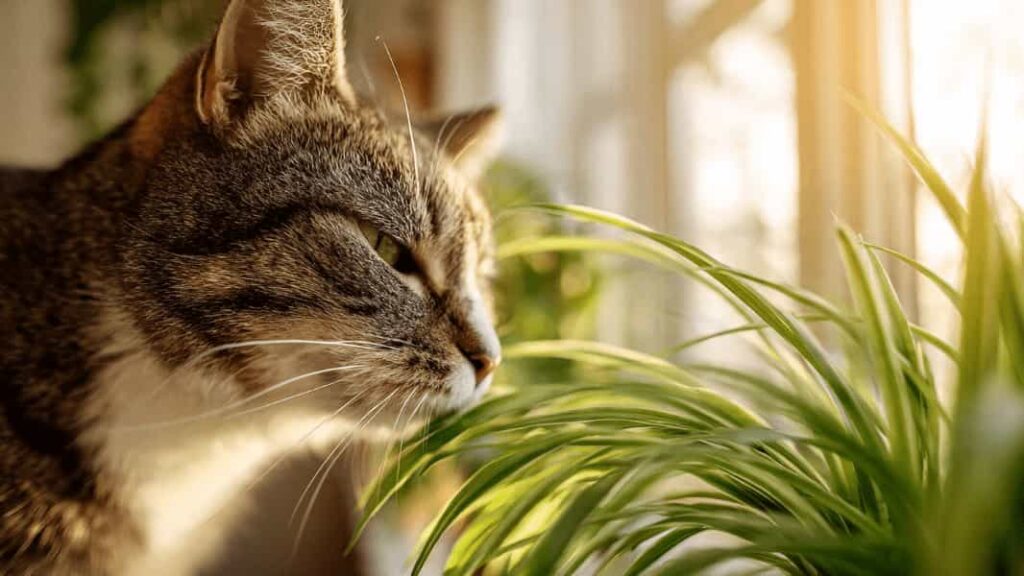
This is perhaps the most common and frightening myth out there. While it is true that you should always be cautious with houseplants around curious cats and dogs, the Spider Plant is actually non‑toxic.
The Truth: According to the ASPCA, Spider Plants are safe for both cats and dogs. However, they are mild hallucinogens to felines (similar to catnip). If your cat is nibbling on the leaves, they aren’t getting poisoned; they might just be getting a little buzz, which can sometimes lead to an upset stomach if they eat too much.
Myth 2: They Like to Be Root‑Bound
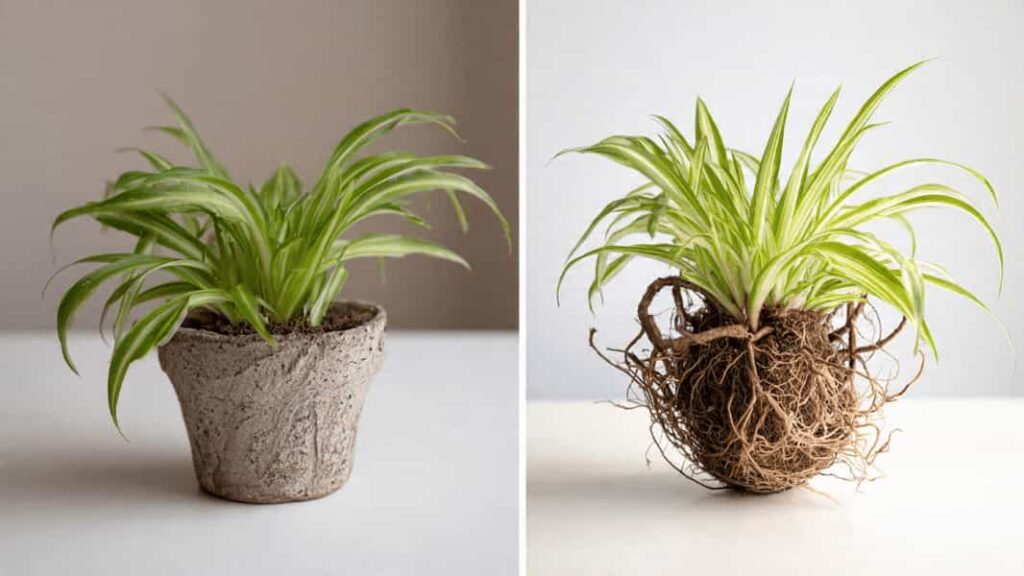
Walk into any nursery, and you’ll likely see Spider Plants bursting out of tiny pots. Because they produce pups when slightly crowded, many people believe they prefer to be root‑bound.
The Truth: While a slightly crowded pot encourages the plant to produce babies, being severely root‑bound stresses the plant. If roots are growing out of the drainage holes or pushing the soil up out of the pot, it’s time to repot. A stressed plant will eventually stop growing and producing pups altogether.
Myth 3: Brown Tips Mean the Plant is Dying
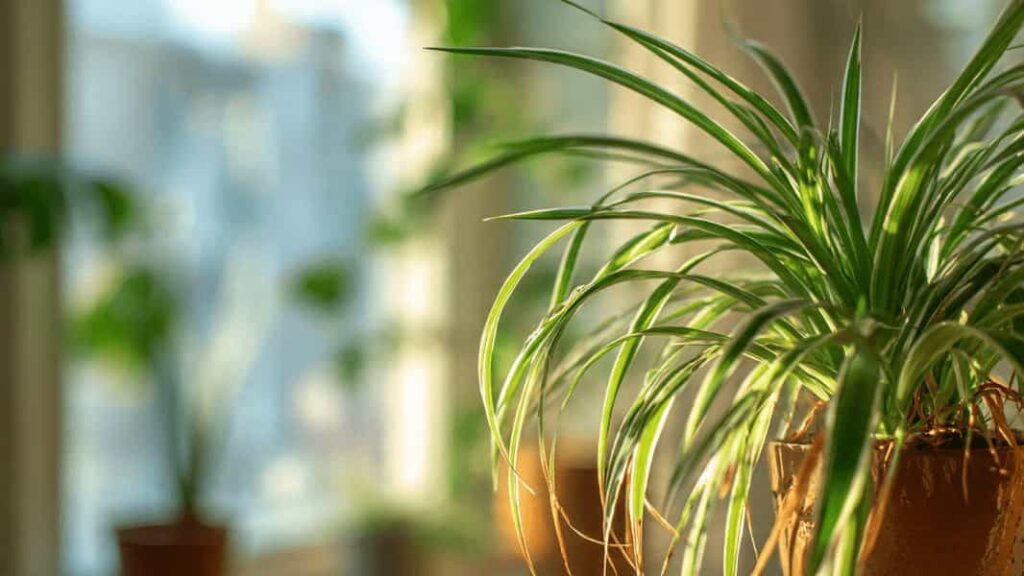
It is incredibly common to see brown, crispy tips on Spider Plant leaves. Many new owners assume they are killing the plant.
The Truth: Brown tips are usually a cosmetic issue rather than a sign of impending doom. This phenomenon is called tip burn (or leaf necrosis). It often happens because Spider Plants lack an efficient way to “exhale” the excess minerals—like fluoride and chlorine—found in tap water. Those minerals travel to the leaf tips and accumulate, causing the tissue to die back. Switch to distilled or rainwater, and increase humidity. If the rest of the plant looks healthy, those brown tips are just a beauty mark.
Myth 4: You Can Only Propagate by Planting the “Babies”
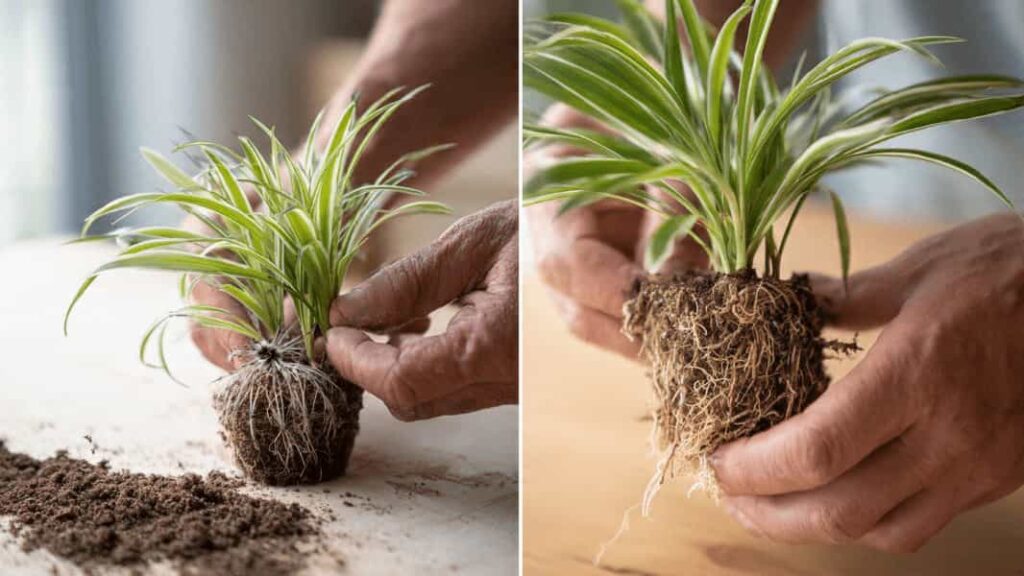
When we see the long stems dangling with baby spiderettes, we assume the only way to get a new plant is to leave them attached until they root in soil.
The Truth: While the “spider” method is effective, it isn’t the only way. You can also propagate Spider Plants by division. If you have a mature plant, you can simply cut the root ball in half (or thirds) during repotting to create multiple new, established plants instantly. This is often faster than waiting for pups to mature.
Myth 5: They Are Low‑Light Plants
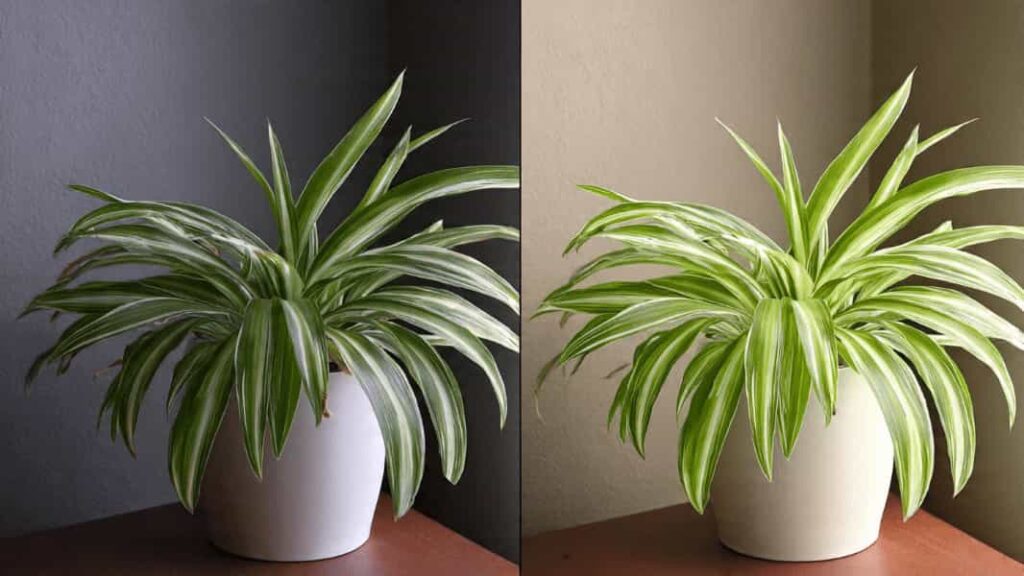
Because they are so resilient, Spider Plants are often marketed as plants that can thrive in a dark corner or a bathroom with no windows.
The Truth: Spider Plants are survivors, but they thrive in bright, indirect light. While they won’t die immediately in low light, they will lose their variegation (the white stripes will fade to solid green) and they will stop producing those adorable baby spider plants. For a full, vibrant plant, give it plenty of filtered sunlight.
Myth 6: Spider Plants Don’t Need Fertilizer
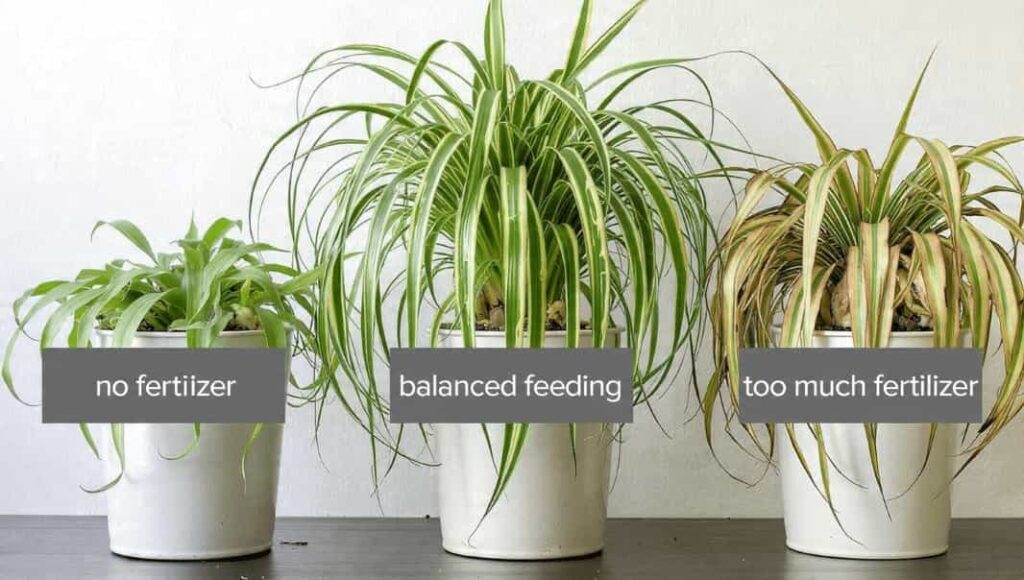
Their tough nature leads many to believe that Spider Plants can survive on water and air alone without any food.
The Truth: Spider Plants are heavy feeders, especially when they are actively growing in spring and summer. If you want those signature “spider legs” (the long stems with pups), you need to fertilize. However, be cautious—over‑fertilizing can also cause brown tips. A balanced liquid fertilizer diluted to half strength once a month works wonders.
Myth 7: They Are Only Green and White
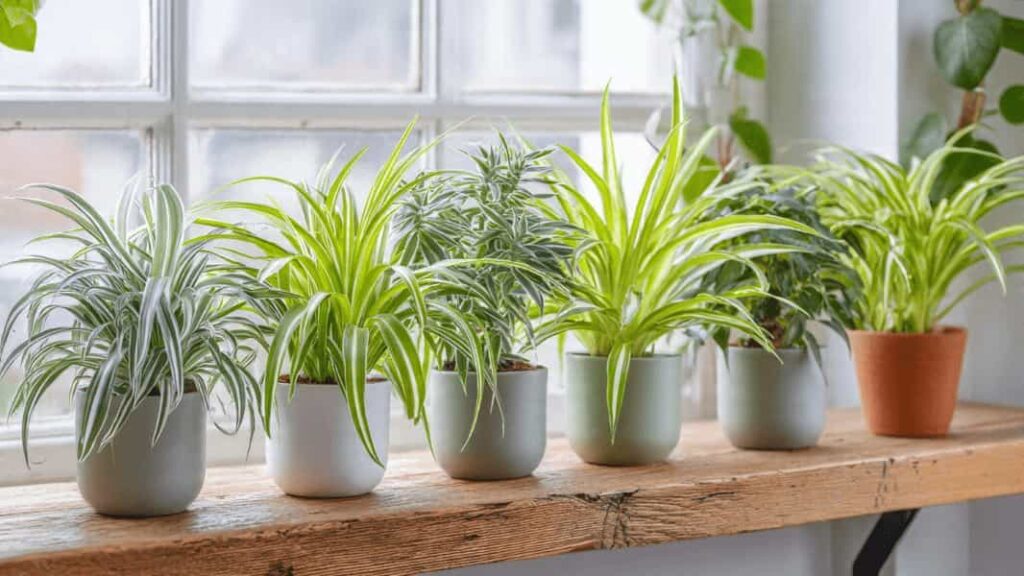
When most people think of a Spider Plant, they picture the classic green leaves with white margins.
The Truth: There is actually a wide variety of looks within the species. Aside from the standard Variegatum, there is the Vittatum (which has a white center stripe), the curly “Bonnie” variety, and even solid green varieties. For those interested in expanding their collection, exploring the subtle differences between variations can be a fun challenge.
Myth 8: The “Spider” Name Comes from the Pests
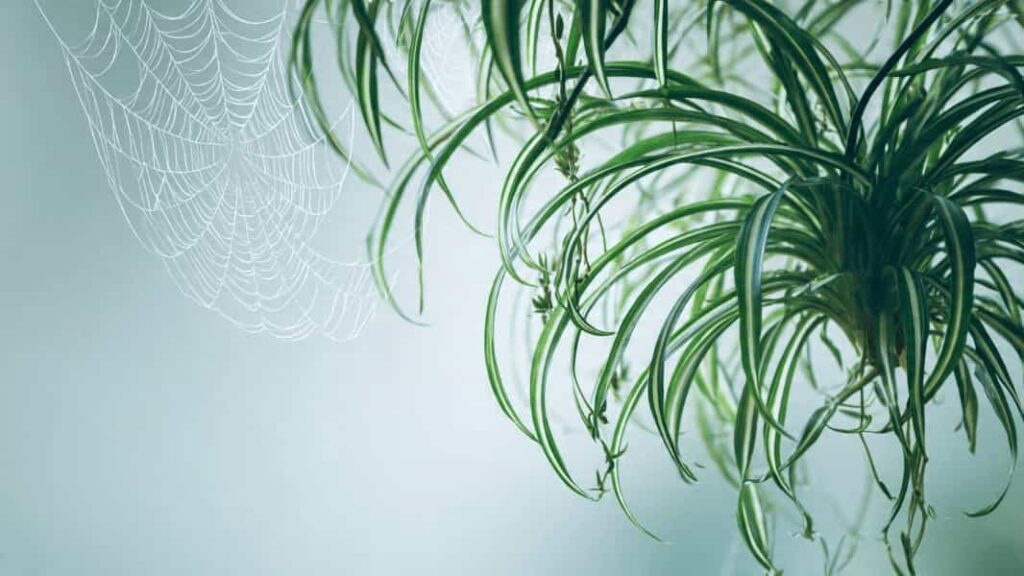
A common fear is that the plant is called a “Spider Plant” because it attracts arachnids.
The Truth: The name actually comes from the plant’s growth habit. The long, arching stolons (stems) that hang down with baby plantlets look like spiders dangling from a web. It has nothing to do with attracting real spiders.
The Spider Plant is a fantastic, forgiving houseplant that has earned its spot in our homes. By ignoring these common myths and understanding its true needs—bright indirect light, occasional feeding, and fluoride‑free water—you can keep your spider plant thriving and producing “offspring” for years to come.