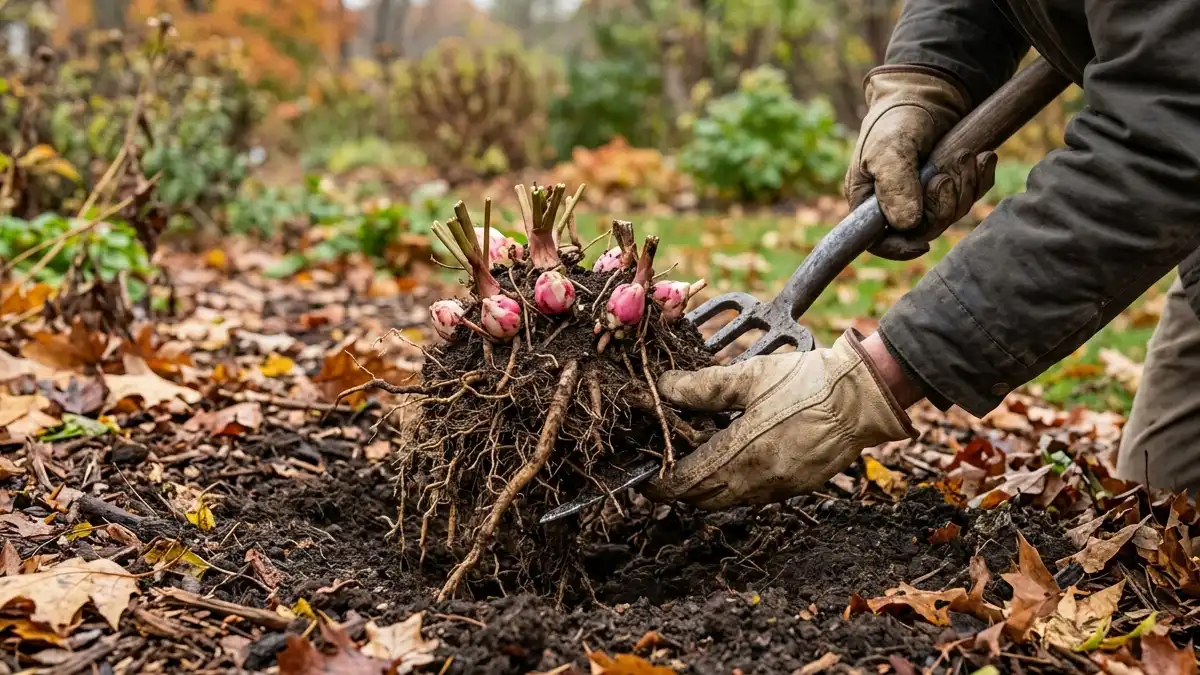

Its long, narrow leaves often remind people of a snake—especially with the green and white stripes that run along each blade. If you saw just the leaves, calling it a “snake” might even make more sense.
So why is it called a spider plant?
The answer isn’t in the leaves. It’s in how the plant grows.
The Real Reason Behind the Name
Spider plants produce long, thin stems called runners. These stretch out from the main plant, and at the ends, they grow small baby plants.
These baby plants dangle in the air, hanging down like tiny legs.
When you look at the whole structure—the central plant with multiple stems spreading outward and small plantlets at the ends—it starts to resemble a spider with long legs.
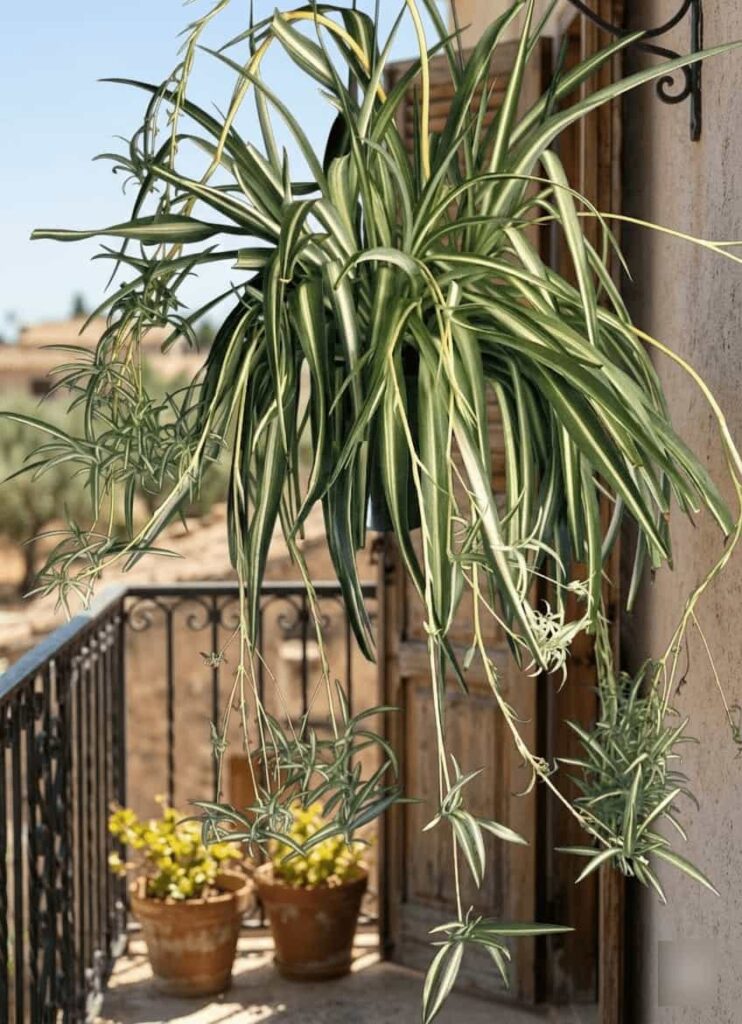
That’s where the name comes from.
Why It Feels Confusing at First
The confusion is pretty natural.
- The leaves are long and curved
- The stripes give a slightly “reptile-like” look
- There’s nothing about the leaves that resembles a spider
So if you’re only noticing the foliage, your brain connects it to a snake instead of a spider.
But once the plant matures and starts producing those hanging baby plants, the spider-like form becomes obvious.
The Moment It Finally Looks Like a Spider
A young spider plant may not look like anything special.
But give it time.
As it grows:
- Runners start extending outward
- Small plantlets appear at the tips
- The plant begins to spread in all directions
At this stage, especially when kept in a hanging pot, the resemblance becomes clear. It looks less like a bunch of leaves—and more like a living structure with legs extending outward.
Simple Way to Remember
If the leaves confuse you, just remember this:
- Leaves = snake-like
- Growth pattern = spider-like
And the name comes from the growth, not the leaves.
That’s it. No deep science, no complicated story—just a name inspired by how the plant naturally spreads.