
🌸 Quick Answer
No. Peonies are low‑maintenance perennials. They require about 20 minutes of care per plant per year: spring fertilizing and support ring installation, summer watering only during drought, and fall cutting back and debris removal. The hardest part is waiting 2–3 years for them to mature.
Key Takeaways
- Peonies require less than 20 minutes of annual maintenance per plant.
- They are far lower-maintenance than roses and fussy annuals.
- Patience is key: mature plants take 2–3 years to bloom heavily but live for decades.
- The single biggest beginner mistake is planting the eyes too deep.
You see photos of massive, fluffy peony blooms and think: “Those must be so much work.” Maybe you have heard that peonies need special care, constant spraying, or expert pruning. The result? You hesitate to plant them, worried you do not have the time or skill.
Here is the truth: Peonies are surprisingly low‑maintenance plants. They are not like roses (which often demand regular spraying) or fussy annuals (which need constant deadheading). Once established, peonies mostly take care of themselves – with just a few simple seasonal tasks.
This guide separates reality from reputation. You will learn exactly what peonies actually need, where beginners go wrong, and whether peonies are the right plant for your lifestyle.
Why Peonies Have a “High Maintenance” Reputation
The reputation comes from a few misunderstandings:
- They take time to start blooming. Beginners see no flowers for 2–3 years and assume the plant is “high maintenance” or broken. In reality, peonies are just slow to mature.
- They need staking. Heavy double peonies flop over without support. But that is one simple task – install rings in spring. Compare that to pruning roses every few weeks.
- They can get fungal spots. Yes, but most peonies survive just fine with minimal treatment. Fall cleanup usually solves the problem.
- People confuse peonies with fussier plants. Peonies are not orchids, not lawn grass, not vegetable gardens. Their needs are simple and seasonal.
The reality check: Peonies ask for very little. What they do ask for is specific – correct planting depth, fall cleanup, and spring support. Miss those, and you may have issues. But the list of tasks is short.
What Peony Bushes Actually Need
Here is the complete list of what a peony requires. It is shorter than you think.
| Task | Frequency | Time per Plant |
|---|---|---|
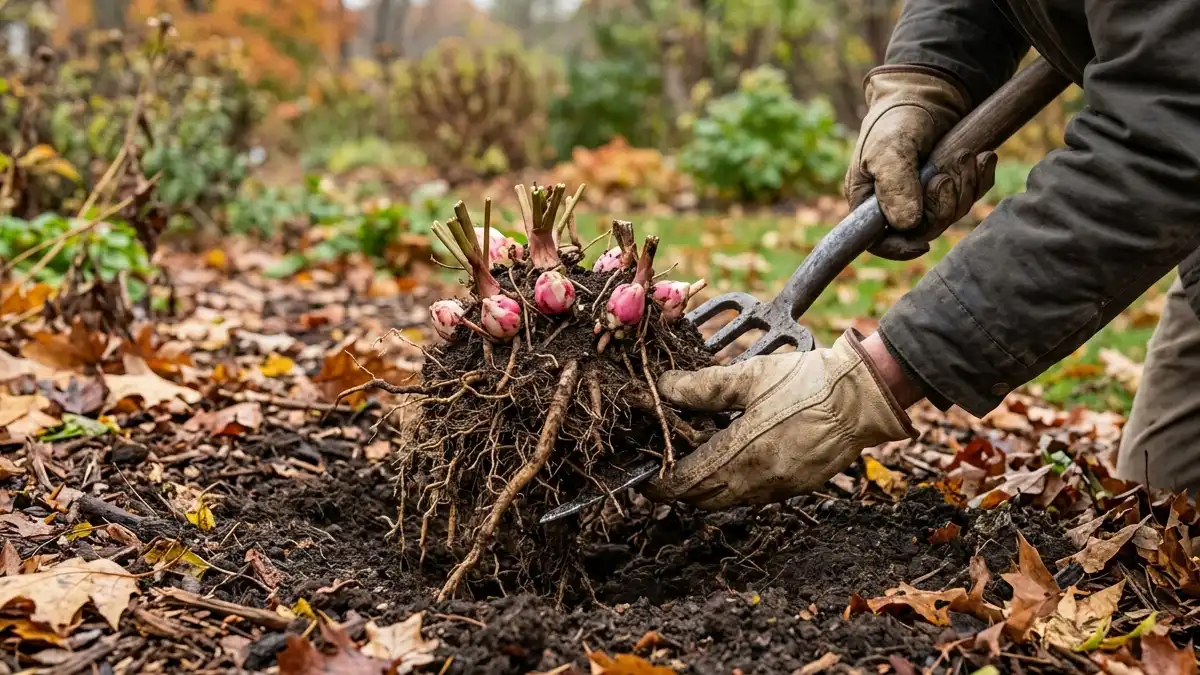
| Plant at correct depth (eyes 1.5–2 inches down) | Once, at planting | 15 minutes |
| Water during first year (if dry) | Weekly during dry spells | 2 minutes |
| Water mature plants (only during drought) | Occasionally | 2 minutes |
| Apply low‑nitrogen fertilizer | Once per year (early spring) | 2 minutes |
| Install support rings | Once per year (spring) | 2 minutes |
| Cut back dead foliage | Once per year (fall after frost) | 5 minutes |
| Remove and trash fallen leaves | Once per year (fall) | 5 minutes |
Total annual time per mature peony: Less than 20 minutes. That is it.
What they do NOT need: Daily watering, weekly fertilizing, constant pruning, winter wrapping (except in extreme climates), or indoor winter protection.
The Hardest Part: Patience
If there is one “challenge” with peonies, it is not maintenance – it is waiting.
- Year 1: Peony looks like a small clump of leaves. No blooms. You wonder if it is alive.
- Year 2: More leaves, maybe one or two small blooms. Not impressive yet.
- Year 3+: Finally – the show begins.
Why this frustrates beginners: We are used to annuals that bloom the same year. Peonies are perennials that invest in roots first.
The good news: Once established (years 3–4), your peony will outlive you. Decades of blooms for 20 minutes of annual work. That is not high maintenance – that is high reward.
Common Beginner Mistakes (and How to Avoid Them)
These mistakes make peonies seem harder than they are. Avoid them, and your peony will thrive.
| Mistake | Why Beginners Do It | Correct Action |
|---|---|---|
| Planting too deep | “Deeper means more secure.” | Keep eyes 1.5–2 inches below soil. |
| Cutting foliage back in summer | “It looks messy after blooming.” | Leave leaves until fall frost. |
| Over‑fertilizing | “More food = more flowers.” | Use low‑nitrogen once in spring only. |
| Watering too often | “Plants need water daily.” | Peonies prefer dry soil. Water only when top inches are dry. |
| Skipping support rings | “They look fine in spring.” | Install rings when shoots are 6–8 inches tall. |
| Panicking over ants | “Ants must be bad.” | Ants are harmless. Ignore them. |
The fix for all of these: Read one good care guide (like this one) and follow the seasonal checklist. Peonies are forgiving of one mistake – but multiple mistakes compound.
Are Peonies Easier Than Roses?
This is the comparison every gardener wants to know. Let’s settle it.
ADVANTAGES
- ✓ Needs watering only during drought
- ✓ Fertilized once per year in spring
- ✓ Cut to ground once in fall
- ✓ Extremely cold hardy and persistent for decades
LIMITATIONS
- ✕ Takes 2-3 years to bloom heavily
- ✕ Heavy blooms require spring support rings
- ✕ Limited bloom window (2-3 weeks per spring)
| Aspect | Peony Bush | Rose Bush (e.g., Hybrid Tea) |
|---|---|---|
| Watering | Once a week in drought | 2–3 times per week in heat |
| Fertilizing | Once per year (spring) | Every 4–6 weeks during growing season |
| Pruning | Cut to ground once (fall) | Complex pruning multiple times per year |
| Disease spraying | Rarely needed (fall cleanup usually enough) | Often required (black spot, powdery mildew) |
| Winter protection | None (except very cold Zones 3–4) | Required in many climates (mounding, wrapping) |
| Bloom reliability | Very reliable once mature | Can be finicky; depends on variety and care |
| Time per plant per year | ~20 minutes | 2–3 hours |
Verdict: Peonies are significantly easier than roses. If you can grow a hosta or daylily, you can grow a peony.
Do Peonies Need Constant Watering?
No. Peonies are surprisingly drought‑tolerant once established.
First‑year peonies: Keep soil consistently moist (not soggy). Water weekly if no rain.
Mature peonies (2+ years): Water only when the top 3–4 inches of soil are dry. In most climates, natural rainfall is sufficient. During extended drought (2+ weeks without rain), give them a deep soak.
Overwatering is far more dangerous than underwatering. Peony roots rot in wet soil. If you forget to water for a week, the plant will be fine. If you water every day, you will kill it.
You May Also Like
Essential Watering Tips for All Plant Types: From Cacti to Tropicals
How Much Pruning Is Required?
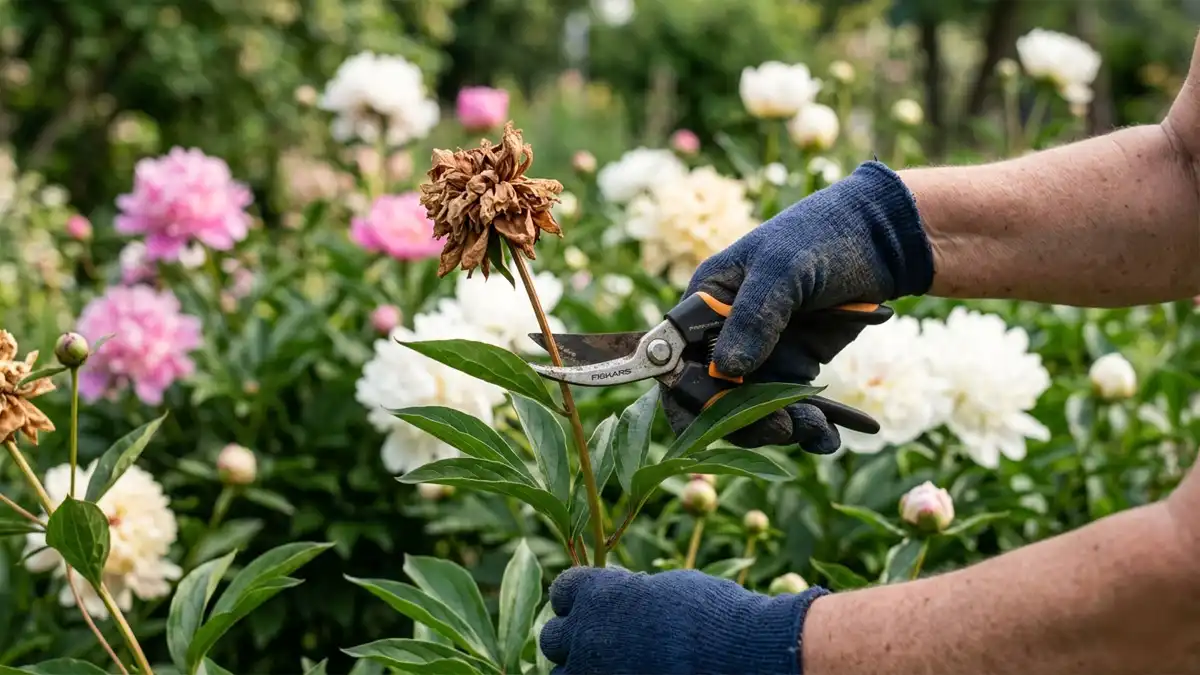
Peonies require precisely one pruning session per year – in the fall after the first hard frost.
The task: Cut all stems to 1–2 inches above ground. Remove every leaf and stem. Trash the debris. Done.
What you do NOT need to do:
- Summer pruning
- Shaping or thinning (except to remove diseased stems)
- Deadheading individual flowers (optional – you can do it, but it is not required for plant health)
Compare to other perennials: Hydrangeas need careful timing of pruning. Lavender needs shaping. Ornamental grasses need cutting back. Peonies are as easy as daylilies – cut to ground in fall, forget until spring.
Biggest Seasonal Care Tasks
Here is your complete year‑at‑a‑glance for peony care:
| Season | Tasks | Time Estimate |
|---|---|---|
| Spring | Remove winter mulch (if used). Apply low‑nitrogen fertilizer. Install support rings. | 5 minutes per plant |
| Summer | Water during drought only. Remove severely diseased leaves if needed. | 2 minutes per plant (only when needed) |
| Fall | After hard frost: cut stems to 1–2 inches, remove all debris, trash it. | 5 minutes per plant |
| Winter | Nothing – plant is dormant. | 0 minutes |
That is it. No monthly tasks. No complicated schedules.
Who Should Avoid Growing Peonies?
Peonies are not for everyone. Be honest about your situation.
Avoid peonies if you:
- Live in a tropical climate (Zone 9b+ with no winter chill).
- Have heavy clay soil that stays soggy year‑round and cannot build raised beds.
- Cannot tolerate waiting 2–3 years for first good blooms.
- Have very limited space (less than 3 feet diameter per plant) and cannot reduce other plants.
- Need instant gratification from your garden (choose annuals instead).
Peonies are still fine even if you:
- Travel frequently (they can be left alone for weeks).
- Are a beginner gardener.
- Have a small yard (choose compact varieties).
- Live in a warm climate (choose low‑chill varieties – see Article 4 of Growing Conditions cluster).
If you are unsure: Try one peony. Plant it in a good spot. If you enjoy the low maintenance, add more. If not, you have only invested in a single plant.
Final Verdict for First‑Time Gardeners
Peonies are not high maintenance. They are low‑maintenance perennials that require patience in the first few years.
The reputation comes from a few specific tasks (staking, fall cleanup) and the slow start. But compare peonies to almost any other flowering shrub or perennial, and they come out near the bottom in required work.
For beginners: Start with a reliable variety like ‘Sarah Bernhardt’ or ‘Festiva Maxima’. Plant it in full sun with good drainage. Install a support ring in spring. Cut it back in fall after frost. Ignore it the rest of the time. You will be rewarded with 2–3 weeks of spectacular blooms each spring for decades.
The one real risk: Planting too deep. That is the only mistake that is hard to reverse. Everything else – forgetting to water, missing a fertilizer application, cutting back a week early – the plant will survive.
Stop worrying. Plant a peony. You can handle it.
Frequently Asked Questions About Peony Care
Are peonies hard to grow for beginners?
Not at all. Peonies require less than 20 minutes of care per plant each year. As long as you plant them at the correct depth and give them full sun, they mostly take care of themselves.
Do ants on peony buds mean the plant is damaged?
No. Ants are attracted to the sweet nectar secreted by peony buds and cause zero harm. In fact, they help protect the plant from pests. Leave them alone!
Why is my peony bush not blooming?
The most common reason is planting the plant’s eyes too deeply in the soil. Peonies need their eye buds planted no deeper than 1.5 to 2 inches below ground level to set flower buds.