🌱 About African Iris
The African Iris, also known as Dietes, is a strikingly elegant flowering plant that belongs to the Iridaceae family. Native to South Africa, this hardy perennial is often seen gracing landscapes with its sword-shaped foliage and delicate, iris-like flowers. Loved for its low maintenance and drought-tolerant nature, the African Iris thrives in a variety of climates and is especially popular in USDA Zones 8–11. For more on drought-tolerant plants, explore our guide on watering tips for all plant types.
Article Index
🌿 Botanical Profile
- Scientific Name: Dietes bicolor, Dietes iridioides, Dietes grandiflora
- Common Names: African Iris, Dietes grandiflora, Dietes iridioides,Fortnight Lily, Butterfly Iris, Wild Iris
- Pronunciation: DIE-teez
- Plant Type: Herbaceous Perennial
- Family: Iridaceae
- Sunlight: Full sun to partial shade
- Flowering Season: Spring through fall
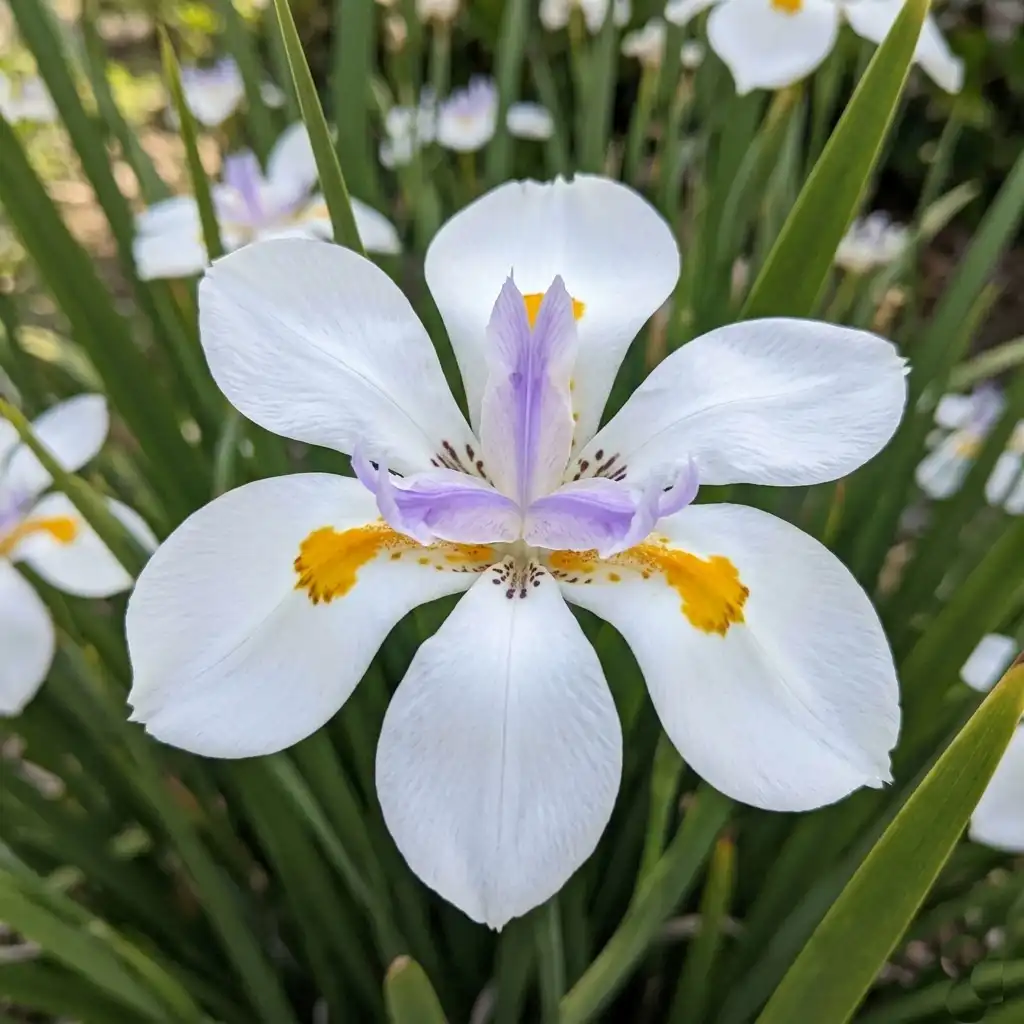
- Flower Colors: White, yellow, pale lavender, with markings
- Mature Height: 2 to 4 feet
- Native Regions: South Africa
🌾 African Iris – Plant Care
🧱 Soil Requirements
African Iris thrives in well-drained, slightly acidic to neutral soils. Amend heavy clay with compost or sand to improve drainage. Ideal pH range: 6.0–7.0. For more soil-related tips, check out our article on choosing the right garden beds.
💧 Watering Tips
Water young plants regularly until established. Once mature, they are drought-tolerant and require only occasional deep watering, especially in dry climates.
🌡️ Temperature & Humidity
African Iris prefers warm, temperate climates. It can tolerate brief cold spells down to 20°F (-6°C) but thrives best in temperatures between 60–85°F (15–29°C).
🌻 Fertilizer
Apply a balanced, slow-release fertilizer (10-10-10) in early spring and mid-summer. Avoid over-fertilizing, as it may promote leaf growth over flowers.
☀️ Light Requirements
The plant prefers full sun for best flowering, though it can adapt to partial shade. Insufficient light may reduce bloom frequency. If you’re designing a garden layout, our garden design guide offers creative ideas to maximize sunlight exposure.
🌸 Types of African Iris
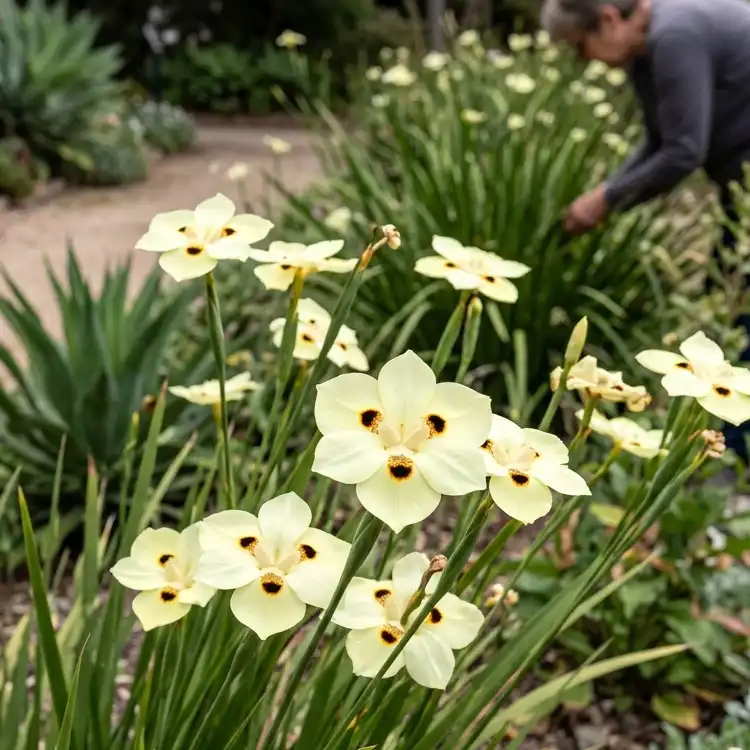
- Dietes bicolor: Known for its pale yellow blooms with three distinct dark purple spots at the base of each petal. It has a clumping habit and is highly heat-tolerant.
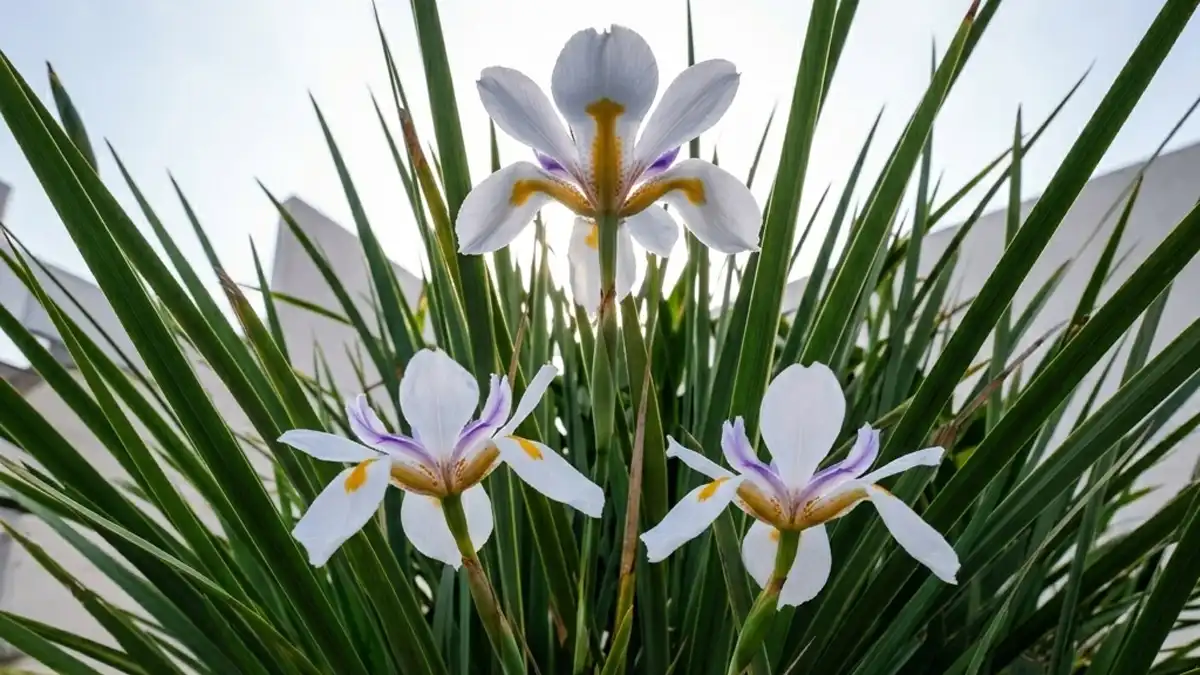
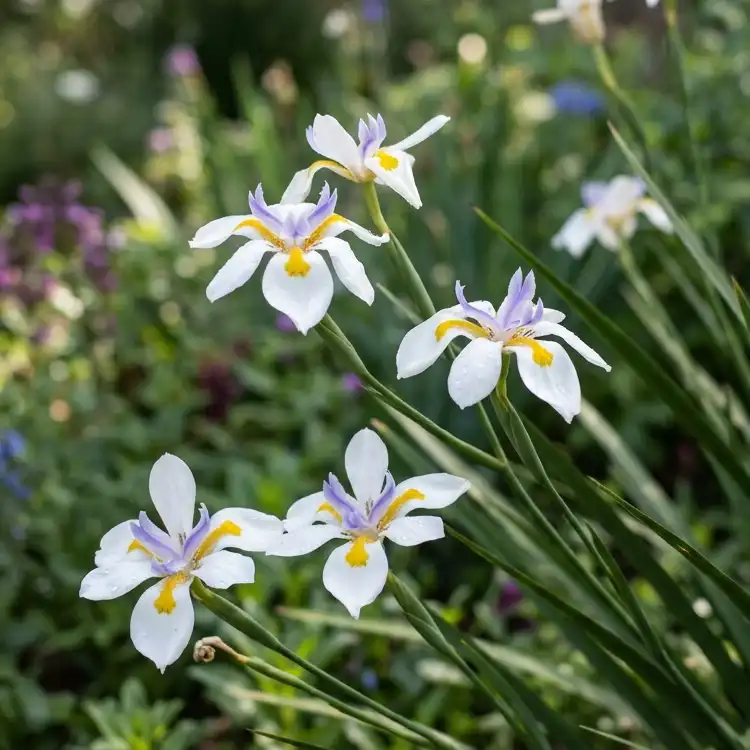
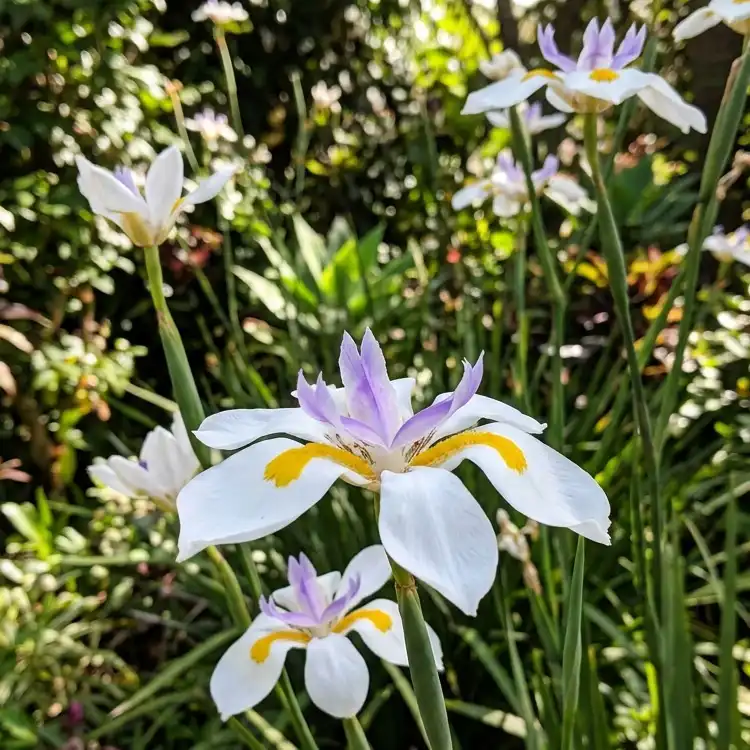
- Dietes iridioides: Produces white flowers with violet and yellow markings. While it can tolerate light shade, it actually performs best and flowers most prolifically in full sun to partial shade, rather than being specifically for “shaded gardens.”
- Dietes grandiflora: Features large, striking flowers with bold violet and orange accents. This variety is slightly larger than D. iridioides and is very popular in mass plantings and commercial landscaping.
You can find White African iris plants here.
✂️ Pruning & Propagating African Iris
Pruning
- Remove spent flower stalks and yellowing leaves to encourage new growth.
- Divide clumps every 3–5 years in early spring or fall to maintain vigor.
Propagation
- Propagate by division of rhizomes or seeds.
- Dividing rhizomes is the fastest and most reliable method.
🌱 How to Grow African Iris From Seed
- Harvesting: Collect seed pods once they turn a coffee-bean brown and are dry. Remove them from the plant before they split open to avoid losing seeds.
- Preparation: For faster results, soak seeds in warm water for 24–48 hours or lightly scarify (sand) the seed coat with sandpaper before sowing.
- Sowing: Use a standard seedling tray with a high-quality, well-draining seed-starting mix. Sow seeds roughly 1mm to 1cm deep and do not compact the soil.
- Conditions: Maintain a consistent temperature of 60–70°F (15–21°C). Keep the soil moist but never waterlogged.
- Timeline: Germination typically takes 2 to 6 weeks, though some varieties may take longer. Transplant into individual pots once seedlings are strong enough to handle.
🪴 Potting and Repotting Tips
- Soil Mix: Use a container with ample drainage holes. A mix of normal garden soil, compost, and sand works well, or a blend of bark, pumice, and peat for maximum drainage.
- Maintenance: Repot every 2–3 years or divide the rhizomes when they become overcrowded to maintain healthy bloom cycles.
- Placement: While these plants are adaptable, they flower most prolifically in bright, direct sunlight. If kept indoors, place them in a sunroom or near a south-facing window.
- Feeding: Use a high-phosphorus flower food at the beginning of the bloom season to encourage larger, more frequent flowers.
☀️ Summering and Wintering
Summer:
- Water more frequently during extreme heat.
- Mulch around the base to retain moisture.
Winter:
- In colder zones, mulch heavily or bring containers indoors.
- Avoid overwatering in winter to prevent root rot.
🌼 How to Get African Iris to Bloom
- Ensure at least 6 hours of sunlight daily.
- Apply a phosphorus-rich fertilizer before blooming season.
- Avoid excessive nitrogen which promotes leaf growth over flowers.
- Deadhead to encourage further blooms.
🐛 Common Problems
| Problem | Cause | Solution |
|---|---|---|
| Yellowing Leaves | Overwatering | Reduce watering, check drainage |
| No Blooms | Low light or over-fertilizing | Move to sunny location, reduce nitrogen |
| Leaf Spot | Fungal issue | Use neem oil or a fungicide |
| Rhizome Rot | Poor drainage | Improve soil, reduce watering |
| Aphids/Mealybugs | Pests | Spray with insecticidal soap |
🧠 FAQs
Q1: Can African Iris grow indoors?
Yes, if given bright indirect sunlight and proper pot drainage.
Q2: How fast does African Iris spread?
Quite quickly by rhizomes; expect to divide every 2–3 years.
Q3: Is African Iris toxic to pets?
Generally considered non-toxic, but ingestion may cause mild discomfort.
Q4: Does African Iris require deadheading?
Yes, deadheading encourages continuous blooming and neat appearance.
Q5: What companion plants go well with African Iris?
Try lavender, ornamental grasses, or salvia for contrast in height and texture. For more inspiration, see our list of pet-safe plants or beautiful peony varieties to pair with your iris.
Q6: Is African Iris deer-resistant?
Yes, it’s rarely browsed by deer.
Q7: Are African Iris evergreen?
Yes, in warm climates (USDA zones 8–11).
The African Iris is not just another ornamental plant—it’s a resilient, graceful addition to any garden or indoor space. With just a little care and planning, these hardy perennials will reward you with dazzling flowers year after year. Whether you’re planting in-ground or in containers, mastering the care for this South African beauty ensures long-lasting, low-maintenance floral displays. For more low-maintenance gardening ideas, read our snake plant varieties guide or benefits of snake plants.
Affiliate Disclaimer: This article contains affiliate links. As an Amazon Associate, We may earn a commission if you make a purchase through these links, at no additional cost to you. We only recommend products we believe in and that add value to our readers.