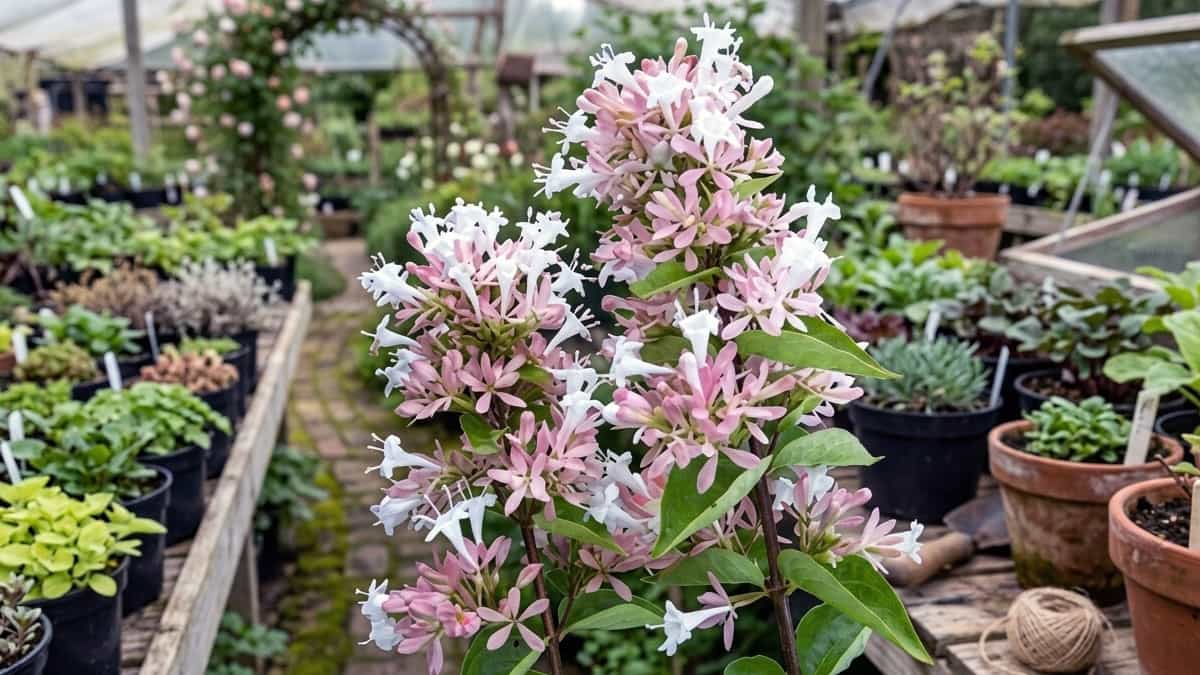
Abelia (uh-BEE-lee-uh), commonly known as Glossy Abelia, is a versatile and ornamental flowering shrub that belongs to the Caprifoliaceae (honeysuckle) family. Originally native to China, Japan, and Mexico, this plant has become a favorite among gardeners due to its semi-evergreen foliage, graceful arching branches, and long blooming period from summer to fall. It thrives in USDA Hardiness Zones 5 through 9, adapting well to various landscapes and climates. For more on pet-safe plants or low-maintenance varieties, explore our guides.
Abelia Botanical Profile
- Scientific Name:
Abelia × grandiflora (a commonly cultivated hybrid) - Common Names:
Glossy abelia, fragrant abelia - Pronunciation:
“uh-BEEL-yuh” - Plant Type:
Deciduous to semi-evergreen shrub - Family:
Caprifoliaceae (honeysuckle family) - Sunlight:
Thrives in full sun to partial shade - Flowering Season:
Blooms from summer through early fall - Flower Colors:
White to soft pink with a hint of cream - Mature Height:
Typically reaches 3 to 4 meters (about 10–13 feet) - Native Regions:
Native to parts of East Asia, particularly China and Japan
Abelia Care
Soil
Abelia prefers well-draining, loamy soil that is slightly acidic to neutral. It does best when the soil retains moisture without being waterlogged. For tips on watering techniques or essential gardening tools, check out our resources.
Water
- Keep the soil consistently moist, especially during the growing season.
- Allow the top inch of soil to dry out between waterings.
- Be cautious of overwatering, which can lead to root rot.
Temperature and Humidity
- Thrives in warm climates but can tolerate light frosts.
- In cooler climates, protect with mulch or move container-grown specimens indoors during extreme cold.
- Performs well in moderate to high humidity without showing stress.
Fertilizer
- Feed in early spring with a balanced, slow-release fertilizer.
- Avoid heavy fertilizer use as Abelia generally prefers less nutrient-rich conditions.
Light
- Requires at least 4–6 hours of direct sunlight per day for optimal blooming.
- Partial shade can be tolerated but may reduce the flowering display.
Types of Abelia
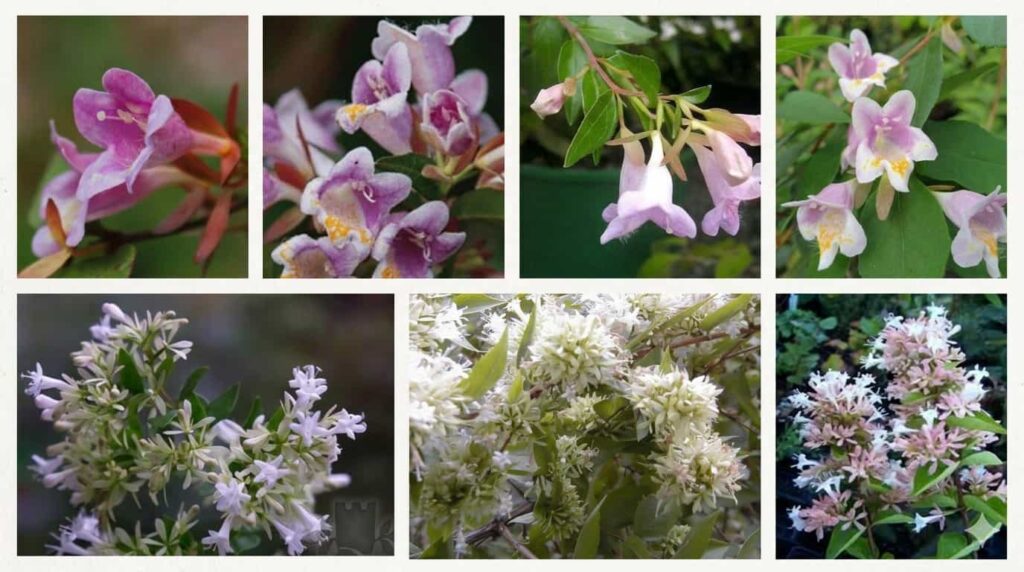
Some popular types and cultivars include:
- Abelia × grandiflora ‘Kaleidoscope’: Known for its variegated foliage blending green, cream, and pinkish hues.
- Abelia × grandiflora ‘Edward Goucher’: Valued for its compact form and abundant white-pink blooms.
- Abelia chinensis: Appreciated for its elegant, arching habit and delicate flowers.
Note: Choose the variety that best suits your local climate and garden style.
Pruning & Propagating
Pruning
Best performed immediately after the blooming period to encourage vigorous new growth. For detailed pruning and care guides, or to compare gardening tools, visit our articles.
- Remove dead or weak stems and lightly shape the shrub to maintain the desired form.
- Avoid heavy pruning in late summer or fall to prevent stimulating tender new growth that might be damaged in winter.
Propagation
- Cuttings: Semi-hardwood cuttings taken in summer work best.
- Tip: Use rooting hormone to boost success and keep the medium moist and warm during the rooting phase.
How to Grow 🌸Abelia From Seed
- Seed Collection & Preparation:
Collect mature seeds in late autumn when the seed pods open. - Pre-Treatment:
Some Abelia seeds benefit from scarification or cold stratification—place the seeds in a moist medium in a cool setting (around 4°C) for 4–6 weeks. - Sowing:
Sow the seeds on the surface of well-draining seed-starting mix and lightly press them in. - Germination:
Keep the soil consistently moist and provide indirect light until germination, which may take several weeks. - Transplanting:
Once seedlings develop true leaves, transplant them into individual containers or directly into the garden.
Potting and Repotting
Choose a container with ample drainage holes and quality potting mix enriched with compost.
Repotting:
Refresh the soil every 2–3 years to supply renewed nutrients and encourage healthy growth.
Tip: Use a container slightly larger than the previous one to prevent excess moisture retention.
Over Summer & Wintering

 Summer Care
- Provide regular, deep watering during hot, dry periods.
- Mulch around the base to conserve moisture and keep the roots cool.
- Monitor for pests during humid summer months.
❄️Wintering
- In colder regions, add a thick layer of mulch around the base to insulate the roots.
- For container-grown Abelia, move the plant to a sheltered spot or indoors during severe freezes.
- Avoid heavy pruning during winter to safeguard dormant buds.
How to Get Abelia to Bloom🌸
- Light Exposure:
Ensure your Abelia receives at least 4–6 hours of direct sunlight daily. - Proper Pruning:
Prune right after flowering to avoid removing next season’s buds. - Balanced Fertilization:
Use a balanced fertilizer in early spring; too much nitrogen may lead to excessive leafy growth with reduced flowers. - Adequate Watering:
Maintain consistent soil moisture without overwatering to keep the plant stress-free.
Common Problems
- Pests:
Keep an eye out for spider mites, aphids, and scale insects. Early treatment with insecticidal soap can help prevent infestations. - Diseases:
Watch for powdery mildew and leaf spot, particularly in conditions of excessive humidity or poor ventilation. - Environmental Stress:
Overwatering or waterlogged soil might trigger root rot. Ensure your soil drains well. - Nutrient Deficiency:
Yellowing leaves might indicate low nutrient levels; a light feed in early spring typically resolves this issue.
FAQs
- How much sun does Abelia need?
Abelia thrives in full sun to partial shade, with at least 4–6 hours of direct sunlight daily for optimal flowering. - How often should I water Abelia?
Keep the soil consistently moist by watering when the top inch feels dry—typically once or twice a week, based on your climate. - Can Abelia be grown in a container?
Yes, Abelia adapts well to container growing if the pot has good drainage and the plant receives ample sunlight. - What pests commonly affect Abelia?
Common pests include spider mites, aphids, and scale insects; regular monitoring and early action help manage these issues. - Is Abelia deer-resistant?
Yes, most varieties are deer-resistant due to their aromatic leaves. - How tall does Abelia get?
Depending on the variety, 2 to 6 feet tall and 3 to 6 feet wide. - How fast does Abelia grow?
Moderate grower: 1–2 feet per year, depending on conditions. - Is Abelia evergreen?
Some varieties are semi-evergreen or evergreen in mild climates, while others drop leaves in winter.
Abelia is a stunning, low-maintenance shrub that offers long-lasting blooms, eye-catching foliage, and adaptability.
You May Like to Read: