Where nature, design, and quiet moments learn to speak the same language
There’s a certain point in every home where everything indoors feels finished. The furniture is in place, the walls are decorated, the rooms finally feel like they belong to you. And yet, something quietly sits just outside the window — the garden — half-tended, half-forgotten, and strangely full of possibility.
Most people think of a garden as plants. Growth. Maintenance. A weekend task.
But the truth is, a garden becomes something far more interesting when it stops being treated like “outdoor space” and starts becoming a part of living. Not an accessory to the home, but an extension of it — like another room that just happens to have sky instead of a ceiling.
And once you start seeing it that way, everything changes.
🌱 A Garden Begins With a Feeling, Not a Plan
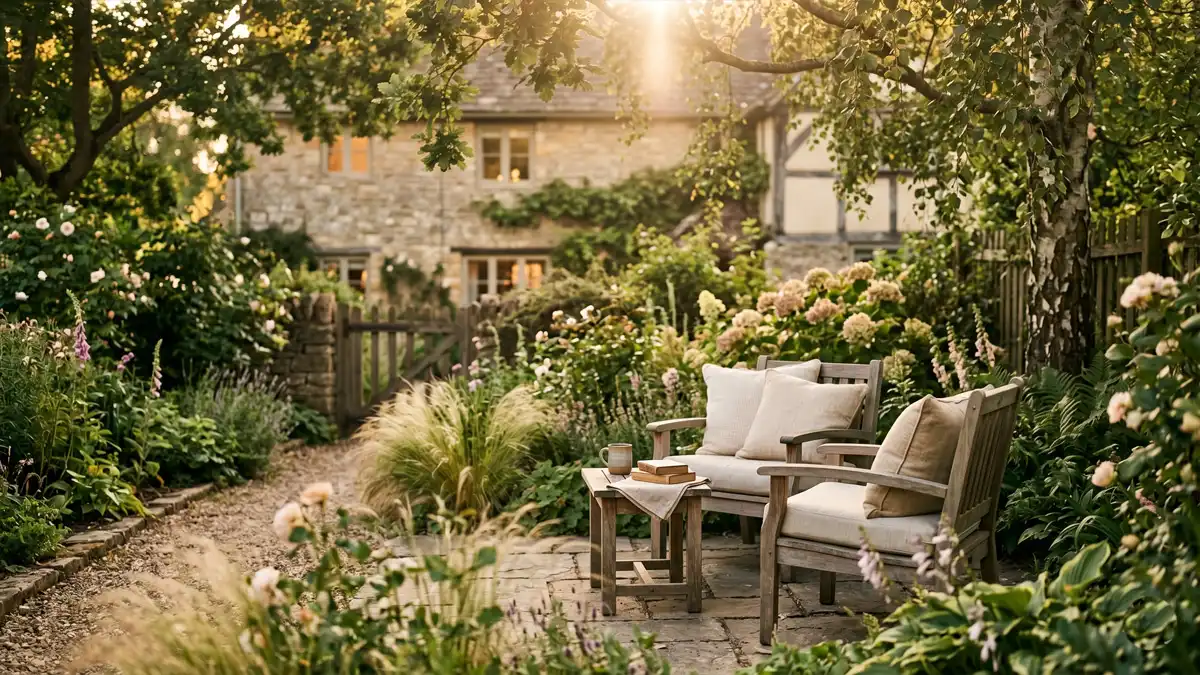
Before stone paths, lighting choices, or decor ideas enter the picture, there is something more important: a mood.
Every memorable garden has one. Some feel like calm retreats where time slows down without asking permission. Others feel creative, a little messy, alive with personality. A few feel almost ceremonial — structured, intentional, grounded.
The mistake most people make is starting with objects instead of intention. They buy pots, lights, ornaments, and then try to “fit” a garden around them. But the most natural-looking spaces work the opposite way. They begin with a feeling, and everything else quietly follows.
A garden designed with intention doesn’t look decorated. It looks inevitable — as if it always wanted to be that way.
🌿 When Natural Materials Do the Talking
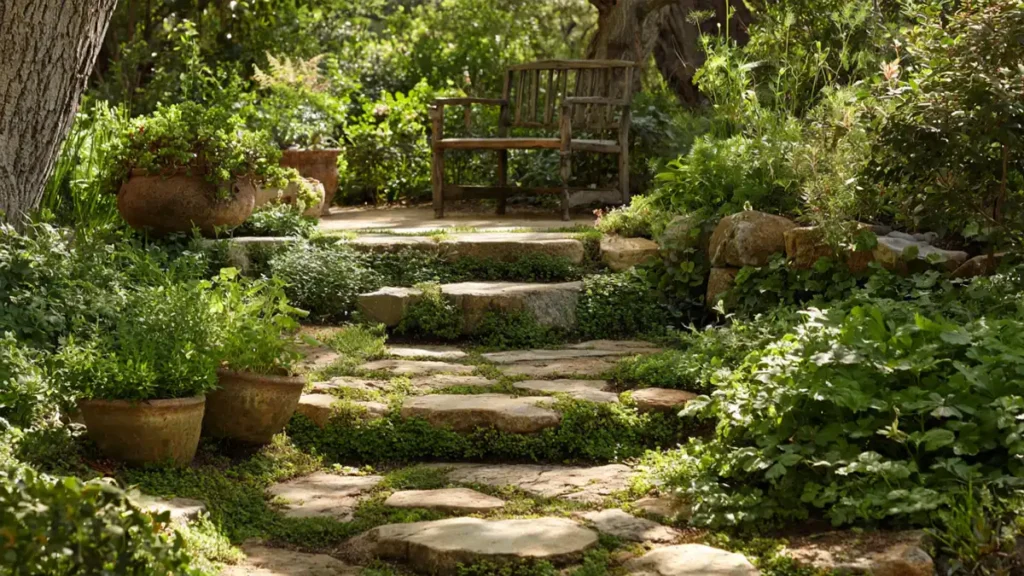
Some spaces don’t need decoration because the materials themselves carry the story. Stone, wood, clay, and plants have a way of aging without losing dignity , and keeping them in good condition is a key part of your seasonal home maintenance checklist.
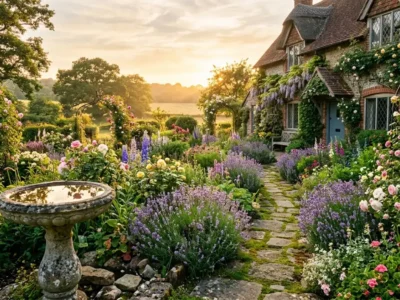
They don’t demand attention, but they earn it slowly. A winding stone path, for example, doesn’t just guide movement — it changes behavior. People walk differently when the ground beneath them feels deliberate. Slower. More aware.
Wood introduces warmth without trying. A simple bench placed under partial shade can become the most used object in the entire garden, not because it is special, but because it invites pause. It becomes a silent agreement between space and person: “you can stay here for a while.”
And plants, when left with enough room to breathe, begin to behave less like decoration and more like presence. They don’t just fill space. They soften it.
💧 When Water Enters the Garden, Everything Softens
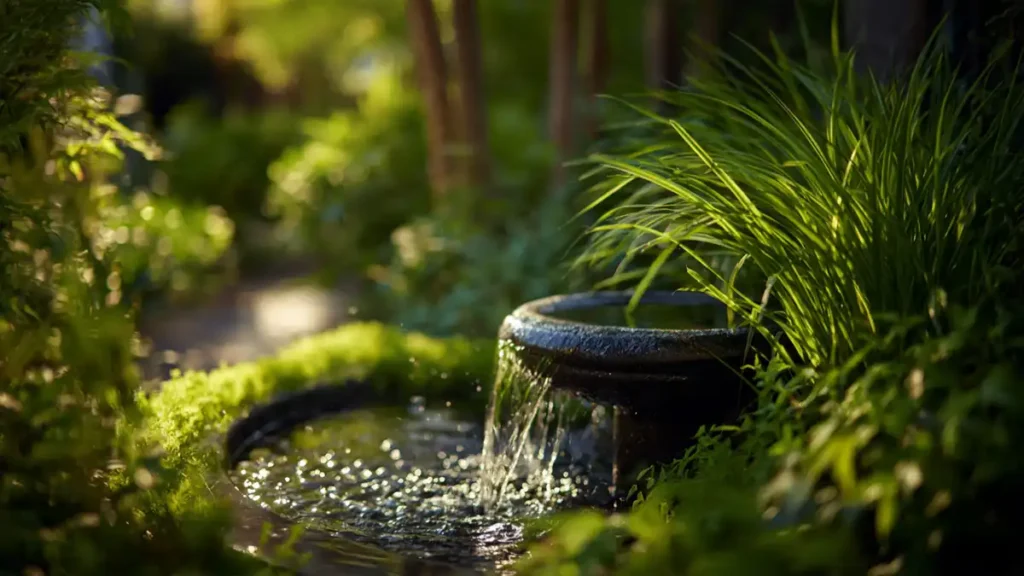
A garden starts to feel different the moment water becomes part of it. Not as a feature that demands attention, but as something that quietly changes the atmosphere.
A small fountain tucked between plants, or a simple water movement reflecting light, adds something that no sculpture or decor piece can replicate — rhythm. The sound of water doesn’t decorate a space; it calms it.
Even a modest setup can shift the entire personality of a garden. A corner that once felt static suddenly feels alive, as if the space is breathing on its own pace.
Water doesn’t just belong in gardens. It defines how a garden feels when nothing else is happening.
💡 The Quiet Power of Light
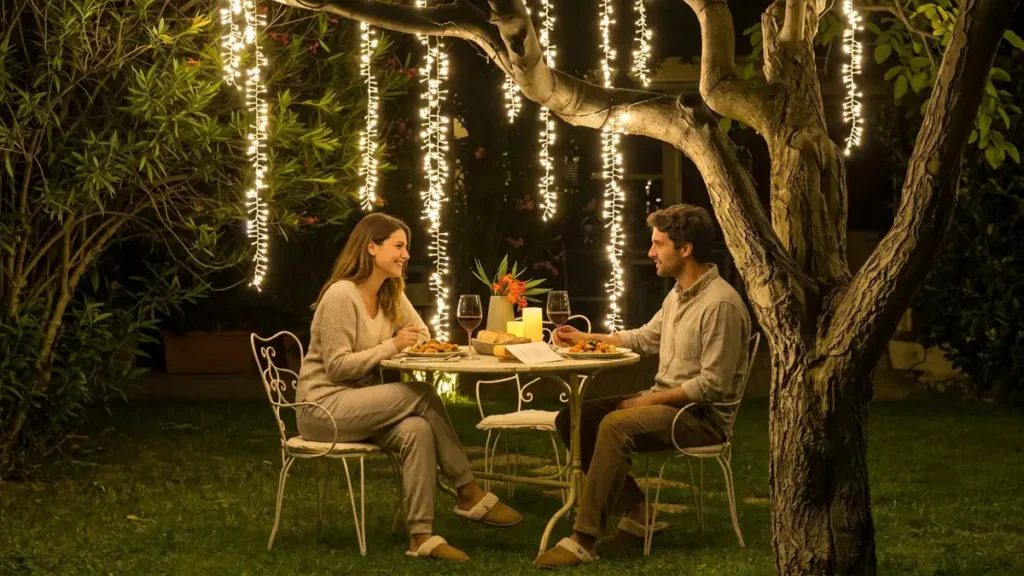
If the daytime garden is about structure, the nighttime garden is about emotion.
Lighting is often treated as an afterthought, but it is actually the element that decides whether a garden disappears after sunset or transforms into something entirely new. In fact, upgrading your lighting is one of the most effective quick home improvement ideas
for changing your outdoor atmosphere.
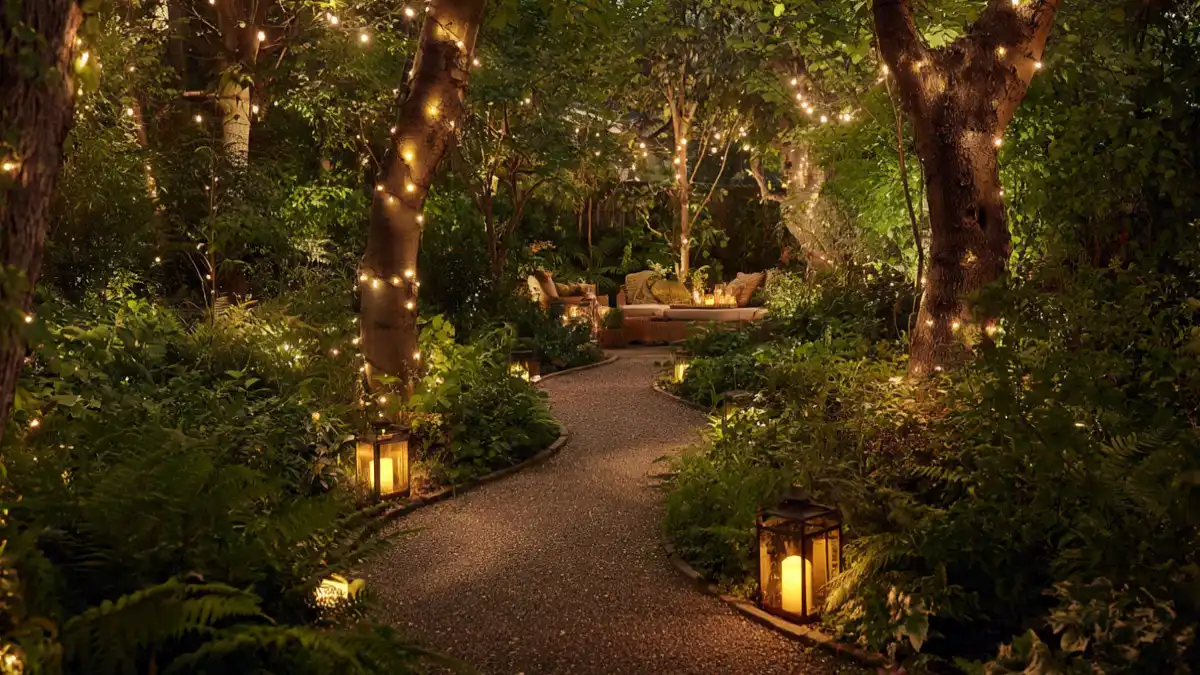
Soft lights along a pathway don’t just help visibility — they create rhythm. You begin to notice how space unfolds step by step. A lantern near a seating corner doesn’t just brighten an area — it assigns meaning to it. It says: this is where you pause.
Fairy lights threaded through branches do something even more subtle. They don’t illuminate the garden; they reinterpret it. Suddenly, familiar plants look unfamiliar. Shadows feel intentional. The entire space becomes less literal and more atmospheric.
And once that shift happens, people stop using the garden only during the day.
They begin to return to it at night, even when there is no reason to.
🌙 When Light Stops Being Utility and Becomes Atmosphere
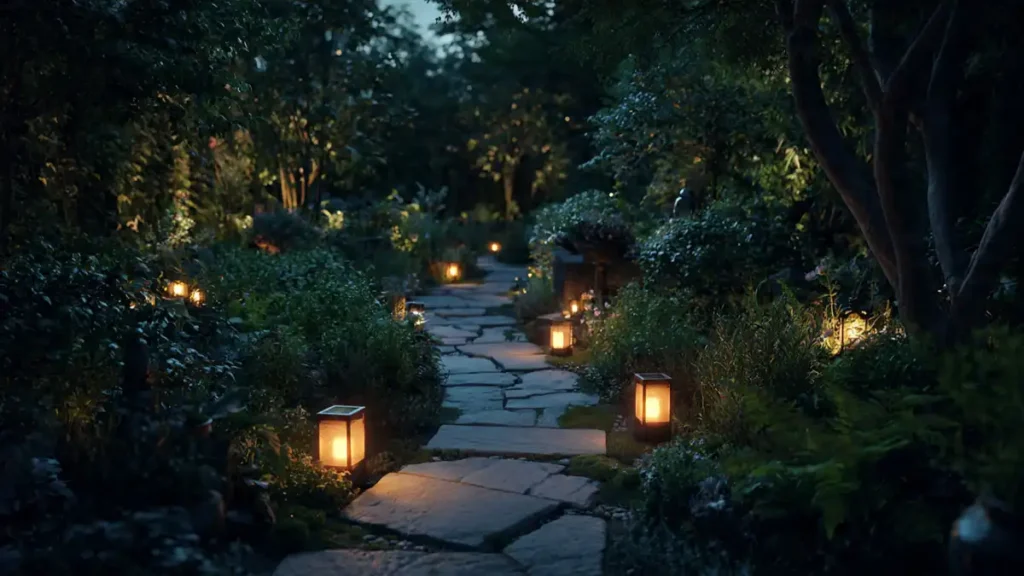
There is a difference between lighting a garden and revealing it.
Solar lights along pathways, soft glows between plants, and subtle illumination placed without force change how a garden behaves after sunset. It is no longer a space that ends with daylight — it becomes something that continues into the night.
The interesting part is not brightness, but restraint. Light placed gently does not dominate the garden. It simply guides attention where it naturally wants to go.
At night, even familiar corners begin to feel unfamiliar in the best possible way — as if the garden is telling a different version of itself.
🪴 Personal Objects, Personal Spaces
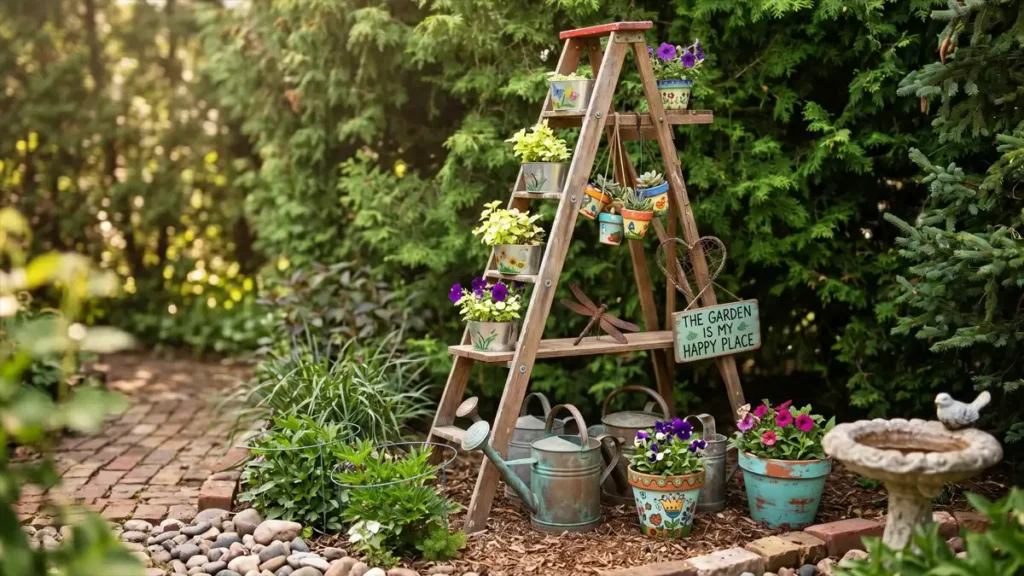
A garden becomes truly memorable when it stops looking like a catalog and starts looking like a life.
This is where personal objects matter — not expensive decor, but familiar, slightly imperfect things. A painted pot that doesn’t match anything else. A repurposed metal container that used to belong somewhere else. A small handcrafted piece that doesn’t quite fit a theme, but fits a memory.
There is a quiet difference between decoration and expression. Decoration tries to complete a space, much like transforming your living room with stunning wall art, while expression reveals the person who lives in it.
Old objects, when placed outdoors, often gain a second life. A ladder becomes a plant stand. A watering can becomes a sculpture of its own past function. These things don’t just fill gaps — they create narrative.
A garden with narrative always feels larger than its physical size.
🌿 When Plants Stop Being Decoration and Start Becoming Identity
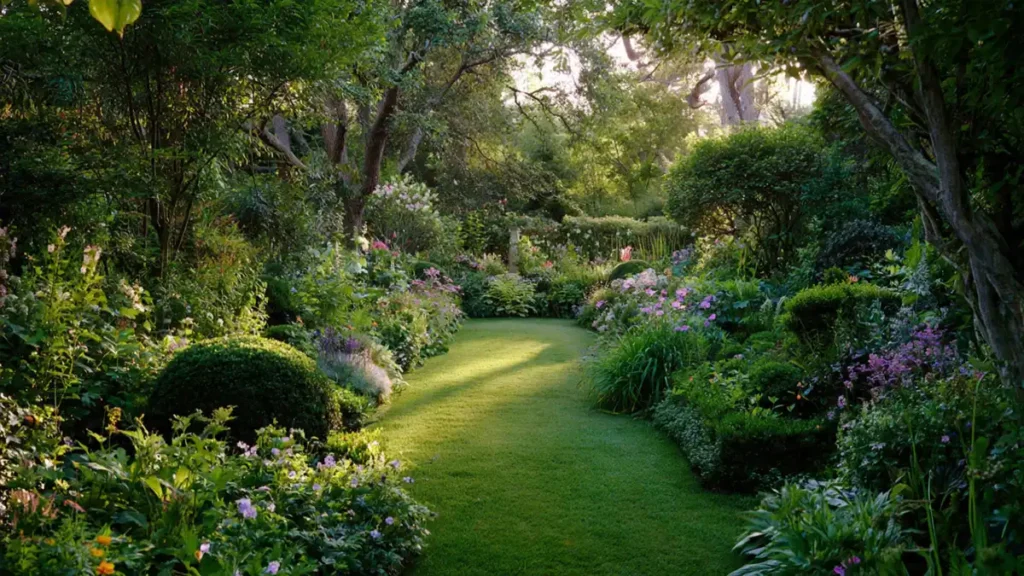
There is a moment in every garden when plants stop behaving like design elements and start shaping the identity of the space itself.
Some grow wild and expressive, softening hard edges. Others stay structured, giving the garden a sense of discipline, and choosing plants with deep roots, such as peonies—which carry rich meaning and symbolism, can help define the identity of the space.. Flowers add rhythm — not in symmetry, but in surprise. A bloom where you didn’t expect one often becomes the most memorable part of the view.
A well-designed garden doesn’t rely on quantity of plants. It relies on how they interact with space, light, and each other.
Over time, plants don’t just fill a garden — they start defining how it is remembered.
🌙 The Idea of Zones Without Walls
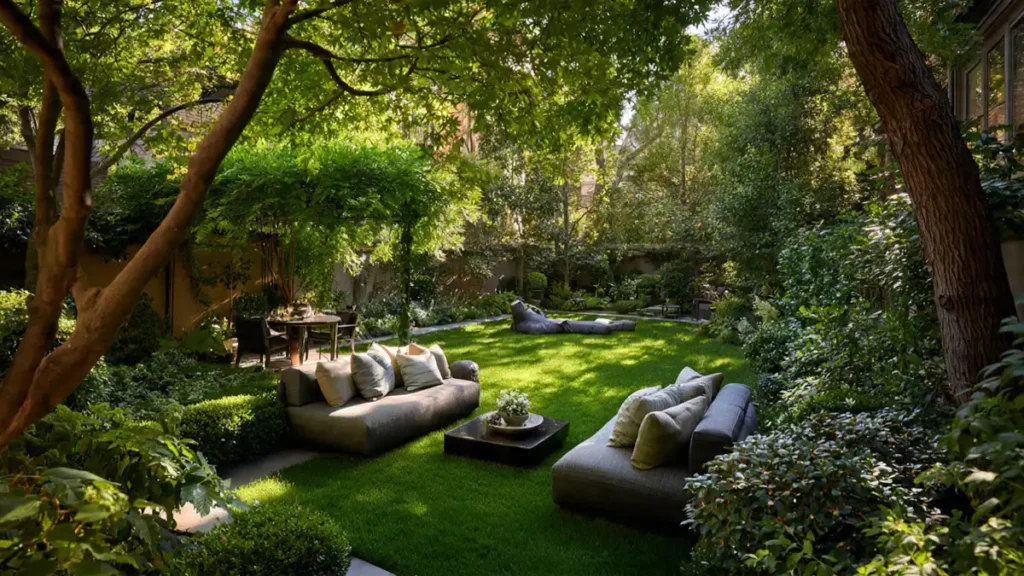
The most interesting gardens are rarely uniform. They are layered.
Not in a rigid architectural sense, but in mood. One corner invites silence. Another naturally gathers people. A small patch of grass becomes movement space without needing instructions.
These zones don’t require fences or structures. They are created through placement, light, and intention.
A seating area slightly removed from the main flow of the garden automatically becomes a thinking space. A table placed under partial shade becomes a gathering point without needing to announce itself. Even an empty corner, when left deliberately untouched, can become meaningful in contrast to everything around it.
This is how gardens grow beyond size. Not outward, but inward — through experience.
🌿 Water, Sound, and Subtle Movement
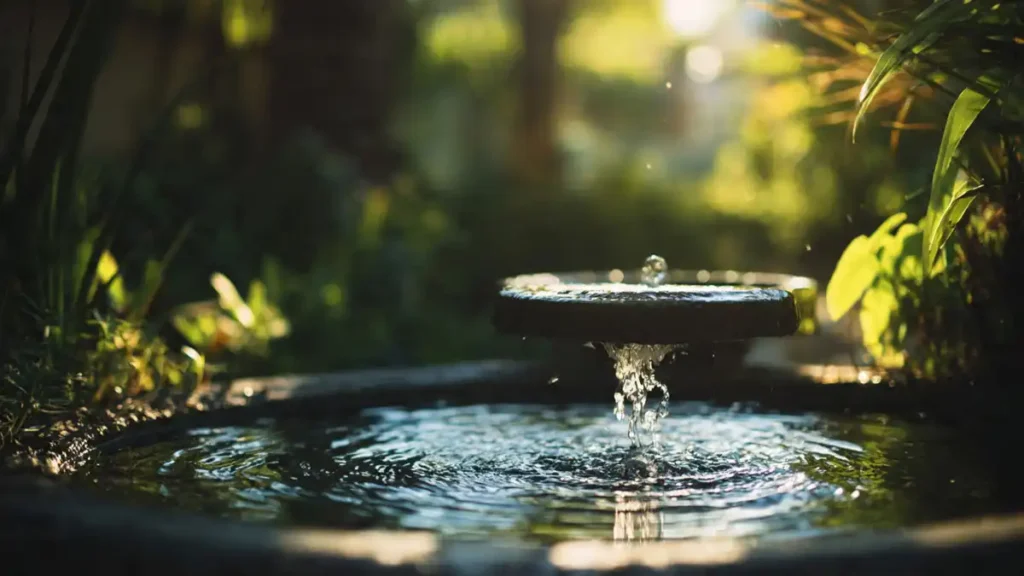
Not every garden needs water features, but every garden benefits from the idea of movement.
Water introduces something that still objects cannot: sound that is not human-made. Even a small fountain changes the atmosphere of a space. It adds continuity, a gentle reminder that the environment is alive even when nothing is happening.
But beyond water itself, what matters is the presence of subtle motion. Leaves responding to wind. Hanging elements shifting slightly. Shadows changing slowly across surfaces.
A garden that moves gently feels more alive than one that is perfectly static.
🐦 When Nature Decides to Stay
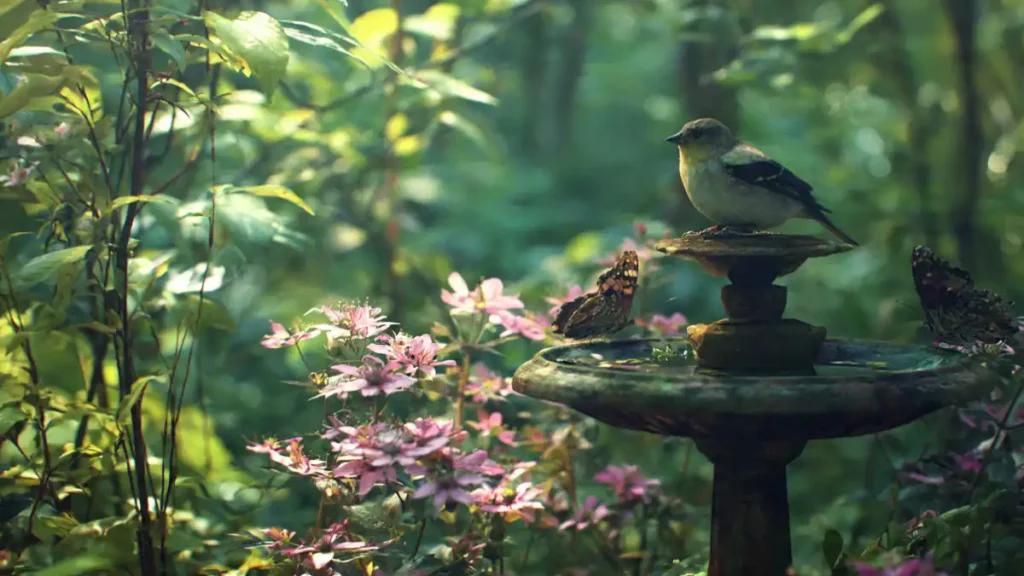
There is a point where a garden stops being designed only for people.
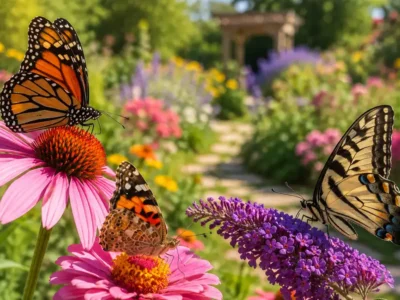
Birds begin to arrive. Butterflies appear without invitation. Small, unplanned visitors turn the space into something less controlled and more shared.
This is not something that can be forced. It happens when the garden feels safe enough, quiet enough, and natural enough to be part of a larger ecosystem.
A bird feeder in one corner or a small water source can subtly shift this balance. But what truly invites wildlife is not decoration — it is patience.
A garden that is too controlled rarely feels alive. A garden that is slightly allowed to be wild often does.
🌙 The Garden at Night Knows More Than You Think
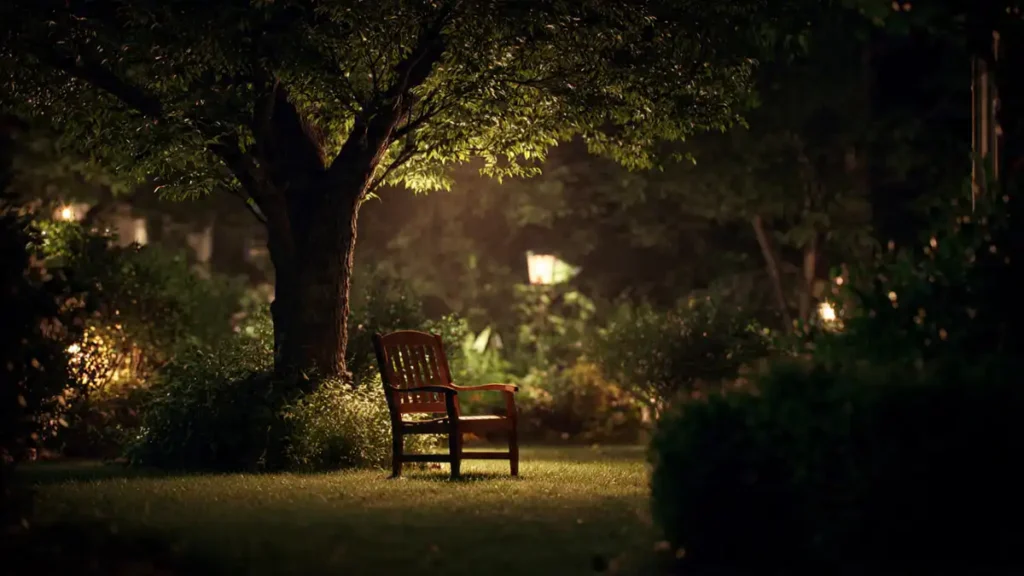
If you spend enough time in a garden after dark, you begin to notice something subtle.
It stops being a visual space and becomes a sensory one.
You hear more than you see. You feel distances differently. Even silence has texture.
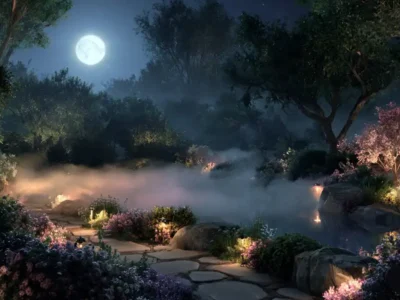
This is why nighttime gardens often feel more emotional than daytime ones. They are not trying to impress. They are simply existing, with light placed carefully enough to guide, not dominate.
A chair under a soft light. A path barely visible but still understandable. A corner that glows gently without explanation.
These are the moments that stay with people longer than any decorative detail.
🌿 The Mistake of Overdoing It
There is a temptation, especially in modern design culture, to fill every space. To optimize every corner. To make everything look “complete.”
But gardens resist this kind of thinking.
Too many objects remove focus. Too many styles cancel each other out. When everything tries to stand out, nothing actually does.
The most calming gardens are the ones that understand restraint. Where empty space is not seen as missing, but as necessary. Where every addition feels considered rather than accumulated.
In a way, good garden design is less about addition and more about editing.
🌿 A Garden Is Never Finished
Perhaps the most important truth about garden design is that it never reaches completion.
It evolves. Slowly. Sometimes intentionally, sometimes not. Plants grow beyond expectations. Light shifts with seasons. Human habits change how spaces are used.
A garden that feels “finished” is often a garden that has stopped being lived in.
The better version is the one that continues to adjust — quietly responding to time, weather, and the people who return to it.
Because in the end, a garden is not a project.
It is a relationship.
And like all good relationships, it gets better when you stop trying to control every detail, and start paying attention instead.