At first glance, natural gardens can appear wonderfully unplanned.
Wildflowers spill onto pathways.
Tall grasses sway in different directions.
Trees cast uneven shadows across stone and soil.
Nothing seems perfectly arranged, and yet everything feels exactly where it belongs.
But spend a little more time in a beautiful natural garden, and another story begins to emerge.
The effortless feeling is rarely accidental.
Behind the loose planting, winding paths, and relaxed atmosphere is a series of quiet decisions — choices that allow nature to lead without letting the space become chaotic.
That balance is what gives natural gardens their charm.
They feel discovered rather than designed.
The first thing you notice in a natural garden is often what isn’t there.
Perfect symmetry.
Rigid borders.
Rows of identical plants.
Instead, there is movement.
Plants of different heights lean into each other. Flowers bloom unexpectedly. Textures overlap. The garden feels alive because it changes from one corner to the next. If you’re looking to create a similar effect from scratch, this comprehensive guide to creating stunning wildflower gardens offers practical advice on choosing and arranging species for a naturalistic look.
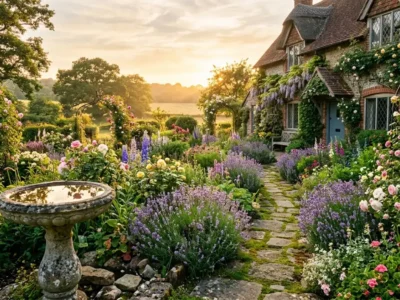
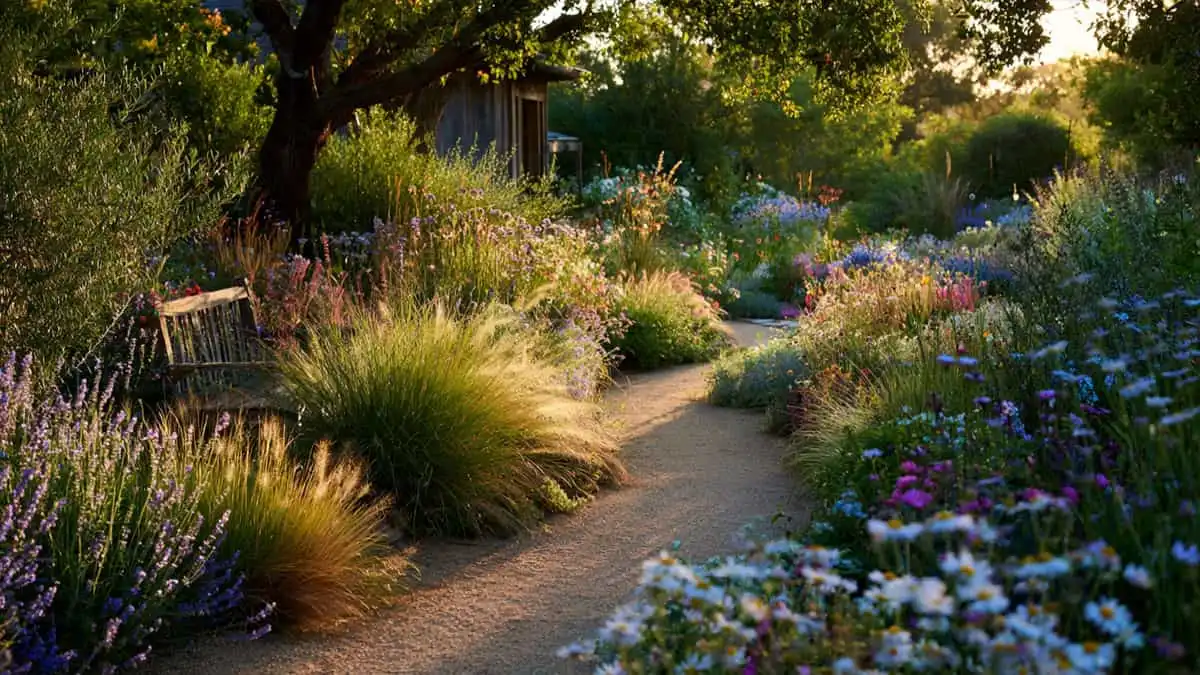
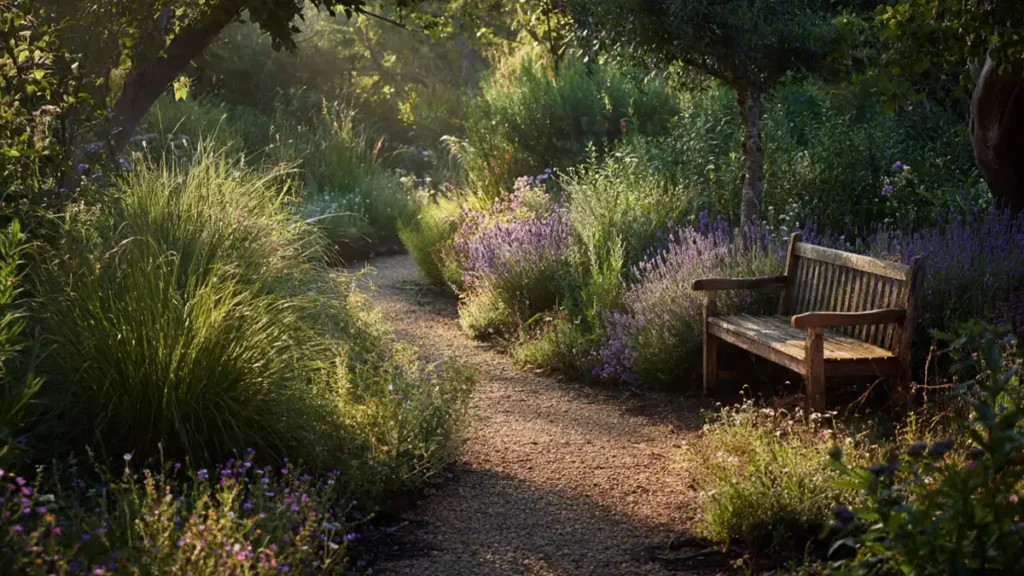
A narrow gravel path may disappear behind grasses before reappearing beside a weathered bench. A cluster of lavender softens the edge of a stone wall. Nothing announces itself too loudly.
The beauty lies in the gradual reveal.
Natural materials play an important role too.
Stone ages beautifully.
Wood fades gently.
Terracotta gathers marks and imperfections over time.
Unlike glossy finishes that demand attention, these materials settle quietly into the landscape. They become part of the garden’s story. For more ideas on incorporating natural decor elements, explore these garden decor ideas for living art in outdoor spaces.
A mossy stepping stone.
A reclaimed wooden planter.
An old watering can left beside a patch of herbs.
None of these elements are particularly grand.
Yet together, they create a sense of permanence — the feeling that the garden has evolved naturally over many years.
Plants are, of course, the real storytellers.
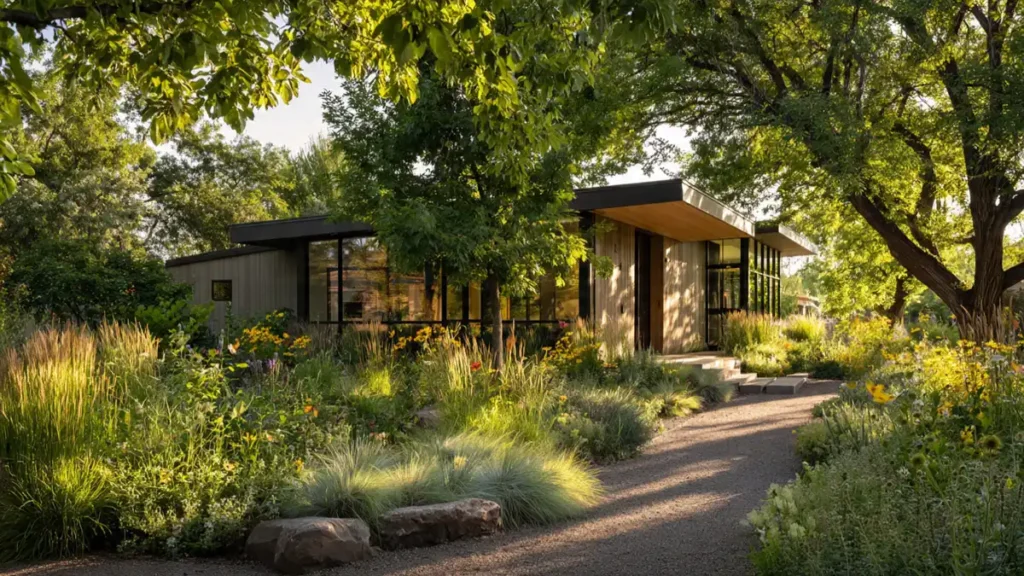
Some gardeners prefer carefully structured borders, but natural gardens often celebrate variety. Good landscape planning helps balance that variety with a coherent flow — you can find useful strategies in this guide on how to transform your outdoor space with landscape planning.
Tall grasses introduce movement.
Wildflowers bring surprise.
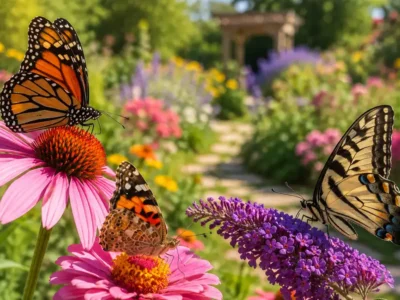
Native plants attract birds, butterflies, and pollinators, creating a landscape that feels connected to its surroundings rather than separate from them.
The goal isn’t to fill every inch.
It’s to allow plants to interact.
To leave space for sunlight to move across the ground.
To let certain corners become a little wilder than others.
Over time, those imperfections become the most memorable parts of the garden.
Water often finds its place naturally as well.
Not in dramatic fountains or formal pools.
But in quieter ways.
A shallow stone basin that reflects the sky.
A small fountain tucked among plants.
The gentle sound of water hidden just enough that visitors hear it before they see it.
In natural gardens, water isn’t a centerpiece.
It’s part of the atmosphere.
It slows the pace of the space.
It invites people to pause.
And then there is the question of perfection.
Or rather, the absence of it.
A few fallen leaves.
An overgrown corner.
A climbing rose that chooses its own direction.
Natural gardens remind us that beauty isn’t always tidy.
In fact, their charm often comes from resisting perfection altogether.
The garden changes.
Seasons reshape it.
Plants grow larger than expected.
Some disappear while others quietly take their place.
Instead of fighting those changes, natural gardens embrace them.
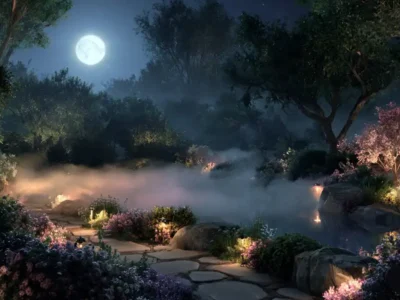
As evening arrives, this softness becomes even more noticeable.
The sharp details of the day begin to fade.
Shadows stretch across pathways.
Tall grasses catch the last light.
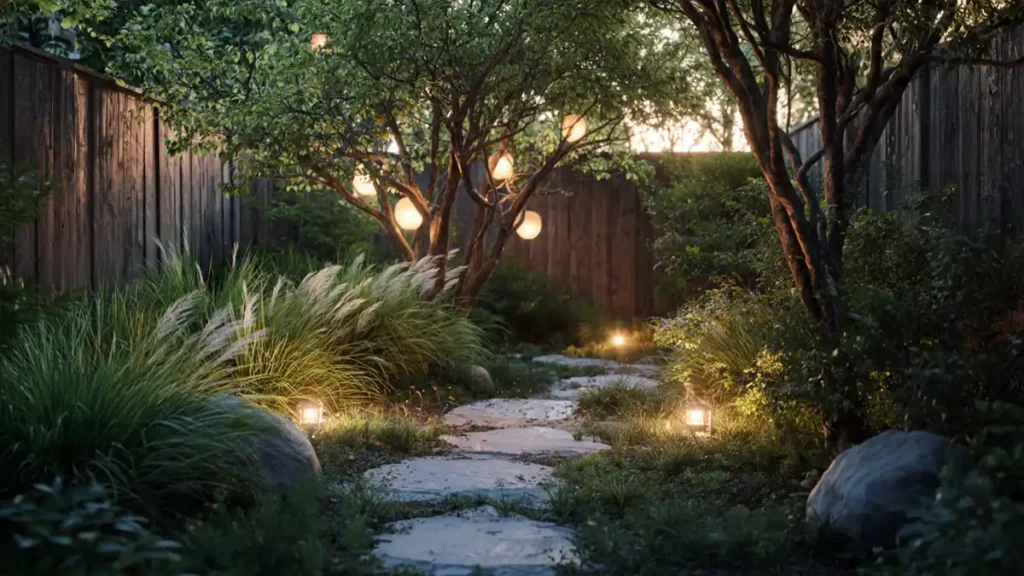
Lanterns glow softly beneath trees while the garden settles into a quieter version of itself.
Suddenly, the space feels less like a project and more like a refuge.
A place designed not to impress, but to be lived in.
Perhaps that’s why natural gardens continue to resonate.
They remind us that beautiful spaces don’t always need to be controlled.
Sometimes the most memorable gardens are the ones that feel a little unpredictable.
A little softer.
A little slower.
Not perfectly arranged.
But deeply connected to the rhythms of nature.
And maybe that’s the secret.
A natural garden isn’t trying to compete with the landscape around it.
It simply becomes part of it.