At first glance, the most beautiful gardens rarely reveal everything at once.
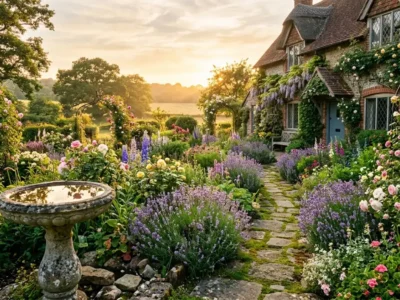
A pathway curves gently out of sight.
A bench appears beneath a tree just when you need a place to pause.
Flowers give way to grasses, which open into a quiet seating area you hadn’t noticed before.
The garden unfolds slowly.
And that’s often what makes it memorable.
The secret isn’t necessarily a larger space or more elaborate planting.
It’s thoughtful zoning.
The art of dividing a garden into smaller experiences, each with its own mood, purpose, and rhythm.
A garden with zones doesn’t simply look beautiful.
It invites exploration — much like garden decor ideas that turn outdoor spaces into living art.
Think about how we move through our homes.
The kitchen feels different from the living room.
A bedroom has a different atmosphere than a dining area.
The same idea applies outdoors.
A seating corner encourages conversation.
A flower-filled pathway creates anticipation.
A shaded retreat beneath trees offers calm.
Each area serves its own purpose while contributing to the story of the whole garden.
The boundaries don’t need to be obvious.
In fact, the best garden zones are often the most subtle.
A change in planting.
A different material underfoot.
A small archway or trellis.
Tiny transitions that quietly signal you’ve entered a new space.
The entrance is where the story begins.
Some gardens announce themselves immediately.
Others prefer mystery.
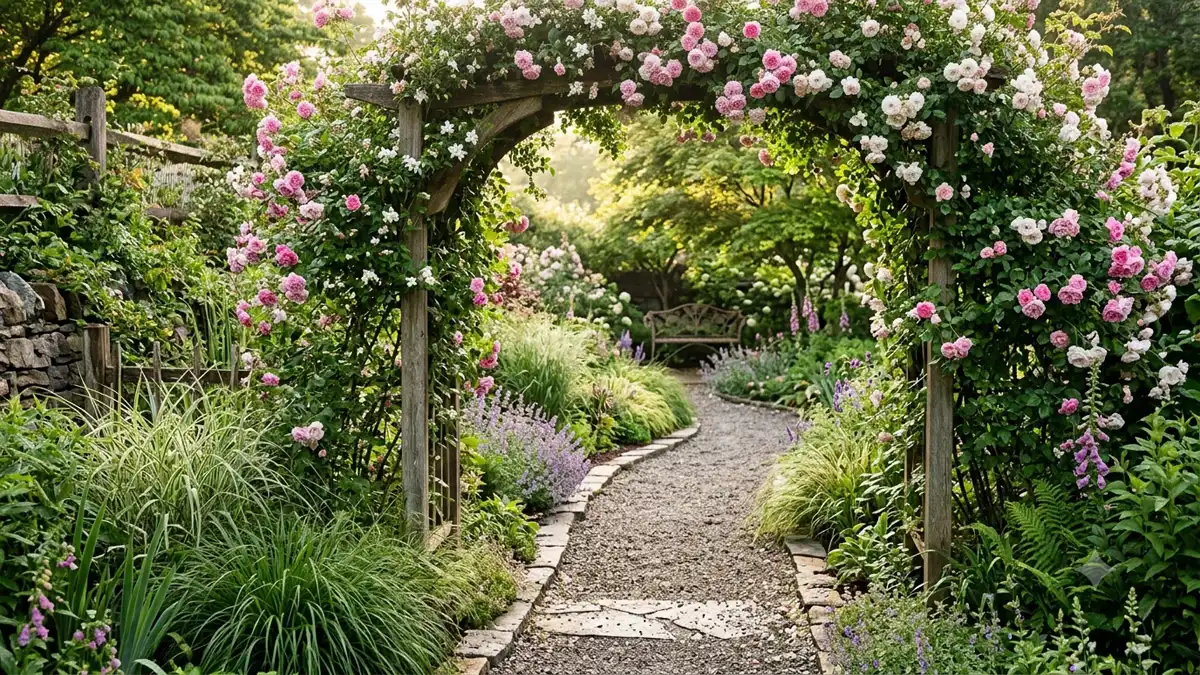
A narrow path framed by grasses.
A pair of oversized pots beside a gate.
A climbing rose arch that reveals only a glimpse of what’s beyond.
The goal isn’t to show everything.
It’s to create curiosity.
Because gardens, much like good homes, become more enjoyable when they reveal themselves gradually — and sometimes transforming your garden with art and decor is the perfect way to add intrigue.
Beyond the entrance, many gardens naturally become social spaces.
Perhaps it’s a bistro table tucked beside herbs.
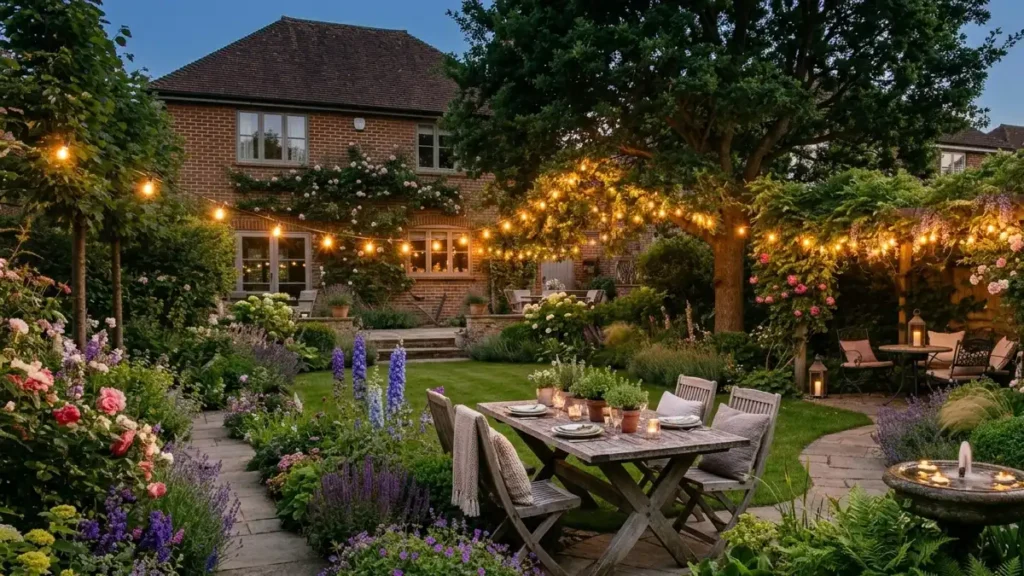
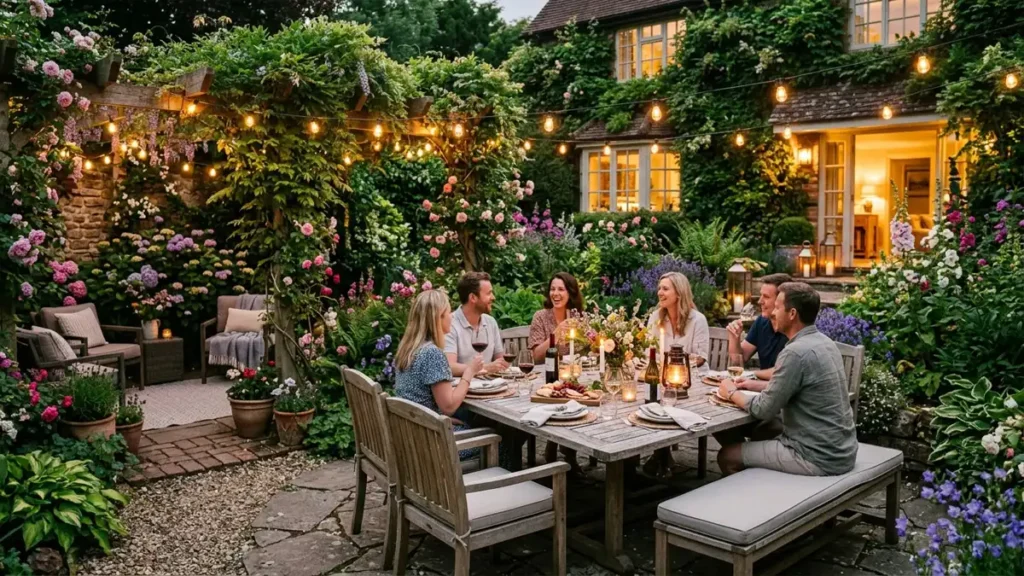
Or a wooden dining table beneath string lights.
Sometimes it’s nothing more than a bench positioned perfectly to catch the evening sun.
These gathering spaces don’t need to be large.
They simply need to feel intentional.
The furniture, lighting, and planting work together to create an atmosphere that encourages people to stay.
To linger.
To have one more cup of coffee or watch the sky change color at dusk.
Not every zone needs activity.
Some exist for quiet.
A shaded bench beneath a tree.
A hammock hidden behind ornamental grasses.
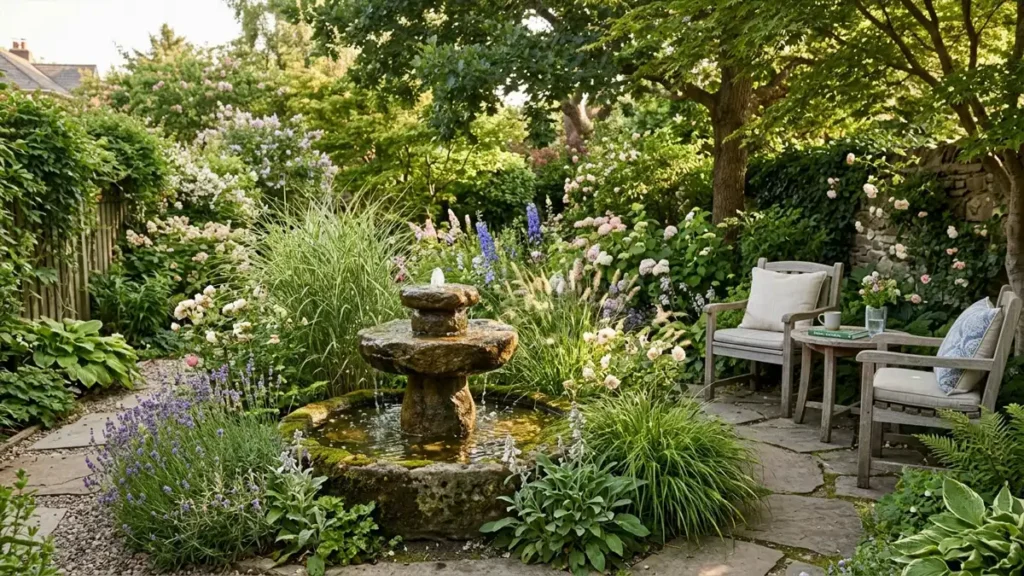
A small fountain where the only sound is moving water.
These spaces often become favorites.
Not because they demand attention.
But because they offer escape.
The world feels a little slower there.
And in busy lives, that feeling can be surprisingly valuable.
Plants play an important role in defining these spaces too.
Tall grasses create privacy without walls.
Flower borders soften transitions.
Evergreen shrubs provide structure that remains throughout the seasons — and selecting the right companion plants for your peony bush can add both beauty and function to these natural boundaries.
Sometimes the zoning is so subtle that visitors don’t notice it consciously.
They simply feel comfortable moving from one area to another.
The garden guides them.
Almost invisibly.
Water has a unique ability to create zones as well.
Not by dividing spaces physically.
But emotionally.
A small fountain introduces calm.
A reflecting pond creates stillness.
The sound of trickling water naturally draws people closer, making one corner of the garden feel distinct from another.
It’s a gentle kind of architecture.
One that shapes mood instead of movement.
Perhaps that’s why the most memorable gardens are rarely experienced all at once.
They are discovered.
Step by step.
Corner by corner.
A garden zone isn’t simply an area dedicated to dining, relaxing, or planting.
It’s a chapter in a larger story.
One space invites conversation.
Another encourages reflection.
A third celebrates the changing seasons.
Together, they create a garden that feels richer than its size would suggest.
Because great gardens aren’t defined by how much space they have.
They’re defined by how thoughtfully that space is experienced — whether through landscape planning that transforms your outdoor space or simply by the mood each area evokes.
And sometimes, the smallest journey can leave the deepest impression.