At first glance, small gardens can seem limiting.
A narrow patio. A tiny backyard. A corner of green squeezed between fences.
It’s easy to focus on what’s missing – more space, more plants, more possibilities.
But spend a little time in a beautifully designed small garden, and something surprising happens.
The limitations begin to disappear.
What remains is atmosphere.
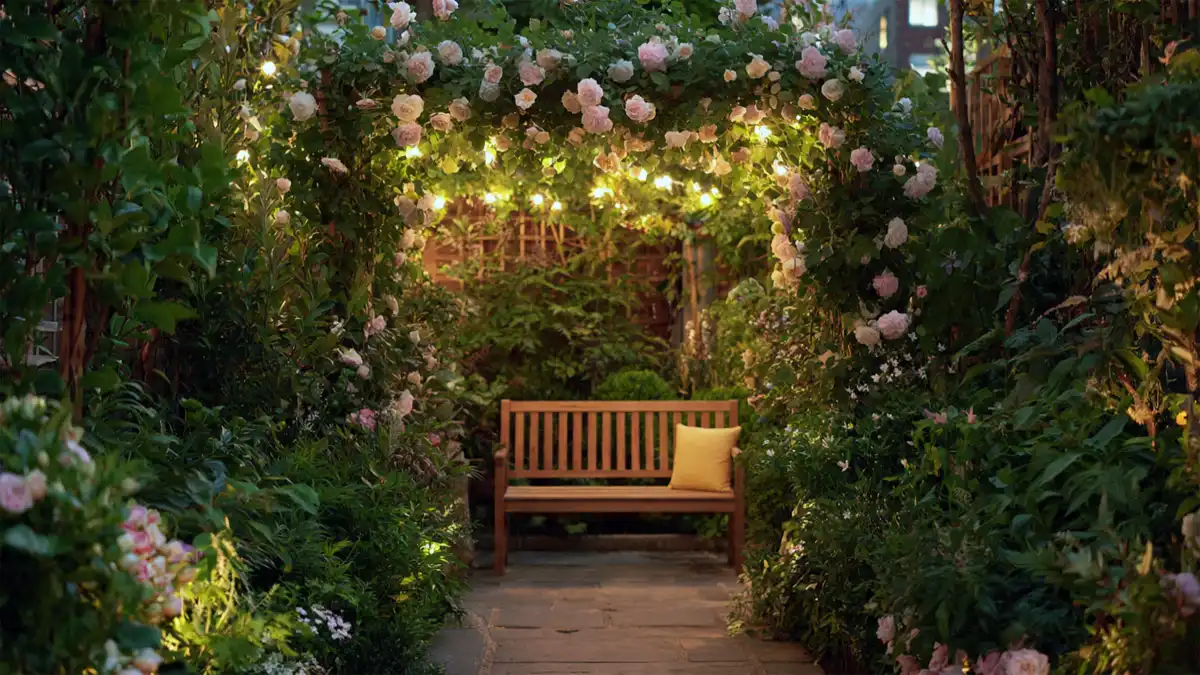
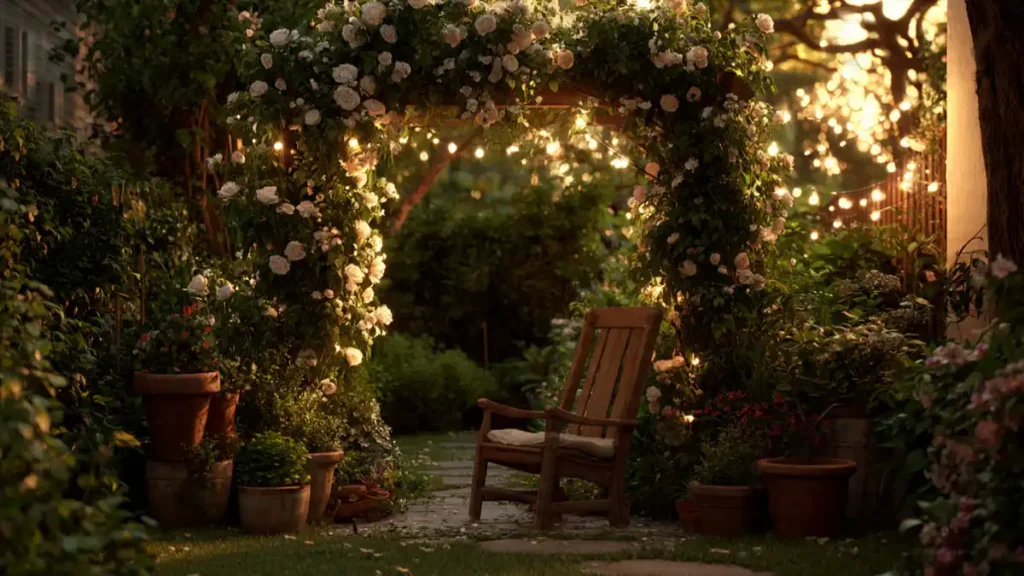
A chair tucked beneath climbing roses. Pots arranged at different heights. Soft lights glowing as evening settles in. The garden feels less like a small outdoor space and more like a private world that exists entirely on its own terms.
In many ways, small gardens ask us to be more thoughtful.
Every choice matters.
And that’s often what makes them memorable.
The most successful small gardens rarely try to feel bigger.
Instead, they focus on feeling deeper.
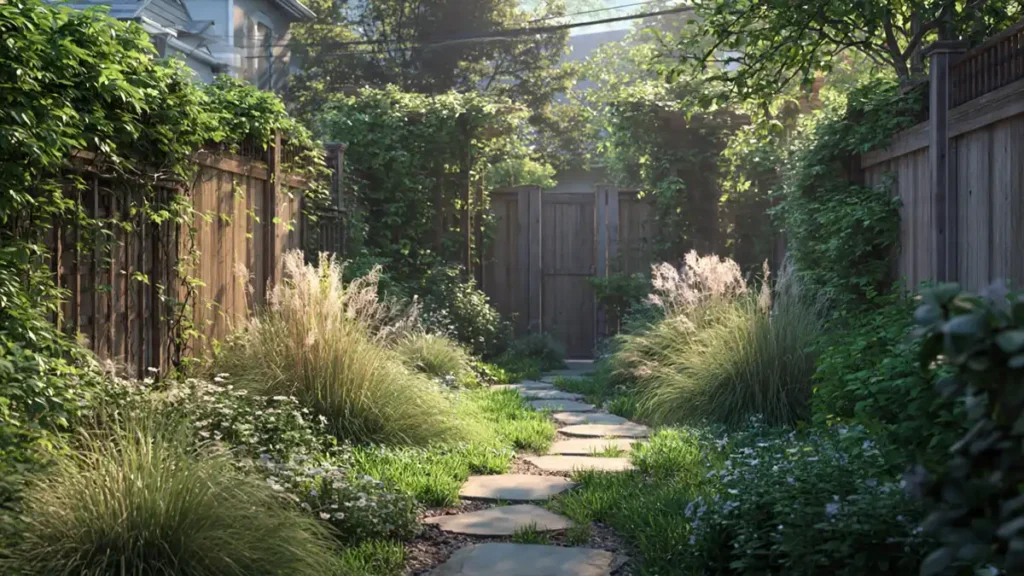
A winding pathway naturally slows the eye. Plants arranged in layers create the impression of distance. Tall grasses soften fences, while climbing plants draw attention upward, making walls feel less like boundaries and more like part of the landscape.
Even mirrors occasionally find their place outdoors, reflecting greenery and sky in ways that blur where the garden ends and where imagination begins.
The space itself may be compact.
The experience doesn’t have to be.
Vertical planting has become one of the defining features of small modern gardens, and for good reason. You can explore more garden decor ideas for living art in outdoor spaces to inspire your vertical design.
When space is limited, walls begin to work harder.
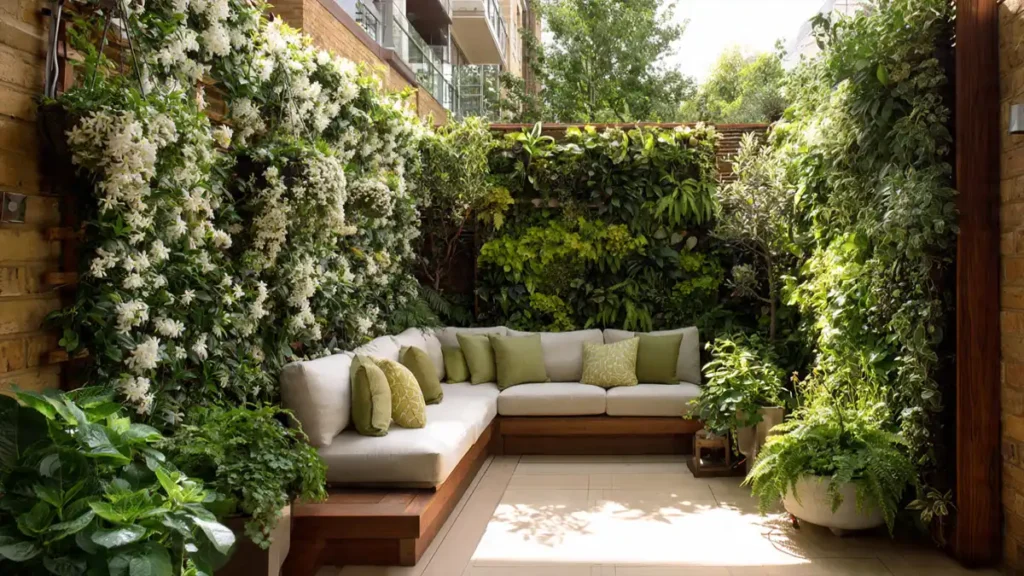
A trellis covered in jasmine or climbing roses can transform an ordinary fence into a living backdrop. Hanging planters introduce greenery without taking up valuable floor space. Living walls turn collections of plants into something that feels almost architectural.
The effect isn’t simply practical.
It changes the proportions of the garden.
The eye moves upward.
The garden begins to breathe.
Seating matters too.
Not because every garden needs furniture, but because even the smallest outdoor spaces deserve somewhere to pause.
A simple wooden bench beneath a tree can become the most used spot in the garden. A compact bistro table creates an outdoor room where none existed before. Foldable chairs disappear when not needed, giving flexibility to spaces that have to serve many purposes.
The best seating doesn’t dominate the garden.
It becomes part of it.
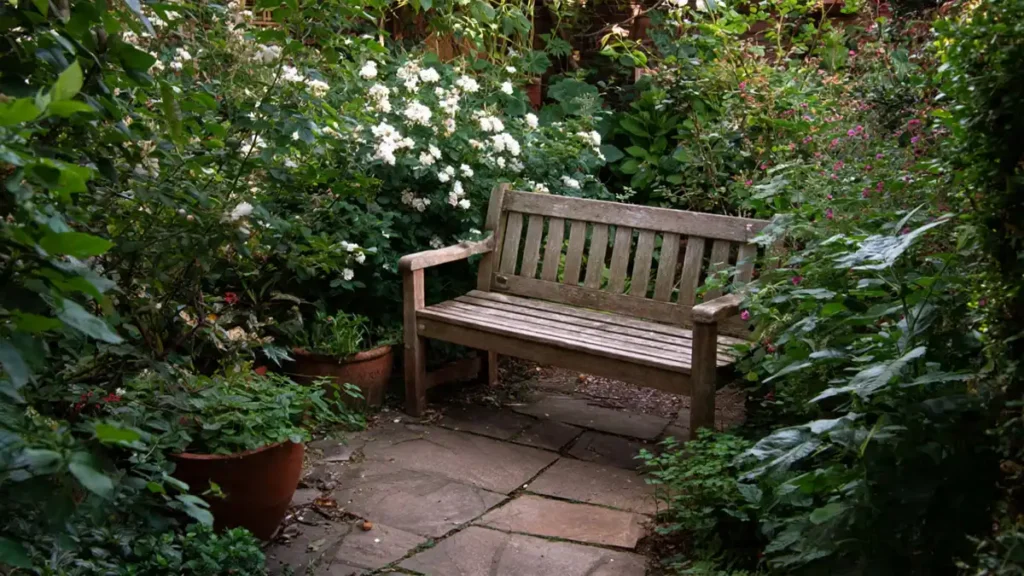
Over time, cushions fade a little, wood softens with age, and favorite spots reveal themselves almost accidentally.
And then there is lighting.
Perhaps no element transforms a small garden more dramatically.
During the day, a garden is defined by shape and color.
At night, it becomes atmosphere.
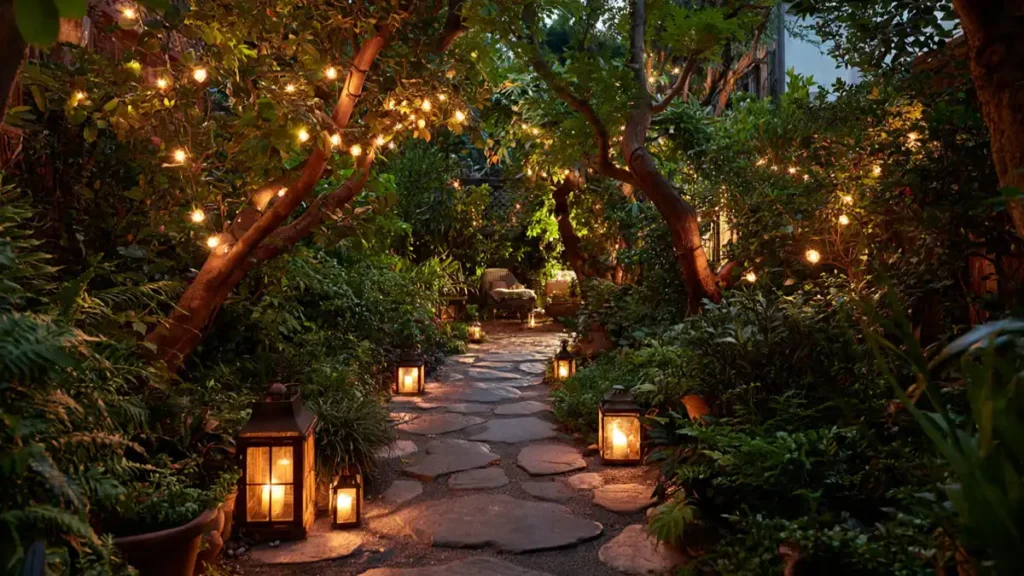
Fairy lights woven through branches create a gentle glow. Lanterns illuminate pathways just enough to guide movement without stealing attention. Shadows become softer. Details become quieter.
The garden feels less designed and more discovered.
A place that reveals itself slowly as evening arrives.
Perhaps that’s why small gardens are so beloved.
They encourage restraint.
They remind us that beauty doesn’t depend on scale, and that a handful of carefully chosen elements can create more impact than an endless collection of features. To truly transform your garden with art and decor, thoughtful curation is key.
A small garden doesn’t need to imitate a larger one.
Its charm lies in being exactly what it is.
Personal.
Inviting.
And surprisingly transformative.
Because sometimes the most memorable spaces aren’t the ones with the most room. Even adding a single, meaningful feature like a well-chosen peony flower meaning and symbolism display can define the entire atmosphere of a small garden.
They’re the ones that make you want to stay a little longer.