At first glance, butterflies seem unpredictable.
They appear for a moment.
Hover above a flower.
Disappear.
And then return when you least expect them.
Perhaps that’s why butterfly gardens feel so magical.
You can’t force butterflies to stay.
You can only create a place they want to visit.
And in doing so, you often end up creating one of the most vibrant and beautiful gardens imaginable.
Butterfly gardens are usually filled with flowers.
But not just any flowers.
The best ones are generous.
Rich in nectar.
Blooming across different seasons.
TOP FLOWERS FOR BUTTERFLIES
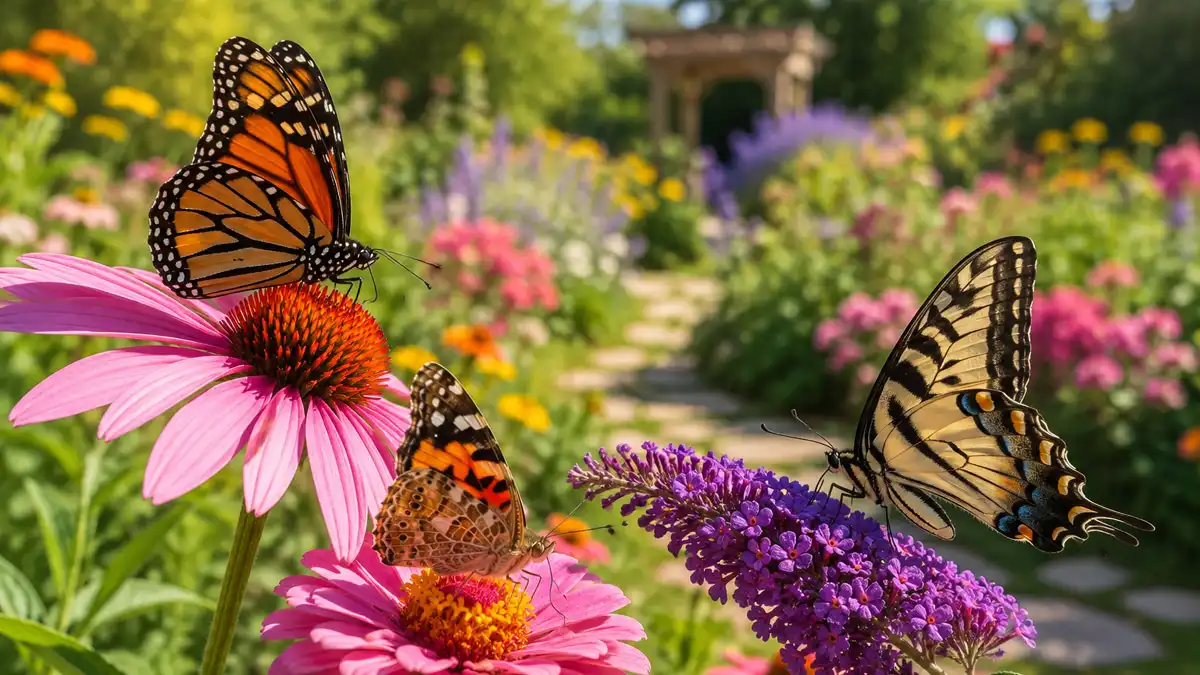
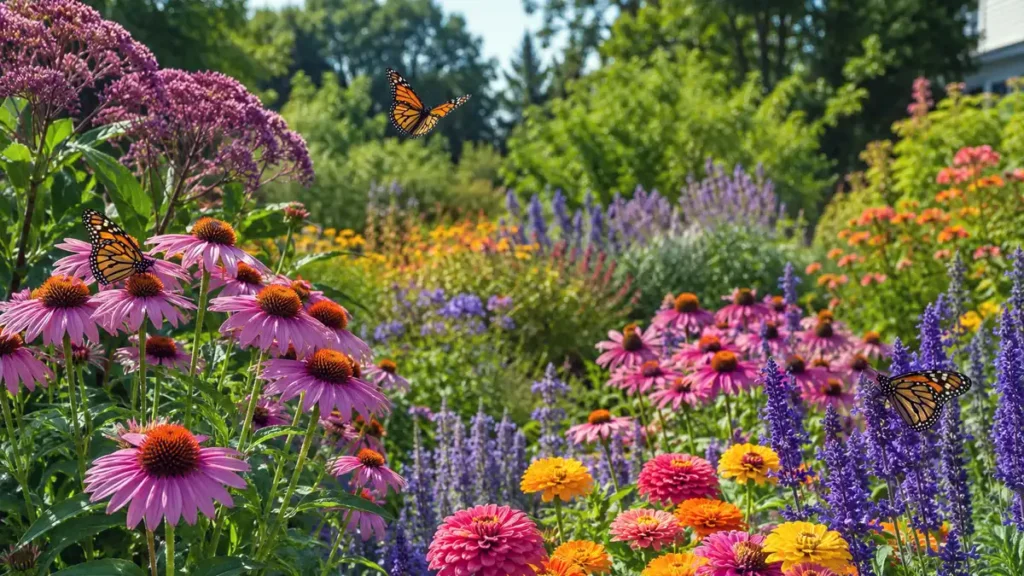
- ✓ Coneflowers – Hardy perennials that provide wide, sturdy landing pads for feeding.
- ✓ Salvias & Lavender – Feature long, tubular blooms packed with premium, fragrant nectar.
- ✓ Zinnias – Fast-growing annuals that offer cheerful, continuous mid-season color.
- ✓ Milkweed – The essential host plant required to support entire monarch lifecycles.
Together, they create something more than a flower bed. They create an invitation that wildlife rarely ignores. If you love this informal, pollinator-friendly look, you might also find inspiration in our comprehensive wildflower gardening guide.
Movement is part of the beauty.
Flowers move with the breeze.
Butterflies drift unpredictably.
Nothing feels static.
Nothing feels perfectly arranged.
And that’s exactly what makes butterfly gardens so charming.
They celebrate a softer kind of design. One that embraces nature instead of controlling it. For more strategies on creating a relaxed outdoor space, check out our natural garden styling guide.
The garden feels alive.
Not because everything is blooming.
But because everything is interacting.
Color plays a quiet role too.
Butterflies are naturally drawn to shades of purple, pink, yellow, orange, and red.
Yet the most beautiful butterfly gardens aren’t simply colorful.
They’re layered.
Tall flowers create drama.
Mid-height blooms add fullness.
Ground covers soften edges.
The eye moves naturally from one area to another.
And butterflies follow the same rhythm.
Stopping briefly.
Then floating onward.
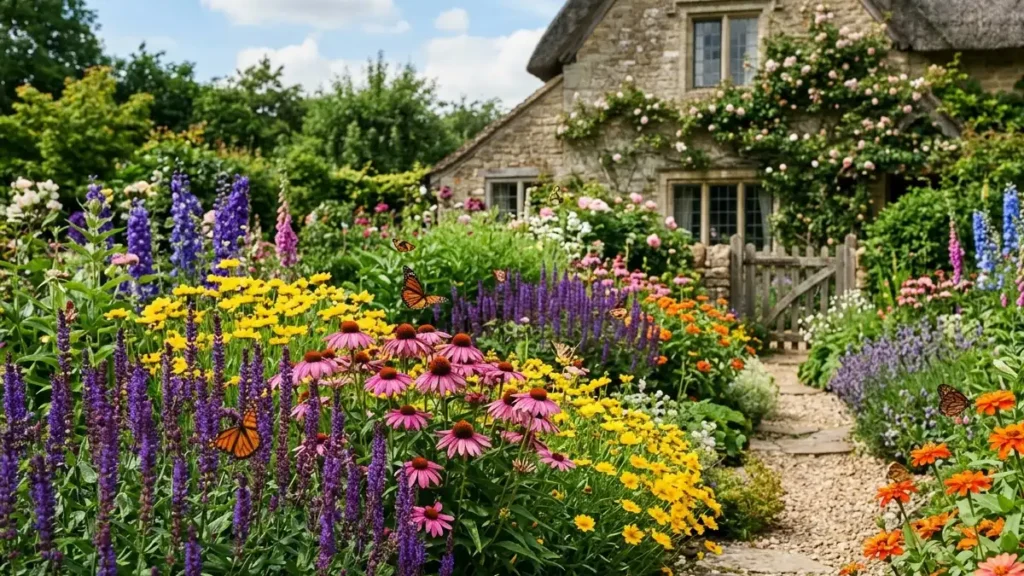
A butterfly garden doesn’t need to feel wild.
Some are carefully designed.
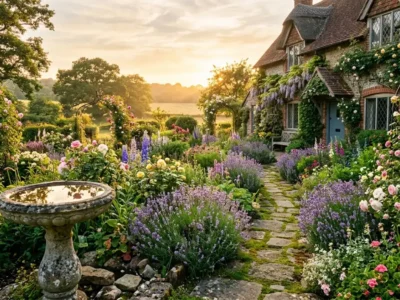
Stone pathways weave through planting beds.
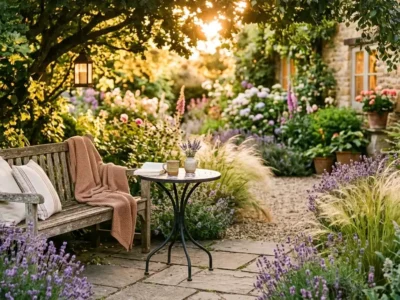
Benches sit beneath flowering trees.
Small fountains provide fresh water.
Everything feels intentional.
You May Also Like
Cozy and Practical Outdoor Living Seating Ideas
Yet even formal butterfly gardens leave room for surprise.
Because nature doesn’t follow strict rules.
A butterfly landing beside you.
A caterpillar hidden beneath leaves.
A flower blooming where you didn’t expect one.
These small moments become the most memorable.
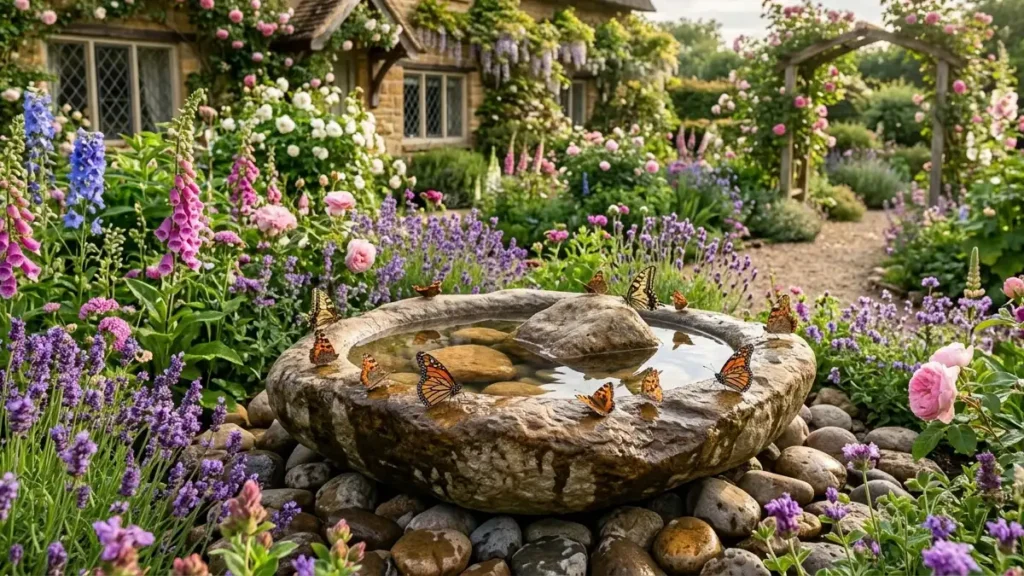
Water makes butterfly gardens even more inviting.
Not large ponds.
Not dramatic fountains.
Just simple sources of moisture.
SETTING UP A PUDDLING STATION
- Select a shallow basin, dish, or a low-profile birdbath.
- Fill the basin with coarse sand or small decorative river stones.
- Pour in just enough water to keep the sand damp or stones partially exposed.
- Add a tiny pinch of sea salt or compost to provide critical missing minerals.
The effect is subtle.
But important.
Because butterfly gardens aren’t designed only to look beautiful.
They’re designed to support life.
And life always responds to kindness.
Perhaps the greatest joy of a butterfly garden is that it changes constantly.
Spring introduces the first visitors.
Summer brings abundance.
By late autumn, the pace slows.
The flowers fade.
The butterflies become fewer.
And yet, the garden never feels empty.
Because anticipation becomes part of the experience.
You begin waiting for their return.
Watching closely.
Noticing small changes.
Appreciating seasons you might have ignored before.
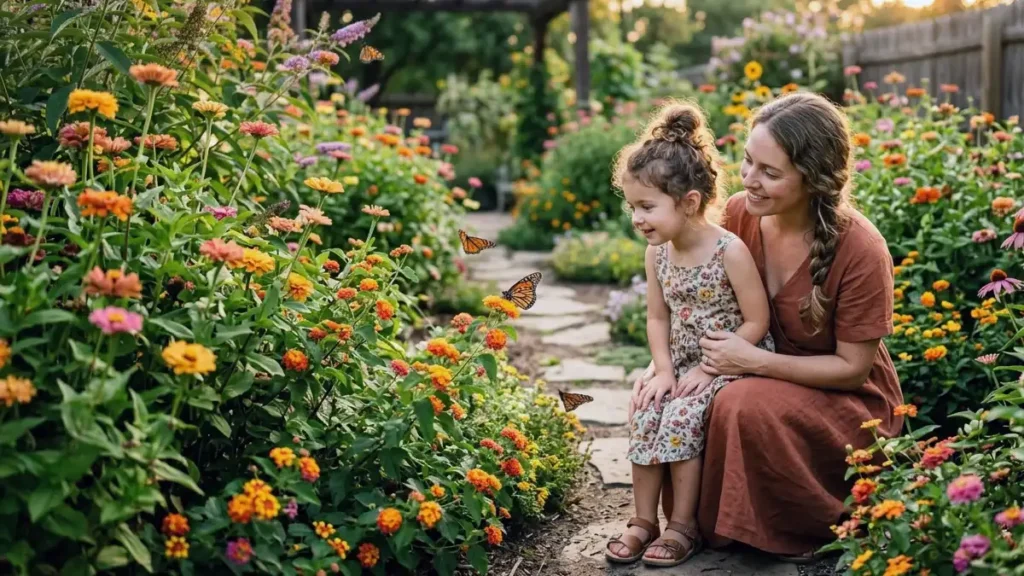
Children love butterfly gardens.
So do adults.
Because butterflies remind us of something easy to forget.
That beauty doesn’t have to stay forever to matter.
A butterfly lands.
Stays for a few seconds.
And flies away.
Yet somehow, the moment feels complete.
Memorable.
Enough.
Perhaps that’s why butterfly gardens feel different from other gardens.
They’re less about control.
More about invitation.
You plant flowers.
Create shelter.
Offer water.
And wait.
Nature does the rest.
The butterflies arrive.
The garden comes alive.
And suddenly, the space isn’t just beautiful.
It’s moving.
Because the best butterfly gardens aren’t designed to impress.
They’re designed to welcome.
And sometimes, welcoming life is the most beautiful form of garden design there is.
Butterfly Gardening FAQs
What is the difference between nectar plants and host plants?
Nectar plants provide food for adult butterflies to drink, while host plants are specific varieties that female butterflies lay eggs on, serving as the sole food source for emerging caterpillars (like milkweed for monarch caterpillars).
Why do butterflies need sand and rocks in their water sources?
Butterflies cannot land on open water surfaces without risking drowning. Wet sand or landing stones allow them to stay safely grounded while absorbing essential moisture and dissolved ground minerals.
Are butterfly gardens hard to maintain?
Not at all. Since butterflies prefer diverse flower heights and minimal chemical disturbance, these spaces thrive on a slightly softer, low-intervention approach that welcomes native ecosystems over rigid grooming.