At first glance, gardens seem to belong to the daytime.
Flowers open toward the sun.
Leaves shimmer in the afternoon breeze.
Stone pathways warm beneath bare feet.
Everything feels visible.
Predictable.
Easy to admire.
But certain gardens reveal their true personality only after sunset.
When colors soften.
When sounds become clearer.
When the familiar landscape begins to feel quietly mysterious.
Night changes the rules of a garden.
The eye stops chasing details.
Instead, it notices shapes.
Silhouettes.
Reflections.
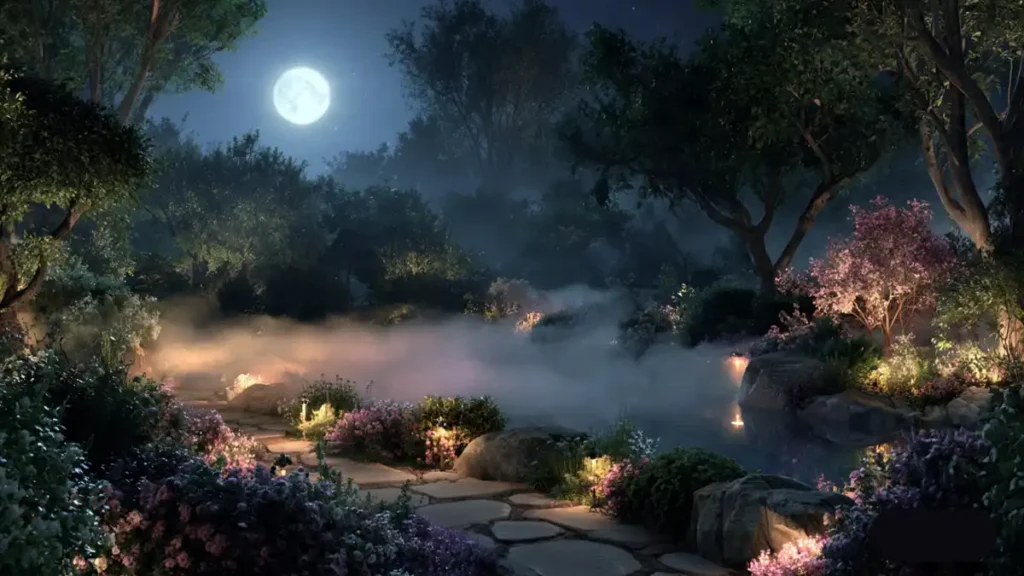
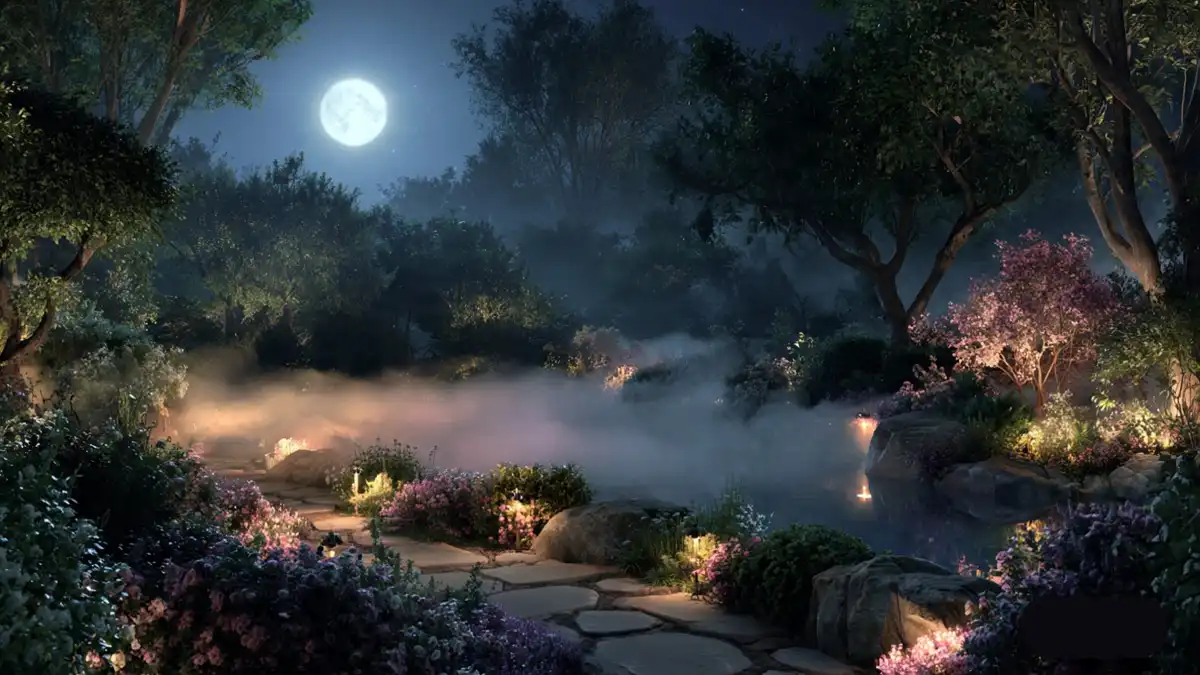
A tree that barely attracted attention during the day suddenly becomes dramatic beneath a soft light.
A pathway glows gently, disappearing into shadows.
Flowers become accents rather than the main attraction.
And somewhere nearby, water moves quietly enough that you hear it before you see it.
The garden hasn’t changed.
Only the way you experience it.
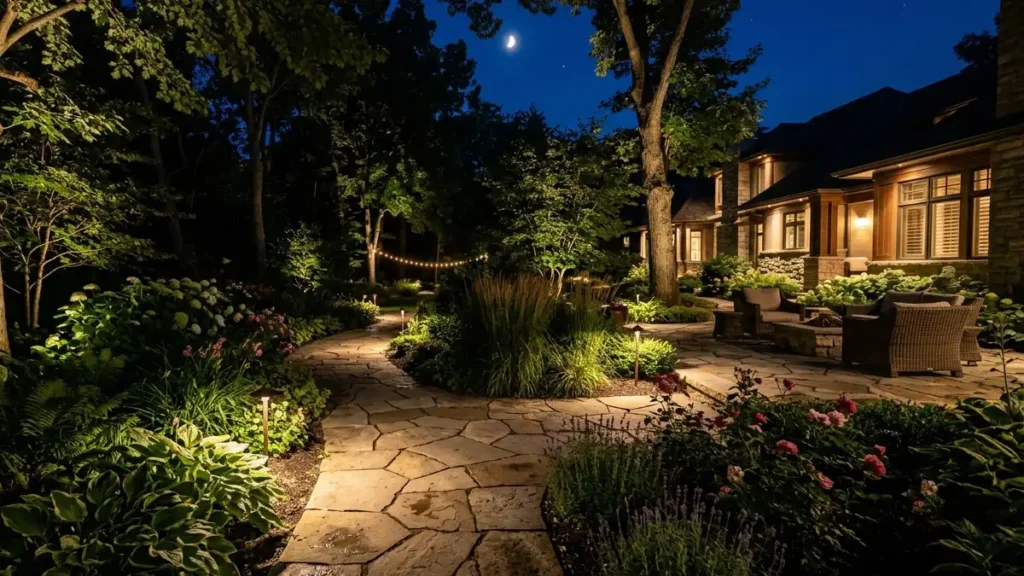
During daylight, gardens are designed around color.
At night, they are designed around atmosphere.
A lantern beside a bench creates intimacy.
Fairy lights wrapped through branches add softness.
Moonlight reflecting on a pond introduces movement.
The darkness itself becomes a design element.
Not something to fight.
Something to embrace by utilizing strategic landscape planning options.
The most memorable night gardens are never brightly lit.
They allow mystery to exist.
Corners remain hidden.
Paths fade gradually into darkness.
The imagination finishes what the eye cannot fully see.
You May Also Like
Natural Garden Styling Guide: Tips for a Beautiful Outdoor Space
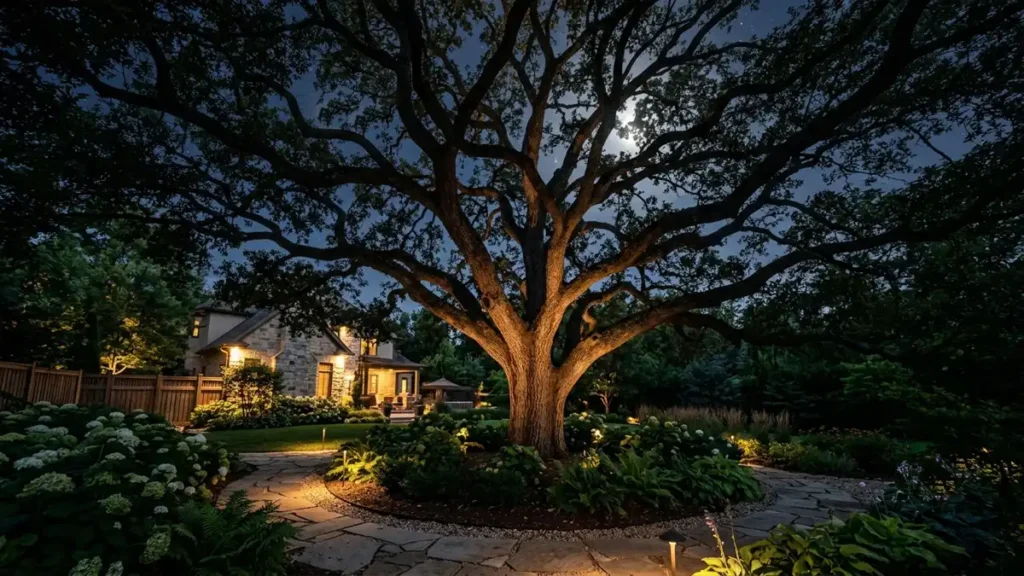
Trees often become the stars of the evening.
An old oak illuminated from below.
A Japanese maple glowing softly against the night sky.
Branches stretching across the lawn like artwork.
Textures become stronger.
Shadows become deeper.
The garden feels older.
Wiser somehow.
As if night reveals qualities that daylight keeps hidden.
Water feels different after sunset too.
The ripples of a fountain catch scattered light.
A pond mirrors the moon.
Reflections tremble gently with the slightest movement.
Everything slows down.
People speak more quietly.
The sound of moving water becomes strangely hypnotic.
You watch longer than you intended.
Not because anything dramatic happens.
But because peace has a way of holding attention.
Some gardens become social after dark.
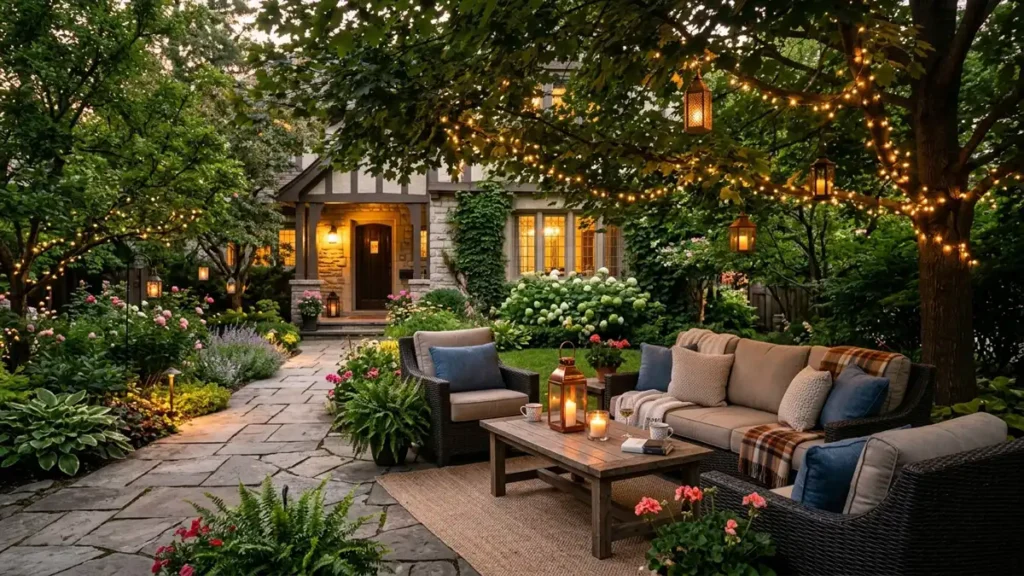
String lights above an outdoor table.
Lanterns flickering beside comfortable chairs.
Warm drinks.
Long conversations.
The atmosphere feels relaxed.
Less curated.
More personal.
Other gardens become private retreats, showcasing beautiful garden seating ideas for solitary comfort.
A single chair beneath a tree.
A book resting beside a lamp.
Silence interrupted only by crickets and distant water.
Both are beautiful.
Because the best night gardens don’t dictate how people should feel.
They simply create the conditions for memorable evenings.
NIGHT DESIGN TIPS
- Focus lighting on distinct structural boundaries by incorporating structured garden design zones.
- Keep pathways softly illuminated to guide foot traffic safely without overpowering the environment.
- Embrace dark corners to retain the natural, mysterious, and organic depth of your yard.
Perhaps that’s why people are becoming fascinated with gardens after dark.
Not because they look perfect.
But because they feel different.
Daytime asks us to notice beauty.
Night asks us to notice atmosphere.
To slow down.
To sit outside a little longer.
To appreciate shadows as much as flowers.
And to realize that gardens don’t stop being beautiful when the sun disappears.
Sometimes, that’s exactly when they begin.
Maybe that’s the real magic of a garden at night.
It’s familiar.
Yet transformed.
The same trees.
The same flowers.
The same pathways.
But beneath moonlight and soft illumination, everything feels touched by mystery.
The garden becomes quieter.
More reflective.
More emotional.
And perhaps that’s why people remember gardens at night so vividly.
Because long after the lights are switched off…
the atmosphere tends to remain.