
🌸 Quick Answer
Cut back peonies in fall, after the first hard frost has killed the foliage (typically late October to November). Cut all stems to 1–2 inches above ground. Never cut back in summer – that weakens next year’s blooms.
Your peony blooms have faded. The leaves have turned yellow or brown. You grab your pruners – but should you cut everything down now? Or wait?
Timing matters more than you think. Cut back too early, and you rob the plant of the energy it needs for next spring’s flowers. Cut back at the right moment, and you set the stage for another season of massive, healthy blooms.
This guide gives you exact timing, step‑by‑step cutting instructions, and the common mistakes that cost gardeners their flowers. By the end, you will know exactly when and how to cut back your peony bush with confidence.
Should You Cut Back a Peony Bush at All?
Yes – but only during the right season. Peonies are herbaceous perennials. Unlike trees or shrubs, their above‑ground foliage naturally dies back every winter. Cutting back is not optional; it is an essential part of their annual cycle.
WHY CUTTING BACK HELPS
- ✓ Prevents overwintering diseases (fungal spores hide on old leaves and stems).
- ✓ Keeps your garden tidy and reduces pest habitat.
- ✓ Allows new spring shoots to emerge without obstruction.
What happens if you never cut back: Old stems and leaves rot over winter, harboring botrytis, leaf blotch, and other fungi. By spring, the plant may emerge weak, diseased, or with reduced blooms.
So yes – cut back. But timing is everything.
Best Time to Cut Back Peonies – Fall Only
The golden rule: Cut back peonies in the fall, after the first hard frost.
- Hard frost means temperatures below 28°F (-2°C) for several hours, killing the foliage completely. Leaves turn black, brown, or mushy.
- Typical timing: Late October through November for most US and Canadian gardens. Northern zones (3–4) may see frost by early October; southern zones (7–8) may not freeze until December.
Do NOT cut back in summer or early fall while leaves are still green. Those leaves are photosynthesizing – turning sunlight into energy that gets stored in the roots for next year’s blooms.
Regional note: If you live in a warm climate (Zone 8+) where hard frost is rare, cut back when the foliage naturally yellows and dies – usually by late November or December. Do not cut green leaves.
Why Cutting Too Early Can Hurt Blooms
This is the #1 seasonal mistake: cutting peonies back immediately after blooming (June or July).
What happens: Peony leaves feed the roots through photosynthesis all summer and early fall. If you cut them off early, the roots store less energy. The result? Fewer blooms – or no blooms – next spring. The plant may even weaken and become more disease‑prone.
The science: Peony roots accumulate carbohydrates (food) from leaf photosynthesis. That stored energy powers the following year’s flower buds. Cutting leaves early is like taking money out of your savings account before you need it.
The rule: Leave the foliage completely alone until it dies naturally after a hard frost. Even brown or yellow leaves are still sending some energy to the roots – let them finish their job.
How Far Down Should You Cut a Peony Bush?
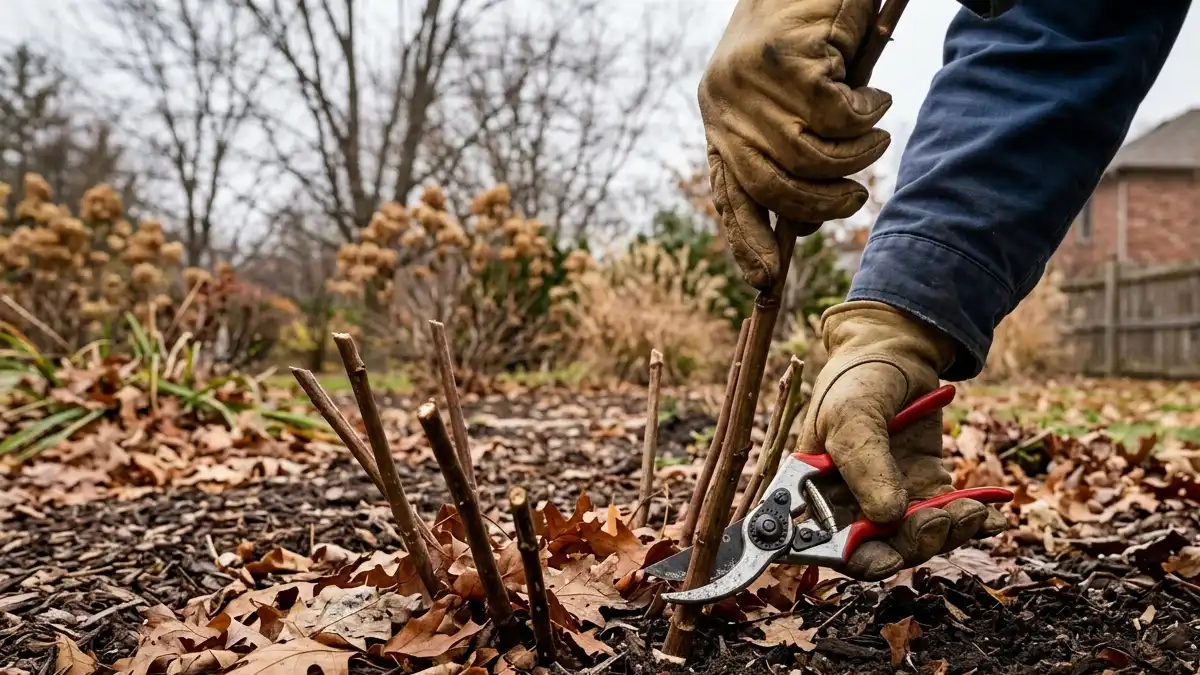
Cut all stems to ground level – about 1–2 inches above the soil surface.
STEP-BY-STEP PRUNING
- After a hard frost has killed the foliage, wait 2–3 days for stems to dry slightly.
- Use clean, sharp pruners or garden shears.
- Cut each stem down to 1–2 inches tall. Do not cut into the crown (the fleshy root mass where eyes are located).
- Remove every piece of cut stem and leaf from the area.
What about tree peonies? Tree peonies have woody stems that remain year‑round. They require only light pruning (deadheading and shaping). This article focuses on herbaceous peonies. For tree peony care, watch for a future guide.
Do not leave stubs taller than 2 inches. Long stubs can rot over winter and invite disease into the crown.
What Tools Work Best for Clean Cuts
| Tool | Best For | Notes |
|---|---|---|
| Bypass pruners (hand shears) | Stems up to ½ inch thick | Sharp, clean cuts. Ideal for most peonies. |
| Hedge shears | Large clumps of many stems | Quick, but less precise. Wipe blades between plants. |
| Loppers | Thick, woody stems (rare for herbaceous) | Not usually needed. |
| Garden knife or saw | Not recommended | Too aggressive for peonies. |
Tool hygiene: Disinfect blades with rubbing alcohol or a 10% bleach solution before cutting. This prevents spreading diseases from one plant to another. Wipe again after finishing.
Should You Remove Dead Leaves and Debris?
Yes – and this is critical. Do not just cut the stems and leave the debris on the ground.
Why removal matters: Peony leaves often carry fungal spores (botrytis, leaf blotch, phyllosticta). If you leave them around the plant over winter, those spores will infect new spring growth. This leads to black spots, bud rot, and weak plants.
How to remove:
- Rake up every fallen leaf and cut stem.
- Place everything in a trash bag – never in your compost pile (home compost does not get hot enough to kill fungal spores).
- Dispose of the bag with yard waste or trash.
Do not: Leave a thick layer of mulch or leaves on top of the crown. That traps moisture and can cause crown rot. A light layer of clean mulch (1–2 inches) is fine in very cold climates.
Common Pruning Mistakes Beginners Make
| Mistake | Why It Hurts | Fix |
|---|---|---|
| Cutting back in summer | Removes energy source, reduces next year’s blooms | Wait until after hard frost. |
| Leaving 6–8 inch stubs | Stubs rot and spread disease to crown | Cut to 1–2 inches. |
| Composting diseased leaves | Fungal spores survive and reinfect garden | Trash all foliage. |
| Cutting back before leaves have yellowed | Premature removal of carbohydrate production | Be patient – let frost do the work. |
| Using dull or dirty tools | Ragged cuts invite disease; spreads infection | Sharpen and disinfect pruners. |
What Happens if You Never Cut Back Peonies?
If you skip fall cleanup entirely, several problems arise:
- Disease buildup: Old leaves rot over winter, continuously releasing fungal spores. By spring, new shoots emerge already infected.
- Weaker blooms: The plant spends energy trying to grow through decaying debris instead of putting energy into flowers.
- Pest habitat: Rodents and insects shelter in old foliage.
- Messy appearance: Dead, flattened stems look unsightly through winter and early spring.
Will the peony die if you never cut it back? Probably not. Peonies are resilient. But you will see a steady decline in bloom quality and an increase in leaf spots and bud rot. Fall cleanup is one of the highest‑return tasks for peony health.
Quick Fall Cleanup Checklist
Use this checklist each autumn:
- ✅ Wait for first hard frost (leaves blackened or fully brown).
- ✅ Cut all stems to 1–2 inches above ground.
- ✅ Remove every stem and leaf from the garden bed.
- ✅ Trash the debris – do not compost.
- ✅ Disinfect pruning tools before and after.
- ✅ Optional: Apply a thin layer (1 inch) of clean mulch in very cold climates (Zones 3–4). Do not mulch in warm, wet climates.
- ✅ Do not fertilize after cutting back. Fall fertilization encourages tender growth that winter will kill.
Peony Pruning FAQs
Can I cut back peonies in the summer?
No. Cutting back peonies in the summer removes green foliage while it is still actively photosynthesizing. This starves the root system and results in fewer or weaker blooms the following spring.
Should I compost the old peony stems and leaves?
It is highly discouraged. Peony foliage frequently carries hidden fungal spores (like botrytis). Because home compost bins rarely get hot enough to destroy these pathogens, composting them can redistribute diseases back into your garden. Always discard them in the trash.
What happens if I forget to cut back my peonies in the fall?
While your peonies will likely survive, the decaying winter debris creates a perfect breeding ground for fungal spores and pests. Come spring, new shoots will have to struggle through rotten mush and are much more likely to suffer from severe leaf spot and bud blight.
Now that you know how to cut back properly, learn what to do with your peony right after flowering ends. Read our guide: [What to Do With a Peony Bush After Flowering Ends](internal link – Article 2 of this cluster). For more seasonal care, explore early‑blooming peonies for Massachusetts and late‑blooming varieties.