
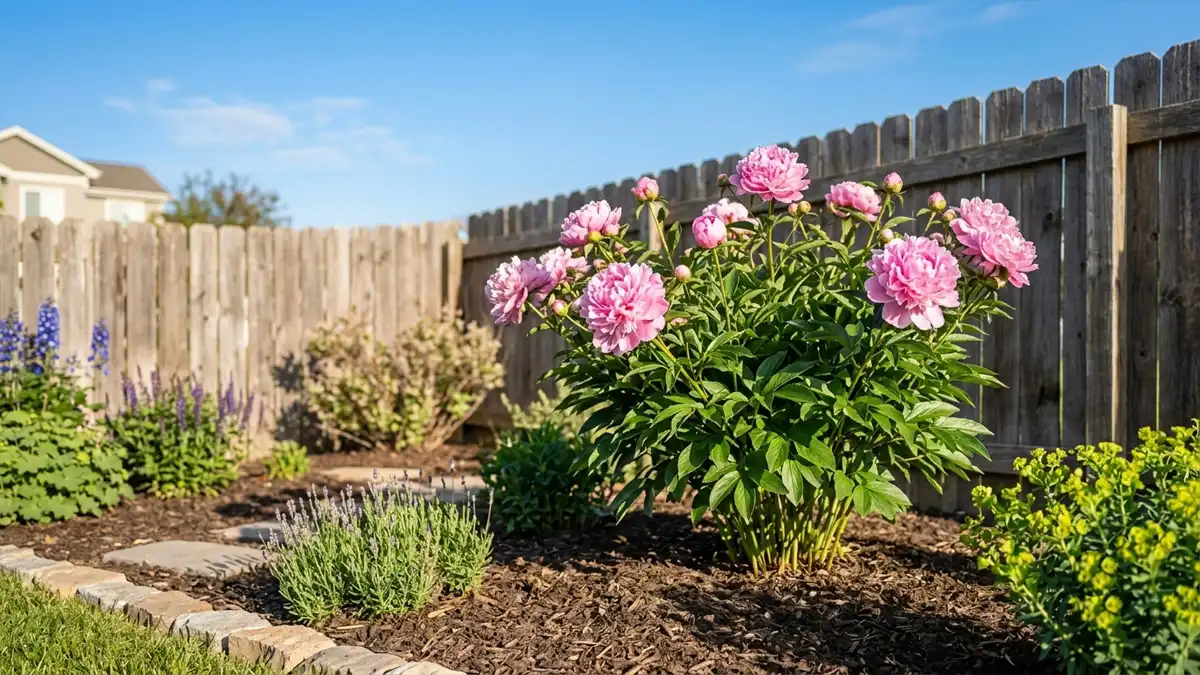
You can fertilize perfectly, water correctly, and prune on schedule – but if your peony is planted in the wrong spot, it will never reach its full potential. Peonies are famously long‑lived, but they are also famously unforgiving of poor placement. Unlike annuals you can move every year, a peony may stay in the same location for decades. Get it right once, and you are rewarded for a lifetime. Get it wrong, and you will spend years wondering why your blooms are sparse or nonexistent.
This guide walks you through every factor that matters: sunlight, airflow, drainage, spacing, and proximity to walls or trees. By the end, you will know exactly where to dig that hole – whether you are planting a new peony or considering moving an unhappy one.
Why Placement Matters More Than Fertilizer
Most gardening advice focuses on what you add to the soil. But with peonies, location is the foundation. A peony in a bad spot will struggle no matter how much compost or bone meal you give it.
The reality: Peonies hate being moved. Once established, they develop deep, extensive root systems. Transplanting a mature peony sets it back two to three years in bloom production. So choosing the right spot from the start is not just convenient – it is essential.
WHAT A GOOD LOCATION PROVIDES
- ✓ Enough sunlight to trigger flower bud formation.
- ✓ Air movement that dries leaves and prevents fungal disease.
- ✓ Soil that never stays soggy after rain.
- ✓ Room to grow without being crowded by neighbors.
So choosing the right spot from the start is not just convenient – it is essential.
You May Also Like
California: Types of Peonies Suitable for Its Climate
🌸 Quick Answer: Where is the best place to plant a peony bush?
Choose a spot with at least 6 hours of direct sun (morning sun preferred), well‑drained soil that never stays soggy, good airflow, and 3–4 feet of space from other plants. Avoid low, wet areas, south walls in hot climates, and competition from tree roots.
How Much Sun Does a Peony Bush Need?
Peonies are sun worshippers. They need at least 6 hours of direct sunlight per day to bloom well. This is non‑negotiable.
Why sun matters: Sunlight drives photosynthesis, which produces the carbohydrates stored in peony roots. Those stored carbs fuel next year’s flower buds. Less sun means less energy – and fewer blooms.
What counts as “direct sun”: Unfiltered sunlight. Sunlight that passes through tree leaves or a porch roof does not count. A spot that gets 4 hours of morning sun and 2 hours of filtered afternoon light may still be insufficient.
If you have less than 6 hours: You will see leafy growth but few, if any, flowers. The plant may also develop weak, floppy stems and be more prone to disease.
Morning Sun vs Afternoon Sun – Why It Matters
Not all sunlight is equal. Morning sun is more valuable for peonies than afternoon sun – even if the total hours are the same.
Why morning sun is better:
- Morning light dries dew and rain quickly, reducing the time leaves stay wet. This dramatically lowers the risk of fungal diseases like botrytis and leaf blotch.
- Morning sun is less intense, allowing gentle photosynthesis without heat stress.
- Afternoon sun (especially in hot climates) can cause leaf scorch and wilting.
The ideal setup: An east‑facing location that receives sun from sunrise until early afternoon, then light shade or filtered light during the hottest part of the day.
In hot climates (Zones 7–8): Morning sun with afternoon shade is actually better than full all‑day sun. The plant gets enough light for blooming but avoids heat stress.
In cool climates (Zones 3–5): Full all‑day sun is ideal. Afternoon shade is not necessary and may reduce bloom count.
Avoiding Wet or Soggy Areas
Peonies hate wet feet. In fact, poor drainage kills more peonies than cold winters. Standing water around the crown for even a few days can cause root rot and crown rot, which are almost always fatal.
Signs of poor drainage:
- Water pools on the soil surface for hours after rain.
- The ground feels spongy or squishy when you walk on it.
- Moss or algae grow on the soil surface.
- You have lost other perennials to root rot.
What to do:
- Plant peonies on a slight slope or in a raised bed if your soil is heavy clay.
- Amend clay soil with compost, coarse sand, or gravel before planting.
- Never plant peonies in low spots (bottom of a hill, near downspouts, or where water naturally collects).
The test: Dig a hole 12 inches deep and fill it with water. If the water has not drained completely after 4–6 hours, choose a different spot or build a raised bed.
Why Good Airflow Helps Prevent Disease
Peonies need breathing room. Good air circulation keeps leaves dry and reduces fungal spore buildup.
Why airflow matters: Fungal diseases like botrytis and leaf blotch thrive in still, humid air. When peonies are crowded against walls, fences, or other plants, moisture lingers on leaves, and spores land easily.
How to ensure good airflow:
- Space peonies 3–4 feet apart (center to center).
- Do not plant peonies directly against a solid fence or wall. Leave at least 2 feet of open space on all sides.
- Prune back neighboring shrubs or perennials that crowd the peony.
In humid climates (Southeast US, Gulf Coast): Increase spacing to 4 feet. Consider planting peonies in the open, away from buildings.
Can You Plant Peonies Near Walls or Fences?
Yes, but with caution. Walls and fences create microclimates – some beneficial, some harmful.
South‑facing walls (Northern Hemisphere): These absorb heat during the day and radiate it at night. In cold climates, this can protect peonies from late frosts. But in warm climates, south‑facing walls can overheat the plant, causing stress and reducing winter chill.
North‑facing walls: These stay cooler and shadier. In hot climates, north‑facing walls provide afternoon shade. In cold climates, they may delay spring emergence and reduce blooms.
General rule:
- In Zones 3–5 – south‑facing wall is fine (extra warmth helps).
- In Zones 6–8 – east‑facing or north‑facing wall is better (avoids afternoon heat).
- Never plant peonies directly under an overhang (dry soil, poor airflow).
Minimum distance: At least 2 feet from the wall or fence to allow airflow.
Front Yard vs Backyard Placement
This is as much about aesthetics and practicality as plant health.
UPSIDES
- ✓ High visibility to neighbors adds significant curb appeal.
- ✓ Easy to admire and enjoy on a regular basis.
DOWNSIDES
- ✕ Higher risk of damage from foot traffic, pets, or deliveries.
- ✕ Can suffer from reflected heat off driveways or sidewalks.
Practical recommendation: Plant peonies where you will see them daily – whether that is the front or back. Peonies need regular monitoring for disease and support. Out of sight often means out of mind.
You May Also Like
Transform Your Garden with Art and Decor
How Much Space Does a Peony Bush Need?
Peonies grow into substantial plants – 3 to 4 feet wide and tall. They need room to spread without rubbing against neighbors.
Spacing guidelines:
- Between peony bushes: 3–4 feet (center to center).
- From walls or fences: 2 feet minimum.
- From trees or large shrubs: 6–8 feet (roots compete for water and nutrients).
- From walkways or driveways: 2 feet (to avoid being brushed by passersby).
If you plant too close: Overcrowded peonies produce fewer blooms, have more disease problems, and are harder to support. You will also struggle to access them for pruning and cleanup.
Best Companion Plants Nearby
Peonies are not aggressive, and they tolerate some neighbors. The right companions can enhance the garden while keeping peonies healthy.
Good companions (same sun/water needs):
- Low‑growing perennials: Catmint (Nepeta), salvia, geraniums – these fill space without shading peonies.
- Spring bulbs: Daffodils, tulips, and alliums bloom before peonies leaf out fully. Their foliage dies back as peonies take over.
- Ornamental grasses: Planted at a distance (3+ feet), they add texture without crowding.
Bad companions:
- Large shrubs or trees – they shade and compete for water.
- Aggressive spreaders – mint, bishop’s weed, or bamboo will overtake peony roots.
- Plants that need constant watering – peonies dislike soggy soil.
You May Also Like
Transform Your Outdoor Space with Landscape Planning
Common Planting Location Mistakes
Avoid these errors that gardeners make year after year:
| Mistake | Consequence | Fix |
|---|---|---|
| Planting too close to a tree | Roots compete; shade kills blooms | Move peony at least 8 feet from tree trunk. |
| Choosing a low, wet spot | Root rot, crown rot, plant death | Plant in raised bed or improve drainage. |
| Planting against a south wall in hot climate | Heat stress, reduced winter chill | Move to east or north side. |
| Ignoring future growth (planting 1 foot apart) | Overcrowding, disease, poor blooms | Space 3–4 feet from day one. |
| Planting under a roof overhang | Dry soil, poor airflow, no rain | Move to open area. |
| Planting where dogs or kids run | Broken stems, damaged crown | Fence off or choose a different spot. |
The #1 mistake: Planting peonies where they look good today without considering sunlight and drainage. Prioritize plant health over immediate aesthetics.
Peony Placement FAQs
Can peonies grow in full shade?
No. Peonies are sun-loving perennials that require a minimum of 6 hours of unfiltered, direct sunlight daily to build up enough energy for blooming. Shady spots will yield lush green leaves but zero flowers.
How close can I plant a peony bush to my house or fence?
You should leave at least 2 feet of space between the center of your peony plant and any solid barrier. This preserves essential airflow around the foliage, which keeps leaves dry and helps avoid devastating fungal outbreaks.
What happens if I plant a peony in a low spot where water collects?
Peonies are highly vulnerable to root rot and crown rot caused by soggy ground. If left in standing water for even a few days, the tuberous root systems will rot away, which is almost always fatal to the plant.
Now that you know where to plant, learn how to get your peony into the ground correctly. Read our guide: [When to Plant a Peony Bush (Fall vs Spring)](internal link – will be in another cluster). For region‑specific advice, explore peonies in Arizona and peonies in California.