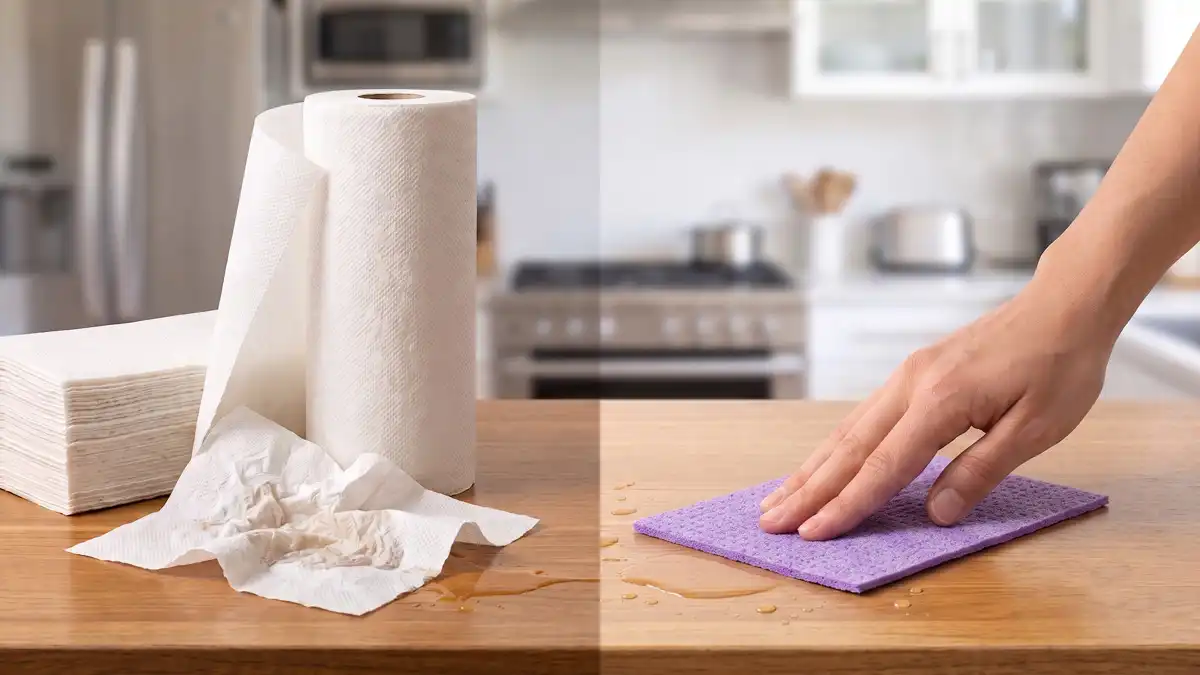
For decades, paper towels have been the go-to choice for wiping spills, drying hands, and cleaning kitchen counters. In recent years, however, Swedish dishcloths have become a popular reusable alternative. At first glance, they may look like ordinary sponge cloths, but they’re designed to replace hundreds of disposable paper towels over their lifetime.
So, should you switch completely, or is there still a place for paper towels in the kitchen? The answer depends less on which product is “better” and more on how you actually clean your home.
Quick Comparison
| Feature | Paper Towels | Swedish Dishcloths |
|---|---|---|
| Initial Cost | ✅ Lower | ❌ Higher |
| Long-Term Value | ⭐⭐⭐ | ⭐⭐⭐⭐⭐ |
| Reusable | ❌ No | ✅ Yes |
| Absorbency | ⭐⭐⭐⭐ | ⭐⭐⭐⭐⭐ |
| Dries Quickly | ⭐⭐⭐ | ⭐⭐⭐⭐⭐ |
| Heavy Grease Cleanup | ✅ Excellent | ⚠️ Better after washing |
| Everyday Counter Cleaning | ⭐⭐⭐⭐ | ⭐⭐⭐⭐⭐ |
| Glass & Mirrors | ⭐⭐⭐ | ⭐⭐⭐⭐⭐ |
| Waste Generated | ❌ High | ✅ Low |
| Machine Washable | ❌ No | ✅ Yes |
UPSIDES
- ✓ Zero maintenance—simply tear, wipe, and toss away immediately.
- ✓ Maximum hygiene for raw meat prep, greasy pans, and heavy oil spills.
DOWNSIDES
- ✕ Ongoing replacement costs that constantly add to your grocery bill.
- ✕ Creates significantly more recurring household waste over time.
Paper Towels: Fast, Convenient, and Disposable

Paper towels remain one of the easiest cleaning products to use because there’s no maintenance involved. Tear off a sheet, clean the mess, and throw it away. That convenience makes them especially useful for greasy stovetops, oil splatters, raw meat preparation, pet accidents, and other situations where you don’t want to reuse the cleaning material.
They’re also handy for quick spills when you don’t have time to rinse or wash a cloth afterward.
The downside is cost over time. Even though a pack may seem inexpensive, households that use paper towels throughout the day often go through rolls surprisingly quickly, especially in busy kitchens.
Pros
- Convenient for one-time cleanup
- Excellent for grease and oily spills
- No washing or maintenance required
- Hygienic for messy kitchen tasks
Cons
- Disposable after use
- Ongoing replacement cost
- Creates more household waste
About: Paper Towels
Key Takeaways: When to Use Paper Towels
- Essential for greasy cookware, oil splatters, and cooking residue that would stain a cloth.
- The most hygienic choice for handling raw poultry or meat juices to prevent cross-contamination.
- Ideal for immediate chemical cleanups or messy pet accidents where simple disposal is preferred.
Swedish Dishcloths: A Reusable Alternative

Swedish dishcloths are made from highly absorbent cellulose-based material and are designed to replace disposable paper towels for many everyday cleaning tasks. They can absorb several times their own weight in liquid, making them effective for wiping countertops, cleaning sinks, drying dishes, and handling everyday spills.
Unlike paper towels, they are meant to be rinsed, machine washed, and used repeatedly over several weeks. Because they dry quickly after use, they’re less likely to remain damp for long periods when cared for properly.
Another advantage is versatility. A single cloth can be used on kitchen counters, stainless steel appliances, glass, windows, tile, wood, furniture, and many other household surfaces without leaving noticeable lint behind. Many households also use different colored cloths for different rooms to avoid cross-contamination.
Pros
- Reusable for weeks
- Highly absorbent
- Quick drying
- Suitable for many household surfaces
- Produces less waste than disposable towels
Cons
- Higher upfront cost
- Requires regular washing
- Not ideal for every disposable cleanup task
About the Product: Swedish Dishcloths – Absorbent Sponge Dish Cloth
Why Swedish Dishcloths Rule Daily Wiping
- ✓ Lint-free performance makes them superior for cleaning glass, mirrors, and steel appliances.
- ✓ Hyper-fast air drying speeds prevent the material from souring or trapping bad odors.
- ✓ Easy to implement room-by-room color coding to strictly prevent common household cross-contamination.
Which Cleans Better?
For everyday kitchen cleaning, Swedish dishcloths often have the advantage. They absorb large amounts of liquid, dry quickly between uses, and can be reused many times before needing replacement.
Paper towels perform better when the mess should be thrown away immediately. Cleaning grease from frying pans, wiping up cooking oil, handling raw meat juices, or dealing with unpleasant spills are situations where a disposable towel remains the more practical option.
Instead of replacing one another completely, each product performs best in different situations.
Which Saves More $ Money?
Paper towels usually cost less at the time of purchase, but they continue adding to grocery expenses because every roll eventually needs replacing.
Swedish dishcloths require a larger upfront investment, yet one cloth can replace many rolls of disposable paper towels when used for everyday wiping and cleaning. Over time, households that rely heavily on reusable cloths may spend less on disposable cleaning supplies.
Which One Should You Choose?
Choose paper towels if most of your cleaning involves greasy cookware, food preparation, pet accidents, or situations where throwing the towel away is the most hygienic option.
Choose Swedish dishcloths if you want a reusable cleaning cloth for countertops, tables, dishes, appliances, windows, and other everyday household surfaces while reducing the number of disposable paper towels you use.
For many homes, the most practical approach isn’t choosing one over the other. Keeping both available allows each product to be used where it performs best—paper towels for disposable cleanup and Swedish dishcloths for routine daily cleaning.
FAQs
How many paper towel rolls can one Swedish dishcloth actually replace?
Due to their durable cellulose-based material, a single high-quality Swedish dishcloth can be washed and reused repeatedly, effectively replacing up to 15 to 17 standard paper towel rolls over its useful lifetime.
How do you sanitize and clean a Swedish dishcloth?
They are completely machine washable! You can toss them into your standard washing machine laundry cycle, place them on the top rack of your dishwasher, or even microwave them while damp for one minute to sanitize them quickly. Always let them air dry instead of using a heated clothes dryer.
Can you use chemical cleaners or bleach with Swedish dishcloths?
Yes. They are incredibly tough and can be safely paired with standard countertop sprays, dish soap, and even mild bleach solutions without breaking down the cellular structure of the cloth.
Final Verdict
Paper towels and Swedish dishcloths solve different cleaning problems. One offers convenience through disposal, while the other focuses on reuse and long-term value.
If your goal is quick cleanup with no maintenance, paper towels remain difficult to beat. If you’re looking to reduce waste and cut down on repeated paper towel purchases, Swedish dishcloths are a practical addition to most kitchens.
Rather than replacing paper towels entirely, many households may find that using reusable dishcloths for everyday cleaning while reserving paper towels for messy or hygienic tasks provides the best balance of convenience, performance, and long-term value.
For more tips on keeping your kitchen and home spotless, check out our guides on how to clean kitchen cabinets properly and what professionals use to clean window glass. And if you are washing your dishcloths frequently, you might also find our article on the best laundry booster for hard water and towels incredibly useful.
Affiliate Disclaimer: This article contains affiliate links. As an Amazon Associate, We may earn a commission if you make a purchase through these links, at no additional cost to you. We only recommend products we believe in and that add value to our readers.