Why Towels Become Stiff and Crunchy After Washing
KEY TAKEAWAYS: LAUNDRY STIFFNESS
- Hard water minerals bond with fibers, creating a rough, scratchy texture.
- Excessive detergent and fabric softeners leave a sticky, non-absorbent layer.
- Over-drying at high temperatures bakes existing chemical residue directly into cotton.
Freshly washed towels should not feel stiff or scratchy. The cause is rarely a single issue. Most often, stiffness comes from mineral deposits, leftover detergent, or both. Understanding which problem affects your towels makes the difference between soft and scratchy.
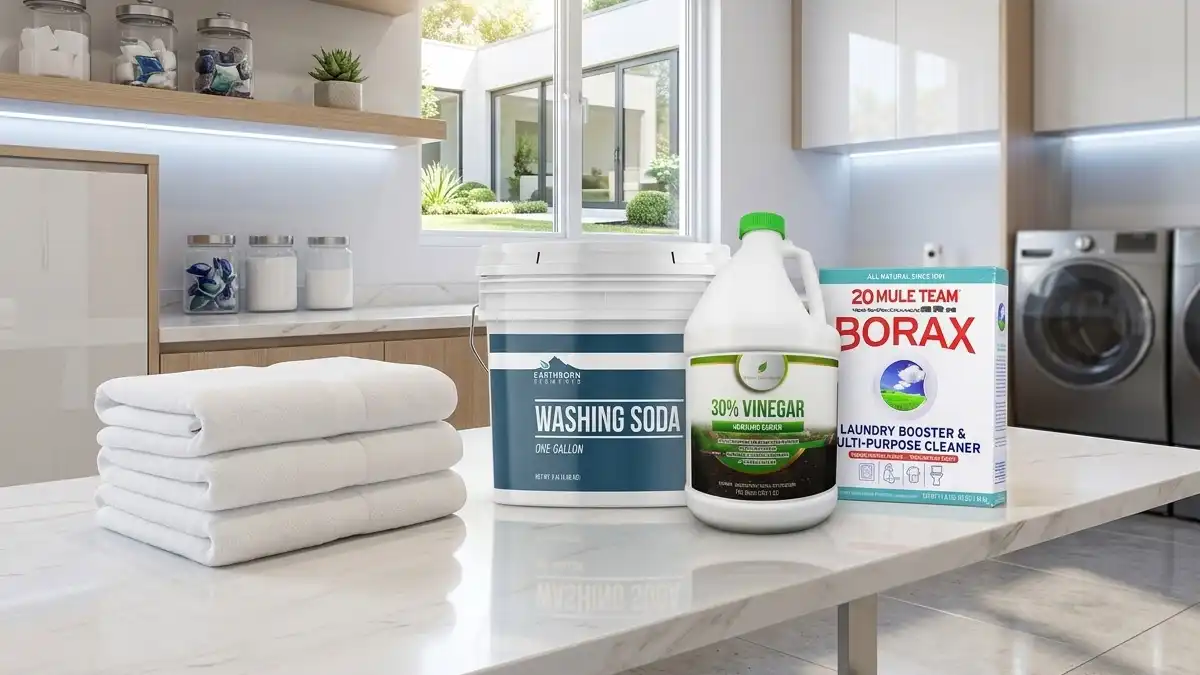
Borax vs Washing Soda vs Vinegar: What Each One Actually Does
| Product | Primary Action | Best For |
|---|---|---|
| Borax | Water softener + odor reducer | Hard water homes, musty towels |
| Washing Soda | Grease cutter + residue remover | Kitchen towels, gym towels, heavy use |
| White Vinegar | Detergent residue breaker + natural rinse aid | Buildup removal, general softening |
Borax
- Helps soften hard water
- Reduces odor buildup
- Helps detergent work better
Washing Soda
- Cuts grease and residue
- Stronger cleaning boost
- Useful for heavily used towels
White Vinegar
- Helps break detergent residue
- May soften fabric naturally
- Commonly used in rinse cycles
Vinegar helps with residue buildup, but it cannot fully soften hard water by itself.
Which One Helps Towels Feel Softer?
UPSIDES
- ✓ Borax: Neutralizes calcium & magnesium before scale bonds with towel loops.
- ✓ White Vinegar: Naturally breaks down crusty soap film during rinse cycles.
- ✓ Washing Soda: High alkalinity easily strips stubborn grease and heavy body oils.
DOWNSIDES
- ✕ Borax: Does not actively break down older, dried-on detergent layers.
- ✕ White Vinegar: Cannot physically soften extreme hard water mineral content on its own.
- ✕ Washing Soda: Overuse can be harsh on delicate cotton blends over time.
For Hard Water Homes
Best: Borax
Minerals in hard water bond with detergent and leave a rough coating on fibers. Borax neutralizes those minerals before they attach to fabric. A standard dosage is ¼ to ½ cup per load — more does not improve softness.
For Towels That Smell Musty
Best: Vinegar
Musty odors usually mean detergent or body oil buildup. Vinegar breaks down that residue during the rinse cycle. Add ½ cup of white vinegar to the fabric softener dispenser, not directly onto dry towels.
For Kitchen or Gym Towels
Best: Washing Soda
Grease, sweat, and heavy soil require more than mild softening. Washing soda cuts through oils and lifts trapped residue. Use ¼ cup with regular detergent for a standard load. For extremely dirty towels, increase to ½ cup.
For Older Towels That Feel Rough
Combination approach works better
Towels that have been washed for years accumulate multiple layers of mineral scale and detergent film. A single product rarely restores softness. Try this sequence: wash with ¼ cup Borax for one cycle, then rewash with ½ cup vinegar in the rinse on the next laundry day.
What Usually Causes Towels to Lose Softness
- Minerals stay trapped in fibers – Calcium and magnesium from hard water attach to cotton, making each strand stiff.
- Detergent coats fabric – Excess soap does not fully rinse away, leaving a sticky film.
- Fabric softener reduces absorbency – Softeners coat fibers with a waxy layer that feels smooth initially but traps oils and reduces fluffiness over time.
- Towel fibers become stiff over time – Normal wear plus buildup creates permanent roughness if not removed periodically.
Knowing the cause helps you pick the right booster. Hard water? Borax. Detergent residue? Vinegar. Heavy grease? Washing soda.
Signs Your Towels Have Buildup (Not Just Old Age)
FABRIC RESIDUE CHECKLIST
- ✓ Towels feel stiff, heavy, or cardboard-like even when completely damp
- ✓ A musty or sour smell emerges within 24 hours of drying out
- ✓ Water beads up or rolls off the fabric surface instead of soaking in quickly
- ✓ Visible white or grey powdery residue lines dark towels post-wash
If any of these signs sound familiar, a laundry booster will help more than switching towel brands.
Which Option Works Best in Different Situations?
Texas / Arizona Hard Water
Borax‑focused approach
High mineral content demands a dedicated softener. Use ½ cup Borax per load for towels. For extra buildup, run an occasional empty cycle with a washing machine cleaner to prevent scale inside the drum.
Humid States Like Florida
Vinegar for odor control
Humidity amplifies musty smells. White vinegar in the rinse cycle (½ cup) works well. Also ensure towels dry completely before folding. A guide to preventing washer odor can help if smells persist.
Homes Washing Towels Daily
Washing soda for buildup removal
Frequent washing means more detergent residue. Add ¼ cup washing soda to every third or fourth towel load to strip buildup without over‑softening.
HE Washing Machines
Use smaller amounts carefully
High‑efficiency washers use less water, so powders and vinegar need room to work. Limit total boosters to 2 tablespoons of any single product. Overloading can leave residue. For compact units, a portable washer comparison may help identify machines that handle additives better.
Can You Use Borax, Washing Soda, and Vinegar Together?
Yes, but never mix vinegar directly with washing soda or Borax in the same water. They neutralize each other.
BOOSTER DOS AND DON'TS
- Do not combine vinegar and washing soda in the exact same cycle compartment.
- Do not blend white vinegar with chlorine bleach due to harmful gas risk.
- Do add Borax or washing soda straight into the primary wash cycles.
- Do distribute white vinegar via your designated fabric softener rinse cup.
Better approach:
- Add Borax or washing soda to the main wash cycle.
- Add white vinegar to the rinse cycle (fabric softener dispenser).
This keeps each product doing its job without interfering.
Best Choice for Softer Towels
Quick verdict section:
- Best for hard water → Borax
- Best for detergent buildup → Vinegar
- Best for greasy/heavy towels → Washing Soda
- Best overall strategy → rotate based on towel problem
Most households will see the biggest improvement by first removing existing buildup (try vinegar for two washes) and then preventing new buildup with Borax if hard water is present.
Final Thoughts
Softer towels usually come from removing buildup rather than adding more fragrance or fabric softener. The best option depends on whether your towels are dealing with hard water, trapped odor, or detergent residue. For mineral‑heavy homes, Borax makes the most consistent difference. For musty smells, vinegar is the simpler fix. For grease and daily heavy use, washing soda belongs in the routine.
Towel Softness & Buildup FAQs
Will commercial fabric softeners fix crunchy towels?
No, it will make it worse. Fabric softeners lay down a oily, chemical coat over the fibers which reduces water absorption over time and locks existing minerals in.
Can I use Borax and vinegar during the exact same laundry load?
Yes, but only if they are separate. Put Borax in the main powder tub for the hot wash cycle, and put vinegar into the fabric softener compartment to drop during the rinse cycle.
How often should I strip laundry buildup from towels?
If you live in a high-mineral or hard water zone, using vinegar as a rinse aid once every 3 to 4 weeks keeps fibers light, springy, and absorbent.