At first glance, garden seating seems like a practical decision.
A bench beside a flower bed.
A table on the patio.
A couple of chairs beneath a pergola.
Simple enough.
But spend time in a memorable garden, and you’ll notice something else.
The places people remember are rarely the flower beds or the pathways alone.
They’re the places where they stopped.
Where they had coffee on a cool morning.
Where they watched the rain.
Where conversations stretched long after sunset.
A seat, after all, doesn’t just fill a space.
It gives the garden a reason to be experienced.
The most inviting seating areas rarely sit in the center of everything.
Instead, they feel discovered.
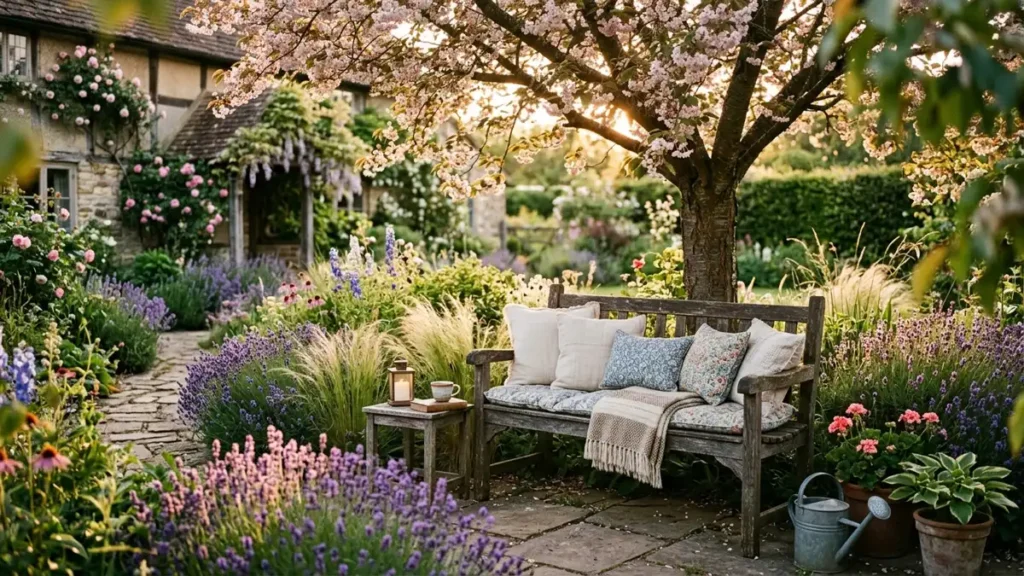
Tucked beneath a tree.
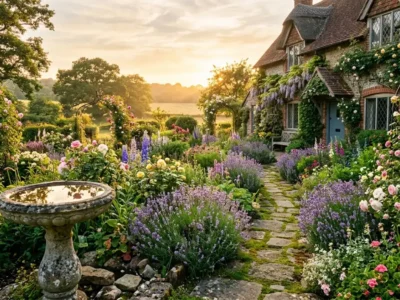
Positioned beside a small fountain.
Half-hidden by tall grasses or climbing roses.
The placement matters as much as the furniture itself.
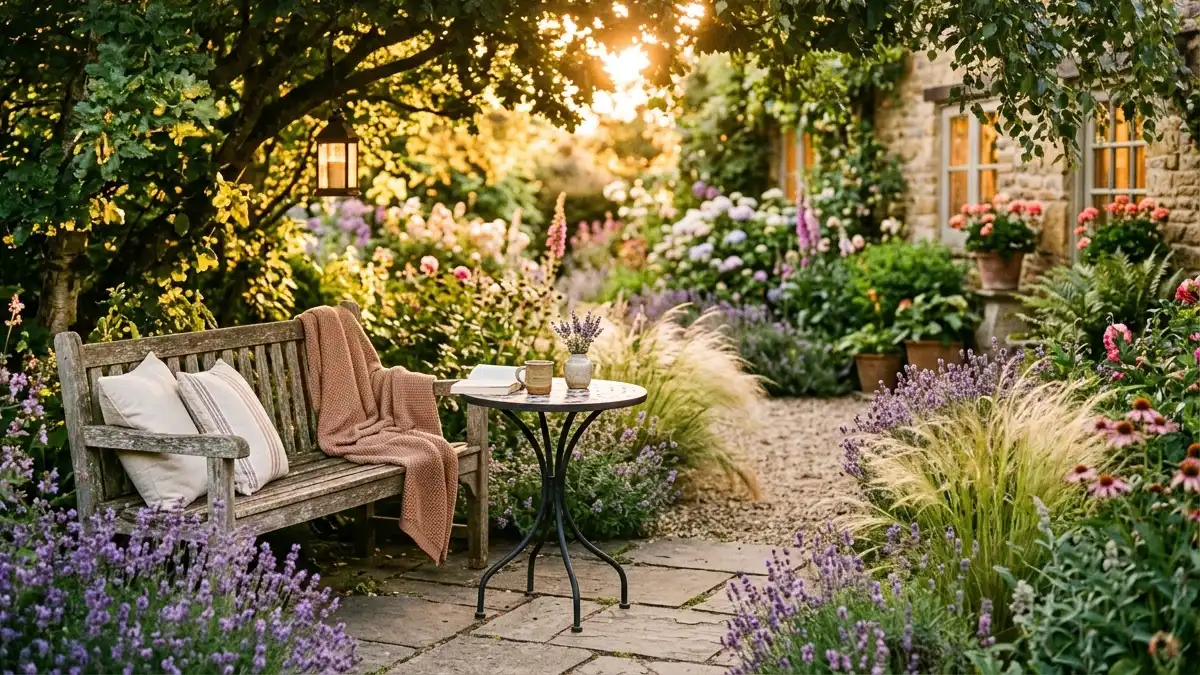
A wooden bench facing a flower border feels contemplative.
A pair of chairs angled toward the sunset encourages conversation.
A bistro table near herbs and lavender transforms an ordinary corner into a morning ritual.
The goal isn’t to create somewhere to sit.
It’s to create somewhere people naturally want to stay.
Some gardens call for something more social.
An outdoor dining table beneath string lights.
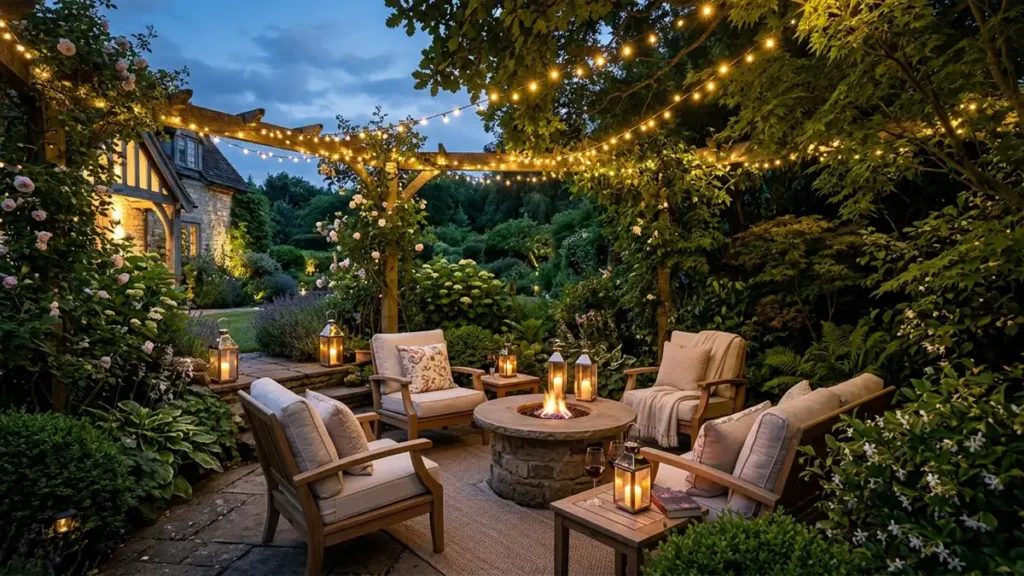
A collection of woven chairs arranged around a fire pit.
A pergola draped with climbing vines where family dinners quietly turn into late evenings.
In these spaces, seating becomes architecture.
It defines how people gather.
How they move.
How the garden is used.
And surprisingly, the furniture doesn’t need to be grand.
Natural wood, woven textures, and soft cushions in earthy tones — materials that age gracefully often feel most at home outdoors, becoming more beautiful with every season.
Small gardens approach seating differently.
Space is precious.
Every piece has to justify itself.
A compact bistro set beside potted plants can create an outdoor room where none existed before. Foldable chairs disappear when needed. Built-in benches provide seating without overwhelming the space.
The cleverest solutions often feel the simplest.
Furniture that adapts.
Pieces that feel light.
Designs that invite flexibility rather than demand permanence.
Because small gardens rarely succeed by adding more.
They succeed by making every element feel intentional.
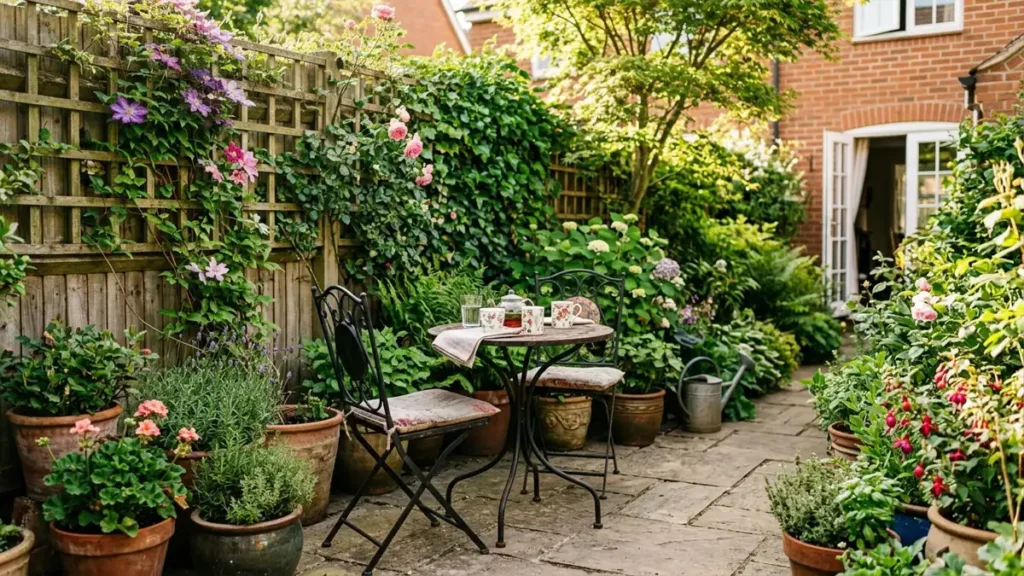
Seating also changes with the seasons.
In spring, chairs migrate toward blooming flowers.
During summer, shaded corners become prized destinations.
Autumn invites blankets and warm drinks outdoors, while winter transforms even the simplest bench into something quietly beautiful beneath frost or fallen leaves.
The garden remains the same.
Yet the experience shifts.
And seating becomes part of that rhythm.
A place that adapts alongside the landscape.
Of course, not every garden needs tables or dining spaces.
Sometimes a single chair is enough.
Placed carefully, it can become the focal point of an entire garden.
Not because it’s dramatic.
But because it suggests something.
A moment of solitude.
A quiet conversation.
An invitation to pause.
These are the details that make gardens feel personal.
Not overly designed.
Simply lived in.
As evening arrives, seating begins to take on a different character.
Lanterns glow softly nearby.
Fairy lights weave through trees overhead.
The sounds of the day fade into the background.
Suddenly, the garden isn’t simply an outdoor space.
It becomes a retreat.
A place where comfort matters as much as beauty.
Where furniture isn’t there to impress anyone.
It’s there to support life’s quieter moments.
Perhaps that’s why garden seating is about more than furniture.
It’s about creating pauses.
Places where mornings begin slowly.
Where afternoons stretch a little longer.
Where the beauty of a garden can actually be experienced rather than admired from a distance.
Because the most memorable gardens aren’t always the ones with the rarest plants or the grandest designs.
They’re the ones that invite you to sit down.
Stay awhile.
And forget, if only for a moment, what time it is.