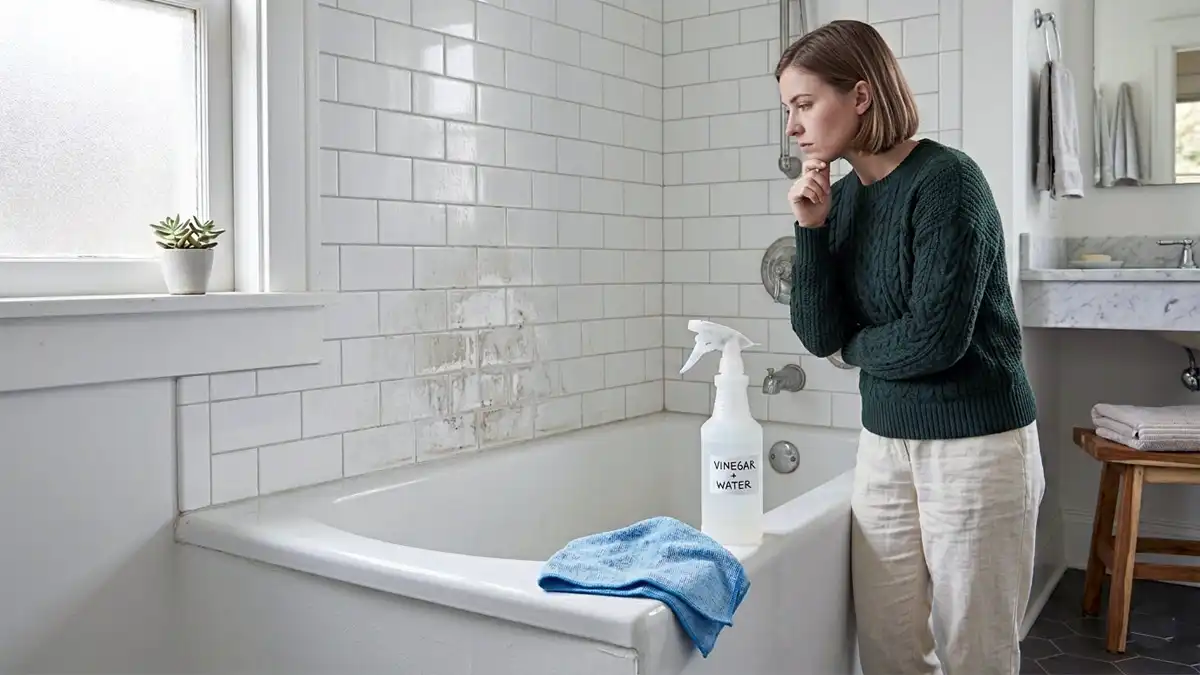
A shower that looks clean after scrubbing but turns cloudy again within days is frustrating. Whether you are trying to figure out how to clean shower tiles, how to clean tiles and grout, or even how can I clean bathroom tiles without damaging the surface, the real problem is usually buildup — not the tile itself.
In most bathrooms, layers of hard water minerals, soap scum, shampoo residue, and trapped moisture slowly coat the surface again after cleaning. Understanding what is actually causing the residue is the key to cleaning shower tiles properly without damaging grout, dulling natural stone, or making buildup worse over time.
In many cases, scrubbing harder is not the solution — using the wrong cleaner is the real problem.
Fast Tracks: How to Clean Shower Tiles Without Scrubbing
- Let the Cleaner Do the Work: Increasing your cleaner’s dwell time (10–15 minutes) breaks down bonds chemically, eliminating the need for aggressive scrubbing.
- Leverage Steam: Handheld steam cleaners use thermal pressure to melt away soap scum and lift hard water spots completely friction-free.
- Squeegee Daily: Spending 30 seconds wiping down shower walls after your last rinse removes 90% of mineral deposits before they can bond to the surface.
Why Shower Tiles Start Looking Dirty So Fast
- Hard water minerals
- Soap scum buildup
- Humidity and poor ventilation
- Shampoo/body wash residue
- Mold inside grout lines
What Type of Shower Tile Are You Cleaning?
Cleaning methods that work on ceramic can permanently damage natural stone. Identifying your tile type is the first step.
Ceramic & Porcelain
- Highly Resilient: Non-porous surfaces that naturally resist deep chemical staining.
- Acid-Safe: Can safely handle household vinegar, baking soda, and intensive oxygen bleaches.
Natural Stone Tiles
- Highly Porous: Acidic cleaners like vinegar will permanently etch, dull, and pit the surface.
- Requires pH-Neutral Formulas: Must only be cleaned using specialized stone cleaners or mild, diluted dish soap.
Once you identify your tile type, the next step is figuring out what kind of buildup is actually causing the cloudy or dirty appearance.
Signs Your Shower Tile Has Buildup (Not Just Dirt)
- White, chalky spots remain after drying even though you scrubbed
- A greasy or slippery film on walls that feels sticky to the touch
- Water droplets do not sheet off the tile but form separate beads
- Dark or pinkish stains appear in grout lines within days of cleaning
- A musty or sour smell lingers even after ventilation
If any of these signs appear, a simple rinse or all‑purpose cleaner will not fix the problem. The issue is chemical buildup — mineral scale, soap scum, or biofilm — and requires targeted removal.
What Causes White Film on Shower Tiles?
Hard Water Buildup
- Chalky white spots
- Cloudy appearance after drying
- Caused by calcium and magnesium in the water supply
Soap Scum
- Slippery or greasy coating
- Mixes with minerals over time to form a hard, waxy layer
- Worse with bar soap than liquid body wash
Detergent Residue
- Leftover cleaner not rinsed properly
- Can combine with minerals to create a sticky film
Knowing the difference matters. Hard water stains feel rough and powdery; soap scum feels slippery and greasy. Each requires a different cleaning approach.
Best Ways to Clean Shower Tiles
Method 1 — Vinegar for Hard Water Film
Best for: ceramic tile, light mineral buildup
- Spray diluted white vinegar (1:1 with water) directly onto dry tile.
- Let sit 5–10 minutes. For heavy buildup, repeat the process instead of leaving vinegar on the surface for extended periods.
- Scrub gently with a microfiber cloth or soft brush.
- Rinse fully with water.
- CRITICAL: Do not use vinegar on marble, travertine, or other natural stone tile. Acid permanently etches and dulls the surface.
Method 2 — Baking Soda Paste for Soap Scum
Best for: greasy buildup and shower residue
- Mix baking soda with a small amount of water to form a paste.
- Apply paste to affected areas using a damp sponge.
- Let sit 5 minutes, then scrub lightly.
- Rinse thoroughly.
- Works well on ceramic and porcelain; safe for stone if rinsed quickly.
Method 3 — Oxygen Cleaner for Deep Cleaning
Best for: grout lines, odor, deep buildup
- Mix an oxygen‑based cleaner (like OxiClean) with warm water according to package directions.
- Apply to tile and grout, allowing 10–15 minutes dwell time.
- Scrub grout carefully with a soft grout brush.
- Rinse completely.
- Oxygen cleaners are color‑safe and do not damage grout or tile.
Method 4 — Steam Cleaning
Best for: textured tile and grout cleaning
- Loosens buildup without harsh chemicals.
- Useful in humid bathrooms where mold returns quickly.
- Reduces aggressive scrubbing, preserving grout integrity.
- A handheld steam cleaner with a brush attachment works well for shower walls.
How to Clean Shower Grout Without Damaging It
Grout is porous and more fragile than tile. Aggressive cleaning can erode it, leading to water damage behind walls.
What Works Safely
- Use a soft or medium‑bristle grout brush — never metal.
- Apply a paste of baking soda and water, or an oxygen cleaner.
- Let dwell for 5–10 minutes before scrubbing gently.
- Rinse thoroughly and dry grout with a towel or squeegee.
Signs Grout Needs Sealing
- Dark patches return within days of cleaning
- Grout absorbs water instantly (drops disappear instead of beading)
- Recurring mildew spots even after scrubbing
- Grout feels powdery or crumbly to the touch
If grout shows these signs, cleaning alone is not enough. Apply a high‑quality penetrating grout sealer after deep cleaning and drying (at least 24 hours).
What Not To Do on Grout
- Do not use bleach regularly – CRITICAL: Do not rely on bleach for routine grout cleaning. Bleach weakens grout over time and often allows mold to return underneath the surface.
- Do not use metal brushes or steel wool – They scratch and remove grout material.
- Do not leave acidic cleaners (vinegar) on grout for hours – Acid slowly dissolves cement‑based grout.
- Do not assume scrubbing harder works – Gentle scrubbing with the right cleaner is more effective and safer.
Best Cleaning Method for Different Problems
| Problem | Best Method | Safe for Stone? | Notes |
|---|---|---|---|
| White hard water stains | Vinegar (ceramic only) | No | Avoid vinegar on marble/travertine |
| Black mold in corners | Oxygen cleaner + ventilation fix | Yes | Bleach is temporary; oxygen kills mold without fumes |
| Yellow or brown grout | Baking soda paste + grout brush | Yes (rinse quickly) | Often caused by old soap scum or rust |
| Slippery shower walls | Soap scum remover or degreasing cleaner | Depends on formula | Liquid body wash residue is common cause |
Common Shower Tile Cleaning Mistakes
GOOD
- ✓ DO dry the shower with a squeegee or towel to prevent immediate mold regrowth.
- ✓ DO rinse all walls completely with fresh water to remove sticky detergent residues.
BAD
- ✕ DON’T mix vinegar with bleach; this reaction creates highly toxic chlorine gas.
- ✕ DON’T use steel wool or metal brushes that permanently scratch glazed finishes and erode grout.
Switching to gentler, residue-focused cleaning methods usually keeps shower tile cleaner longer while protecting grout and natural stone from unnecessary damage.
How Often Should You Clean Shower Tiles?
Weekly Maintenance
- Quick rinse and wipe‑down with a microfiber cloth or squeegee.
- Prevents soap scum layers from forming.
- Takes less than two minutes after your last shower.
Monthly Deep Cleaning
- Scrub grout lines with a brush and oxygen cleaner.
- Remove mineral buildup using vinegar (on ceramic only).
- Inspect mold‑prone corners and address early.
Hard Water Homes
- May require more frequent descaling — every two weeks instead of monthly.
- Consider a daily shower spray formulated for mineral‑heavy water.
Best Tools for Cleaning Shower Tiles
- Microfiber cloths – Lint‑free and gentle on all tile types.
- Grout brushes – Narrow, stiff bristles designed for grout lines.
- Drill scrub brushes – Useful for textured tile, shower floors, or large bathrooms where manual scrubbing becomes tiring.
- Steam cleaners – Chemical‑free option for deep cleaning and mold removal.
- Shower squeegees – The single most effective tool for preventing buildup.
For Hard Water Homes
- Mineral‑removal sprays formulated for bathrooms.
- Daily shower cleaners (spray‑on, no‑rinse) can slow scale formation between deep cleans.
Best Cleaner for Different Tile Types
| Tile Type | Safest Cleaner | Avoid |
|---|---|---|
| Ceramic | Vinegar or oxygen cleaner | Abrasive powders |
| Porcelain | Baking soda or steam | Bleach left overnight |
| Marble | pH‑neutral stone cleaner only | Vinegar, lemon, any acid |
| Slate | Stone‑safe cleaner (mild) | Harsh alkaline detergents |
| Matte tile | Oxygen cleaner + soft brush | Wax‑based products |
This table helps you choose at a glance — no guesswork, no accidental damage.
How to Keep Shower Tiles Cleaner Longer
- Use a shower squeegee daily – Wipe walls and glass after every shower. This removes 90% of waterborne minerals before they dry.
- Improve bathroom ventilation – Run the exhaust fan during and for 20 minutes after showering. Lower humidity means less mold and mildew.
- Avoid excessive product buildup – Shampoos, conditioners, and body washes leave residue. Rinse walls briefly after use.
- Rinse walls after heavy use – A quick spray with the handheld shower head removes soap before it dries.
- Leave shower door open after bathing – Even 15–20 minutes of airflow can noticeably reduce mildew growth in humid bathrooms.
For homes with severe hard water, mineral buildup usually appears in multiple places at once — shower tile, faucets, glass doors, and even laundry. If white residue keeps returning quickly after cleaning, the water itself may be contributing to the problem. In that case, addressing the water supply (or using a targeted mineral remover) is more effective than scrubbing harder.
Frequently Asked Questions About Cleaning Tile Showers
Q1: How do you clean a tile shower without damaging the grout?
Stick to soft-bristle nylon brushes and oxygen-based cleaners. Avoid routine use of harsh chlorine bleach, which structurally weakens cement-based grout matrices over time and breaks down your water barrier.
Q2: Can vinegar safely clean all shower wall tiles?
No. While diluted white vinegar cuts through tough hard water films on ceramic and porcelain tile surfaces, it is highly destructive to stone tiles like marble, travertine, and slate.
Q3: What is the best way to clean shower tile surfaces with heavy buildup?
Apply an oxygen-based cleaner or a thick baking soda paste, allow it to sit undisturbed for 10 to 15 minutes to dissolve structural soap scum bonds, and then rinse thoroughly with a handheld shower head.
You May Also Like
How to clean washing machine inside to prevent odor transfer
Final Thoughts
Shower tiles usually become dull because of buildup layers, not because the tile itself is damaged. The best cleaning method depends on whether the problem is hard water, soap scum, mold, or grout staining. Using the wrong cleaner repeatedly can slowly damage grout, dull natural stone, or leave behind residue that attracts buildup even faster. For most bathrooms, a weekly squeegee and a monthly oxygen‑based deep clean will keep tiles looking fresh without harsh chemicals or abrasive scrubbing.