🌸 Quick Answer:
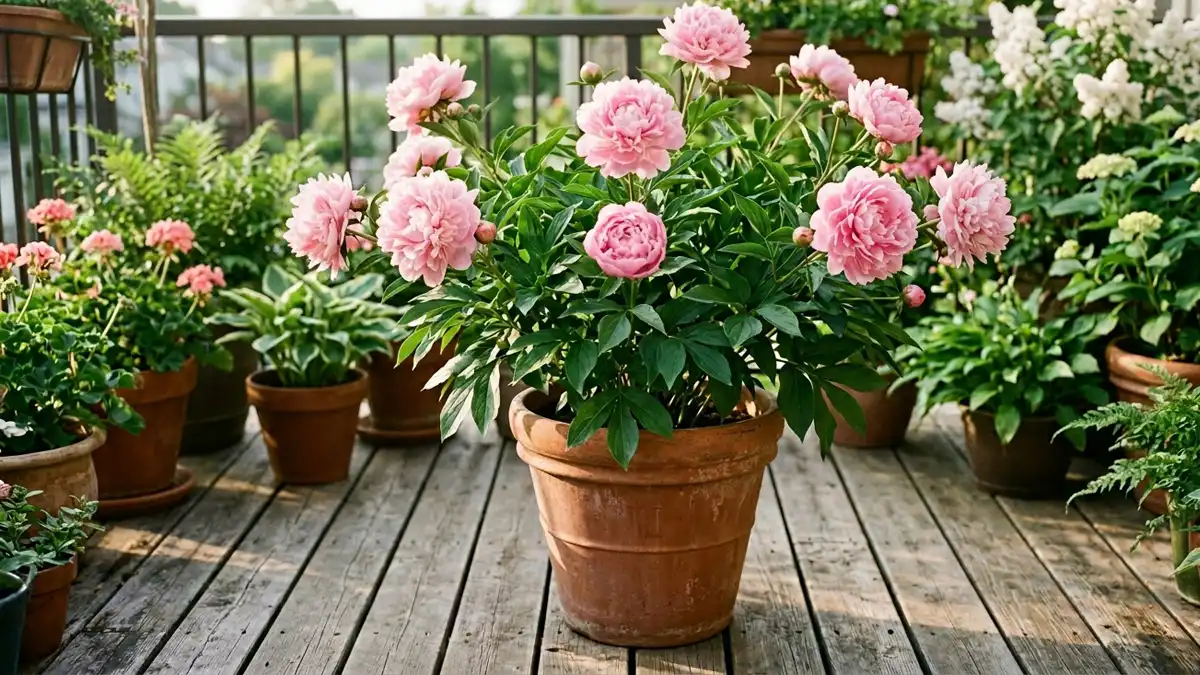
Yes, but they need a very large pot (at least 18 inches deep and wide), well‑draining soil mix, consistent watering, and special winter protection. Potted peonies bloom less heavily than in‑ground plants but can be successful with extra care. Do not grow them indoors permanently.
You live in an apartment with a sunny balcony. Or your yard soil is heavy clay that stays wet. Or you simply want to move your peonies around to follow the light. Can you grow peonies in containers?
The short answer is yes – but with important caveats. Peonies in pots are not as easy as peonies in the ground. They need more attention, larger pots, and special winter care. But for gardeners with limited space or poor soil, containers offer a practical way to enjoy these spectacular blooms.
This guide covers everything you need to know: pot size, soil mix, watering, sunlight, winter protection, and which peony types perform best in containers. If you are willing to put in a little extra effort, you can absolutely grow peonies in pots.
Are Peonies Good Container Plants?
Peonies are not ideal container plants compared to, say, geraniums or petunias. But they are possible with the right setup.
Challenges of potted peonies:
- Peonies develop deep, extensive root systems. Pots restrict root growth, which limits plant size and bloom production.
- Containers freeze and thaw faster than ground soil. This can damage roots or reduce winter chill needed for blooming.
- Potted peonies need more frequent watering and fertilizing.
- They rarely bloom as heavily as in‑ground plants.
Why grow peonies in pots anyway:
- You have no garden soil (balcony, patio, deck).
- Your yard soil is poorly drained or contaminated.
- You want to control the growing medium exactly.
- You need to move peonies to follow sunlight or protect from extreme weather.
Realistic expectation: A well‑cared‑for potted peony can produce 3–5 blooms per year after maturity. An in‑ground peony of the same age might produce 15–20. Containers are a compromise – but a worthwhile one for many gardeners.
🌱 For in‑ground planting advice, see our guide: Best Place to Plant a Peony Bush for Maximum Blooms.
Best Pot Size for a Peony Bush
Pot size is the #1 factor determining success. Too small = no blooms.
Minimum pot size: 18 inches deep AND 18 inches wide (about 15–20 gallons volume). Larger is better – 24 inches deep and wide is ideal.
Why size matters: Peony roots need room to spread and store energy for next year’s blooms. A cramped pot restricts root growth, leading to weak plants and few or no flowers.
Material options:
- Plastic or resin pots: Lightweight, retain moisture, affordable. Good for cold climates (less freeze‑thaw cracking).
- Terracotta or clay: Heavy, porous (dries out faster), attractive. May crack in freezing winters.
- Fabric grow bags: Excellent drainage and air pruning of roots. Can be moved easily. Good choice for peonies.
Do not use: Shallow pots (less than 12 inches deep), decorative containers without drainage holes, or pots narrower than 14 inches.
Choosing the Right Soil Mix
Ordinary garden soil is too heavy for containers. It compacts, drains poorly, and can rot peony roots.
Best soil mix for potted peonies:
- 50% high‑quality potting mix (not garden soil) – look for one with perlite or vermiculite.
- 30% coarse sand or fine pumice – improves drainage.
- 20% compost or well‑aged manure – provides slow‑release nutrients.
Do not use:
- Straight garden soil (compacts, poor drainage).
- Heavy clay or topsoil.
- Moisture‑control potting mixes with water‑retaining crystals (keeps roots too wet).
Drainage layer: Place a layer of gravel, broken pot pieces, or landscape fabric over the drainage holes to prevent soil from washing out while allowing water to escape.
pH: Peonies prefer slightly acidic to neutral soil (6.5–7.0). Most potting mixes are in this range.
How Often Should You Water Potted Peonies?
Container peonies dry out much faster than in‑ground plants. Consistent moisture is critical – but overwatering is still dangerous.
Watering guidelines:
- Spring (cool, rainy): Check soil every 3–4 days. Water only when top 2 inches feel dry.
- Summer (hot, dry): May need water every 1–2 days. Water deeply until it runs out the drainage holes.
- Fall: Gradually reduce watering as the plant slows growth.
- Winter (dormant, in protected storage): Water very lightly (once a month) just to prevent soil from becoming bone dry.
The finger test: Stick your finger 2–3 inches into the soil. If it feels dry, water. If it feels cool and damp, wait.
Avoid: Letting the pot sit in a saucer of water. Empty saucers 30 minutes after watering. Standing water causes root rot.
💧 For general watering principles, see our watering tips for all plant types.
Sunlight Needs for Container Peonies
Potted peonies have the same sun requirements as in‑ground peonies: at least 6 hours of direct sunlight daily.
Advantage of pots: You can move containers to follow the sun or protect from afternoon heat.
Placement tips:
- In cool climates (Zones 3–5): Place pots in full all‑day sun.
- In hot climates (Zones 7–8): Morning sun with afternoon shade is best. Move pots to an east‑facing location.
- On a balcony or patio: Ensure no overhangs or railings block sunlight for most of the day.
Warning: Dark‑colored pots absorb heat and can cook roots in direct afternoon sun. Use light‑colored pots or wrap dark pots with burlap in summer.
☀️ For more on sunlight nuance, read our guide: Do Peony Bushes Need Full Sun or Partial Shade?.
Winter Problems With Potted Peonies
Winter is the biggest challenge for container peonies. Roots in pots are exposed to air on all sides, so they freeze much faster than in‑ground roots. At the same time, peonies need winter chill to bloom.
The problem: In very cold winters (Zones 3–5), potted roots can freeze solid and die. In mild winters (Zones 7–8), pots may not get cold enough for proper vernalization.
Solutions for overwintering potted peonies:
| Method | Best For | How To |
|---|---|---|
| Bury the pot | Zones 3–6 | Dig a hole in the garden and sink the pot to its rim. Cover with soil and 2–3 inches of mulch. Mark location. |
| Unheated garage or shed | Zones 5–7 | Move pot inside before first hard freeze. Water lightly (once a month). Temperatures should stay between 25–40°F (-4 to 4°C). |
| Cold frame or insulated box | Any cold zone | Place pot in a cold frame or build an insulated box with straw bales. Cover with lid during extreme cold. |
| Leave exposed (not recommended) | Zone 8+ only | May survive but bloom poorly. Wrap pot with bubble wrap and place against a north‑facing wall. |
Do not: Bring potted peonies into a heated basement or house. They need winter chill. Temperatures above 50°F (10°C) will break dormancy too early.
Why Small Pots Cause Weak Blooms
You might be tempted to save space with a smaller pot. Resist that temptation.
What happens in a 10‑inch pot:
- Roots become root‑bound within 1–2 years.
- The plant cannot store enough energy for flowering.
- You may get leaves, but few or no blooms.
- The peony may die over winter (roots freeze more easily).
Signs your pot is too small:
- Roots growing out of drainage holes.
- Soil dries out within hours of watering.
- Plant wilts daily even with adequate water.
- No blooms after 3–4 years of maturity.
If you already have a peony in a small pot: Transplant it into a larger pot in early spring (before shoots emerge) or fall. Gently loosen root ball and move to a container at least 18 inches deep and wide.
Can You Keep Potted Peonies Indoors?
No. Peonies cannot be grown as permanent indoor houseplants. They require:
- Winter chill – indoor winter temperatures are too warm.
- Full sun – even the brightest windowsill provides only a fraction of outdoor sun.
- Dormancy – peonies need a rest period. Indoors, they try to grow year‑round and exhaust themselves.
What about temporary indoor display? You can bring a potted peony indoors for 2–3 days while it is in full bloom, just like a cut flower arrangement. Then move it back outside. Longer indoor stays will weaken the plant.
The only exception: In very cold winters (Zones 3–4), you can move a potted peony into an unheated garage or cold basement for winter storage – but it still needs near‑freezing temperatures and no light.
Best Peony Types for Containers
Some peonies adapt to containers better than others. Choose naturally compact or slower‑growing varieties.
| Type | Suitability for Pots | Examples |
|---|---|---|
| Dwarf herbaceous peonies | Best | ‘Little Red Gem’, ‘Pixie’, ‘Early Scout’ (compact growth) |
| Itoh (intersectional) peonies | Good | ‘Bartzella’, ‘Cora Louise’, ‘Kopper Kettle’ (strong stems, moderate size) |
| Standard herbaceous doubles | Fair – needs very large pot | ‘Sarah Bernhardt’, ‘Kansas’, ‘Festiva Maxima’ |
| Tree peonies | Poor – too large, woody | Not recommended for containers long‑term |
If you must grow a standard peony in a pot: Choose a very large container (24+ inches deep) and be prepared for more maintenance.
🌸 For more variety information, see our guide on types of peonies flowers.
Signs a Potted Peony Is Struggling
Watch for these warning signs and act quickly:
| Sign | Likely Cause | Action |
|---|---|---|
| Yellowing lower leaves | Overwatering or poor drainage | Check soil moisture. Improve drainage. Repot if needed. |
| Wilting despite wet soil | Root rot | Remove from pot. Cut away rotten roots. Repot in fresh, dry mix. |
| No blooms after 4 years | Pot too small or insufficient chill | Repot into larger container. Review winter storage method. |
| Leaves scorched (brown edges) | Heat stress or underwatering | Move to afternoon shade. Water deeply. |
| Stunted growth | Pot bound or nutrient deficient | Repot into larger container. Fertilize lightly in spring. |
| Shoots emerge then rot | Botrytis or crown rot | Remove affected tissue. Improve airflow. Reduce watering. |
If your potted peony dies: Do not reuse the same soil for a new peony. Fungal pathogens may remain. Discard the soil and disinfect the pot with a 10% bleach solution.