🌸 Quick Answer
A peony bush (herbaceous) dies back to the ground each winter, grows 2–4 feet tall, needs staking for heavy blooms, and is easier for beginners. A tree peony has woody stems that stay year‑round, grows 4–6 feet tall, does not need staking, costs more, and handles warm climates better.
What is the difference between a peony bush and a tree peony?
You hear the word “peony” and picture a lush bush loaded with huge, fragrant blooms. But did you know that not all peonies grow that way? There is another type called the tree peony – and despite the name, it is not a tree at all.
Both are true peonies. Both produce spectacular flowers. But they grow, bloom, and behave very differently. Choosing between them can be confusing for a home gardener.
This guide clears up the confusion. You will learn the key differences in growth habit, bloom time, cold hardiness, maintenance needs, and which one is right for your yard. By the end, you will know exactly which peony type to plant.
What Is a Peony Bush?
A peony bush (herbaceous peony) is what most people imagine when they think of peonies. It dies back to the ground every winter and re‑emerges in spring.
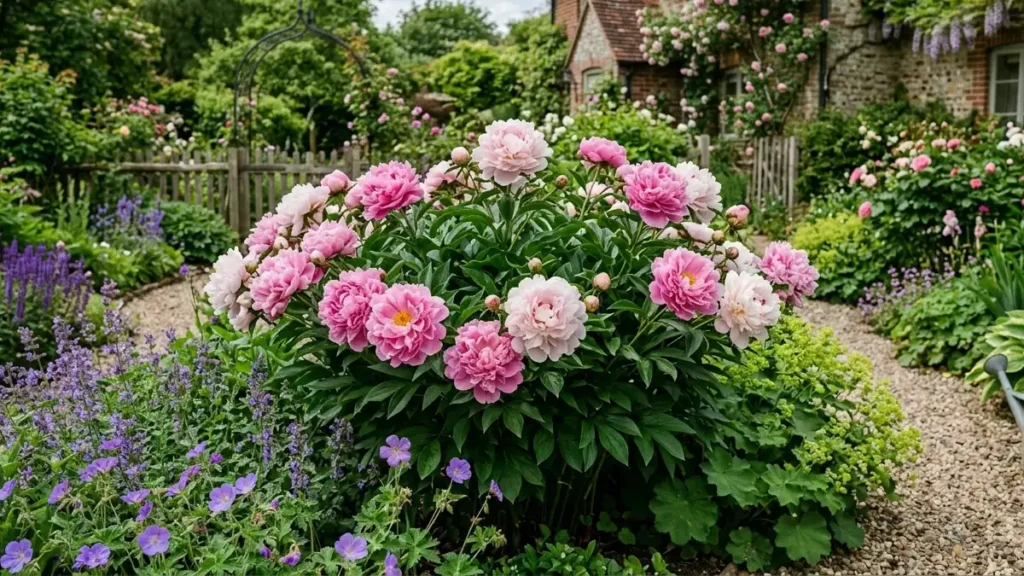
Key traits:
- Soft, green stems that die completely each fall.
- Grows 2–4 feet tall and wide.
- Blooms in late spring to early summer (typically May–June).
- Flowers sit atop stems that often need staking or rings.
- Lifespan: 30–50 years or more.
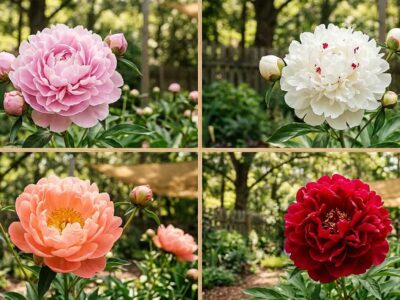
Herbaceous peonies are the classic garden peony. They are reliable, cold‑hardy, and available in hundreds of varieties. If your grandmother grew peonies, this is what she grew.
🌸 For a complete care overview, see our main peony bush care guide.
What Is a Tree Peony?
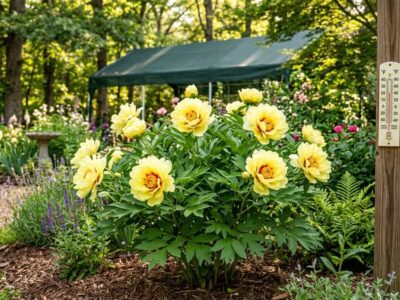
A tree peony has woody stems that do not die back in winter. The branches remain above ground year‑round, like a small shrub.
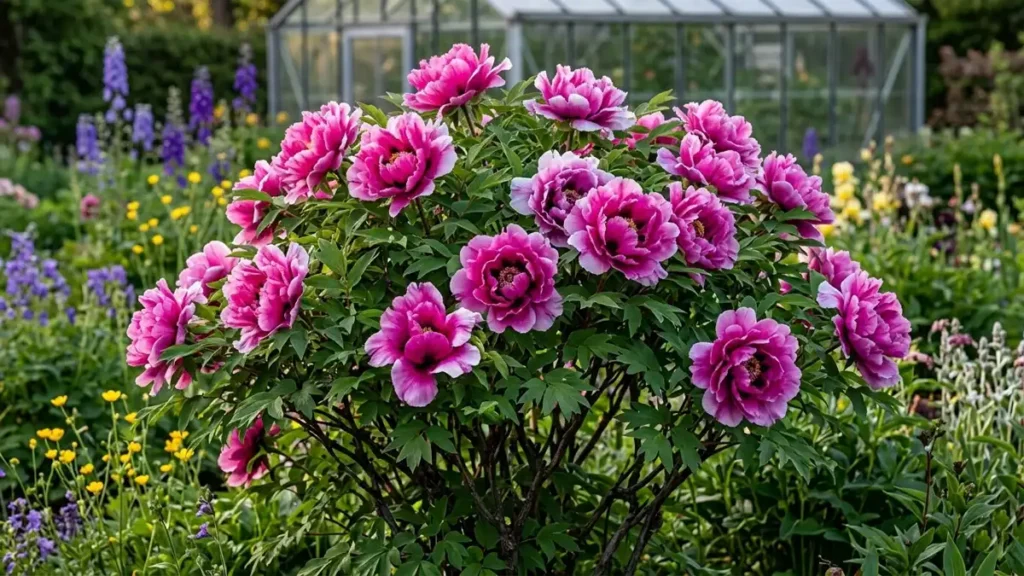
Key traits:
- Woody, branching stems that persist through winter.
- Grows 4–6 feet tall and wide (can reach 7 feet in ideal conditions).
- Blooms earlier than herbaceous peonies (typically April–May).
- Flowers are often larger (up to 10 inches across) and more cup‑shaped.
- Lifespan: 50–100 years – they can outlive you.
Tree peonies are less common in American gardens but beloved by collectors. They look more like a flowering shrub than a traditional peony.
🌳 For tree peony care specifics, stay tuned for our upcoming dedicated guide.
Biggest Visual Differences
At a glance, here is how to tell them apart:
| Feature | Peony Bush (Herbaceous) | Tree Peony |
|---|---|---|
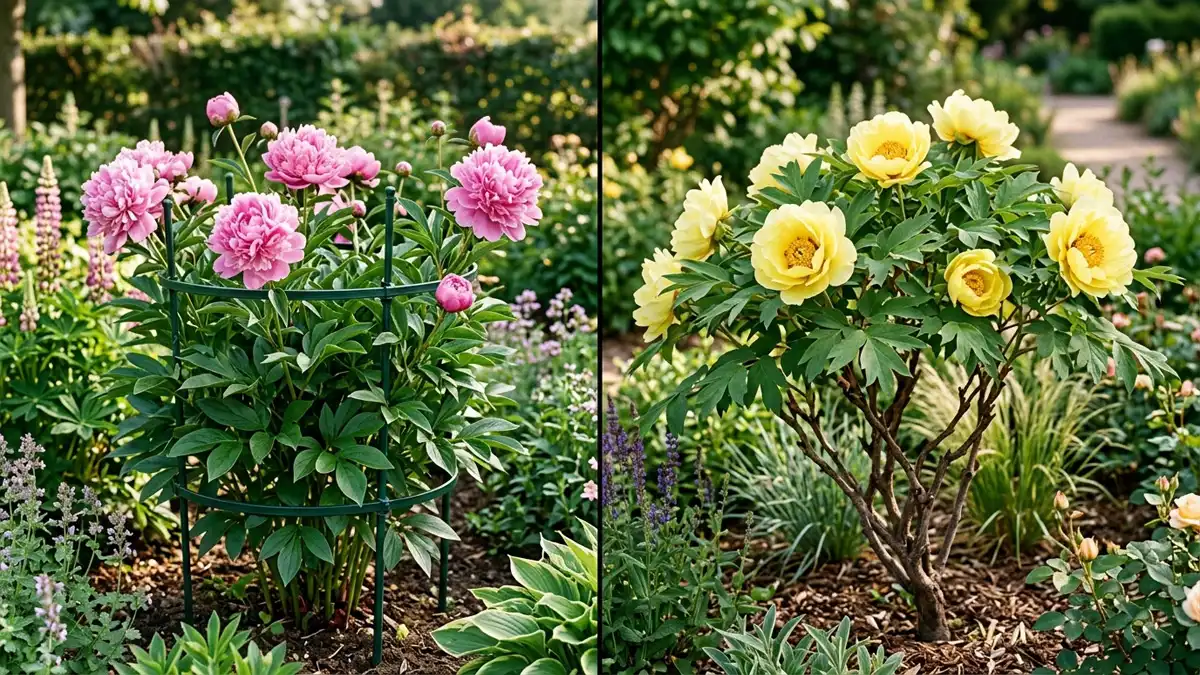
| Stems in winter | Gone – cut to ground | Woody branches remain |
| Overall shape | Mounded, rounded | Open, branching shrub |
| Leaf texture | Glossy, deeply lobed | Matte, larger, more finely cut |
| Flower form | Often double, ruffled | Often cup‑shaped, single to semi‑double |
| Height | 2–4 feet | 4–6 feet |
Easiest way to tell: In early spring, a peony bush sends up red shoots from the ground. A tree peony already has leaf buds on its woody stems.
Growth Habit and Size Comparison
Peony bush (herbaceous):
- Grows from underground roots (crown and eyes).
- New stems emerge each spring from the crown.
- Spreads slowly over time but stays in a tidy clump.
- Needs support rings for heavy double blooms.
Tree peony:
- Grows from a woody framework, like a small deciduous shrub.
- Branches increase in size and number each year.
- Does not need staking – stems are thick and strong.
- Takes up more horizontal and vertical space.
Which one fits your garden? If you have a small perennial bed, a peony bush is easier to place. If you have room for a 5‑foot shrub and want a focal point, consider a tree peony.
📏 For spacing and placement advice, see our guide: [Best Place to Plant a Peony Bush](internal link – Growing Conditions Article 1).
Which One Blooms Longer?
Bloom duration individual flower: Tree peony flowers last slightly longer – 7–10 days compared to 5–7 days for herbaceous types – because the petals are thicker and more durable.
Bloom season (overall): Tree peonies bloom earlier (late April to early May). Herbaceous peonies bloom later (mid‑May to June). By planting both, you can extend peony season to 4–6 weeks.
| Type | Typical Bloom Time (Zone 5–6) | Bloom Length per Plant |
|---|---|---|
| Tree peony | Late April – early May | 2–3 weeks |
| Peony bush | Mid‑May – June | 2–3 weeks |
Staggered planting strategy: Plant one early tree peony + one mid‑season herbaceous + one late herbaceous for continuous blooms from April into July.
📅 For regional bloom timing, see our guides on early‑blooming and late‑blooming peonies.
Cold Climate vs Warm Climate Performance
| Climate | Peony Bush (Herbaceous) | Tree Peony |
|---|---|---|
| Cold winters (Zones 3–5) | Excellent – thrives | Good – hardy to Zone 4, but may need protection in Zone 3 |
| Moderate winters (Zones 6–7) | Very good | Excellent |
| Warm winters (Zones 8–9) | Struggles – needs low‑chill varieties | Better – more heat tolerant, but still needs some chill |
Key difference: Tree peonies handle summer heat better than herbaceous types because their woody stems and larger leaves provide more shade to roots. In warm climates (Zone 8), tree peonies are often more successful.
In very cold climates (Zone 3): Herbaceous peonies are more reliable. Tree peonies can survive but may lose flower buds in late frosts.
🌡️ For warm‑climate growing, read our guide: Can You Grow Peony Bushes in Warm Climates?.
Maintenance Differences
| Task | Peony Bush | Tree Peony |
|---|---|---|
| Pruning | Cut to ground in fall | Light structural pruning only; never cut to ground |
| Staking | Often needed (support rings) | Not needed – stems are strong |
| Fall cleanup | Cut all stems, remove debris | Remove fallen leaves; leave branches intact |
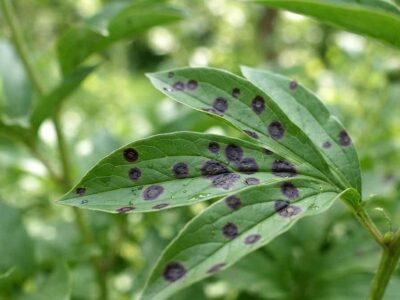
| Disease susceptibility | Moderate – botrytis, leaf blotch | Lower – better air circulation |
| Division | Easy – divide every 10–15 years | Difficult – does not divide well; propagate by grafting |
| Mulching | Light mulch only; keep off crown | Standard mulch around base |
Beginner verdict: Peony bushes are easier for first‑time gardeners. They tolerate mistakes like improper cutting back. Tree peonies require more careful pruning (never cut old wood to ground) and are harder to propagate.
✂️ For pruning guidance, see our guide: When to Cut Back a Peony Bush Without Hurting Blooms.
Which One Is Better for Beginners?
Peony bush (herbaceous) is better for beginners.
Why:
- More forgiving of pruning mistakes (cutting to ground in fall is simple).
- Wider availability and lower cost.
- Easier to divide and share with friends.
- You can find detailed care guides everywhere.
When to choose tree peony as a beginner: Only if you live in a warm climate (Zone 8+) where herbaceous peonies struggle, or if you have your heart set on huge, early blooms and are willing to learn specific pruning.
🧑🌾 For a realistic look at peony maintenance, read our guide: Are Peony Bushes High Maintenance? The Truth for Beginners.
Best Choice for Small Gardens
If space is tight, peony bush wins. It stays smaller (2–4 feet) and can be placed in perennial borders. Tree peonies need 5–6 feet of space and look awkward if crowded.
Small garden solutions:
- Peony bush ‘Little Red Gem’ – dwarf variety, 18–24 inches tall.
- Tree peony in a large container (possible but challenging – see Article 2 of Growing Conditions cluster).
If you have a tiny yard: Stick with herbaceous peonies. One mature tree peony will dominate.
Which Peony Type Is More Expensive?
| Type | Typical Price (bare root) | Typical Price (potted) |
|---|---|---|
| Peony bush (herbaceous) | $10–$25 | $25–$50 |
| Tree peony | $40–$80 | $60–$150+ |
Why tree peonies cost more: They are slower to propagate (grafting or division takes years) and are less commonly available at big‑box stores. Rare varieties can exceed $200.
Budget tip: Start with herbaceous peonies. Add a tree peony as a splurge once you have experience.
Final Verdict:
Which One Should You Grow?
Grow a peony bush (herbaceous) if you:
- Are a beginner gardener.
- Have a small to medium garden.
- Live in Zones 3–7 (cold to moderate winters).
- Want reliable blooms with simple care.
- Want to cut flowers for bouquets (herbaceous stems are excellent for vases).
Grow a tree peony if you:
- Have space for a 5‑foot shrub.
- Live in Zones 6–9 (including warmer regions).
- Want very large, early, cup‑shaped flowers.
- Enjoy collecting unique plants.
- Are willing to learn specific pruning (never cut to ground).
Grow both if you: Have room and want the longest possible peony season. They look stunning together – tree peonies blooming first, then herbaceous taking over.