🌸 Quick Answer
Heat stress. Peonies are cool‑climate plants; they wilt temporarily in temperatures above 85–90°F to reduce water loss. If leaves recover overnight, no action is needed. Provide afternoon shade and mulch to reduce future wilting.
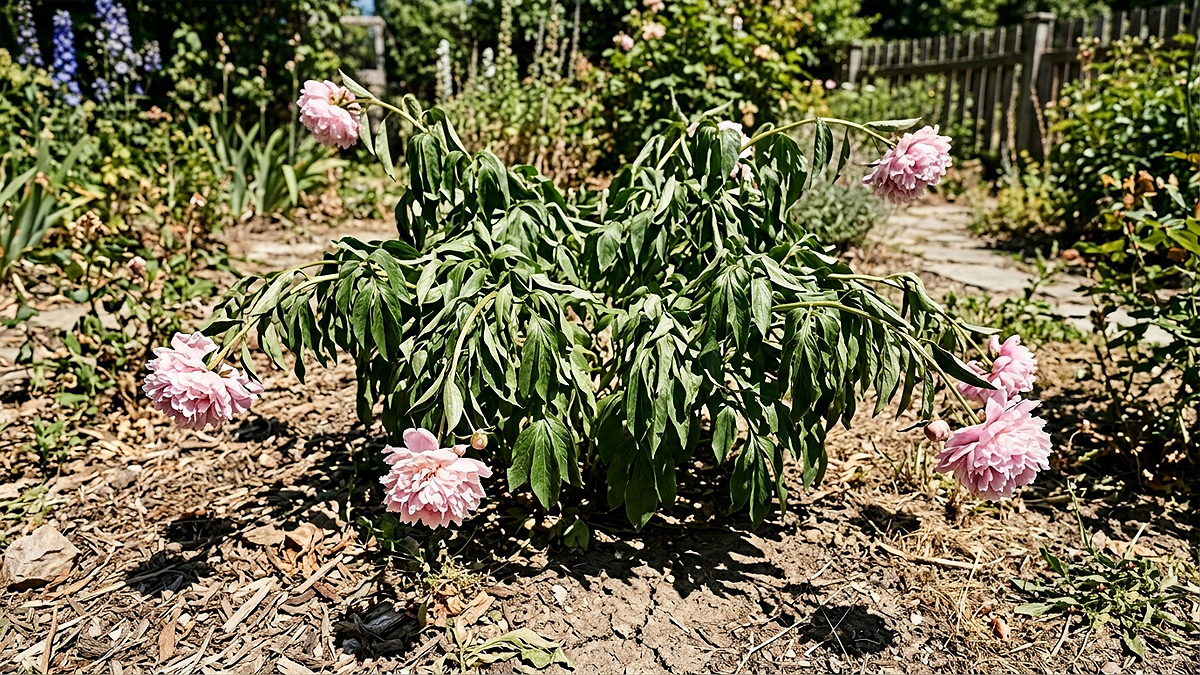
The thermometer hits 92°F (33°C). Your peony bush – which looked perfect this morning – now has limp, drooping leaves and soft stems. You water it, but nothing changes. Is the plant dying?
In hot weather, peonies often wilt dramatically – even when the soil is moist. This is usually heat stress, not a disease or watering problem. Peonies are cool‑climate perennials at heart. They thrive in spring’s mild temperatures but struggle when summer heat arrives.
This guide explains why peonies wilt in hot weather, how to tell heat stress from other problems, and what you can do to protect your plants during summer heat waves – especially if you garden in warmer regions like the southern United States.
Heat Stress vs. Other Wilting Causes
Wilting can have multiple causes. Here is how to tell if heat is the culprit:
| Symptom | Heat Stress | Underwatering | Overwatering / Root Rot | Disease (e.g., Verticillium) |
|---|---|---|---|---|
| Wilts during hottest part of day | ✅ Yes | ✅ Yes | No (constant limpness) | Yes (progressive) |
| Recovers overnight or in cool weather | ✅ Yes | Partial | No | No |
| Soil moisture | Moist or dry | Dry | Soggy | Moist or dry |
| Leaf color | Normal green | Dull, crispy edges | Yellowing, then brown | Yellowing or browning |
| Time of year | Summer (heat waves) | Any dry period | Any, often after heavy rain | Late spring to summer |
The key test for heat stress: Check your peony in the early morning. If the leaves have perked up and look normal again, heat stress is the likely cause. The plant is not dying – it is just protecting itself by reducing water loss through its leaves.
Why Peonies Are Sensitive to Heat
Peonies evolved in regions with cold winters and mild summers – Siberia, northern China, Korea, and the mountains of Japan. They are genetically programmed for cool growing conditions.
TEMPERATURE THRESHOLDS
- Optimal temperature range: 60–75°F (15–24°C) during the active growing season.
- Heat stress threshold: When temperatures exceed 85°F (29°C), peonies begin to struggle. Above 90°F (32°C), wilting becomes common.
What happens inside the plant: High temperatures increase transpiration – water loss through leaf pores. Even with adequate soil moisture, the plant cannot move water from roots to leaves fast enough to keep up with evaporation. The leaves temporarily collapse. This is the plant’s version of “shutting down” to conserve water.
The good news: Heat stress does not kill peonies. It looks dramatic, but the plant recovers when temperatures drop.
Afternoon Shade – The Best Solution
The most effective way to prevent heat wilting is to provide afternoon shade. Morning sun is essential for peonies (6+ hours), but shielding them from the harshest afternoon rays (1 PM onward) makes a huge difference.
HOW TO PROVIDE AFTERNOON SHADE
- ✓ Plant peonies on the east side of a building, fence, or large shrub to ensure morning sun and afternoon protection.
- ✓ Use a shade cloth (30–40% shade factor) suspended above the plants during intense heat waves, removing it when temperatures cool.
- ✓ Plant a tall, airy companion (like a butterfly bush or ornamental grass) to the southwest, keeping enough distance for airflow.
What to avoid: Dense evergreen shrubs or walls that block morning sun. Peonies need that early light to thrive.
Watering Adjustments During Heat Waves
Watering during a heat wave requires balance. Too little, and wilting worsens. Too much, and you risk root rot.
THE RIGHT WATERING APPROACH
- ✓ Water deeply – a slow soak for 20–30 minutes – to encourage roots to grow downward where soil stays cooler.
- ✓ Water in the morning (before 10 AM) so leaves dry completely before the intense heat hits.
- ✓ Do not water midday – most water will evaporate, and wet leaves in intense sun can cause scorching.
- ✓ Check soil moisture by sticking your finger 3–4 inches into the ground. If it feels cool and damp, do not add more water.
How much water: Mature peonies need about 1 inch of water per week. During a heat wave, increase to 1.5–2 inches per week – but split it into two deep waterings rather than daily shallow sprinkles.
Important: Wilting from heat stress does not always mean the plant needs water. If the soil is already moist, additional water will not help – and may cause root problems. Rely on the morning recovery test, not the wilted appearance alone.
Mulch to Keep Roots Cool
A 2–3 inch layer of organic mulch around your peony (but not touching the crown) helps keep soil temperature cooler and reduces moisture loss.
BEST MULCHES FOR HEAT
- Shredded bark or wood chips (slow decomposition, provides good thermal insulation)
- Straw or pine needles (light colored, naturally reflects high heat)
- Compost (adds beneficial nutrients while keeping roots cool)
MULCH MISTAKES TO AVOID
- Piling mulch against the peony crown – this traps moisture and causes crown rot.
- Using dark, fine mulch (like cocoa hulls) – it absorbs midday heat and cooks the roots.
- Applying mulch too late – ensure it is down in late spring before the first heat wave strikes.
Choosing Heat‑Tolerant Peony Varieties
If you garden in a hot climate (USDA Zones 7b–9), some peony varieties handle heat better than others. Focus on these types:
| Type | Heat Tolerance | Notes |
|---|---|---|
| Early‑blooming herbaceous peonies | Moderate | Flower before peak summer heat. Examples: ‘Coral Charm’, ‘Early Scout’ |
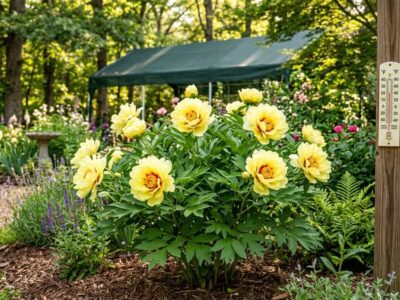
| Intersectional (Itoh) peonies | Good | Hybrids between herbaceous and tree peonies. Strong stems, heat tolerance. Examples: ‘Bartzella’, ‘Cora Louise’ |
| Tree peonies | Best | Woody stems, larger leaves, naturally more heat‑resistant. Examples: ‘Kamata‑nishiki’, ‘High Noon’ |
What to avoid in hot climates: Late‑blooming double herbaceous peonies (e.g., ‘Sarah Bernhardt’). They flower in early summer when heat is already building, and their heavy blooms wilt quickly.
You May Also Like
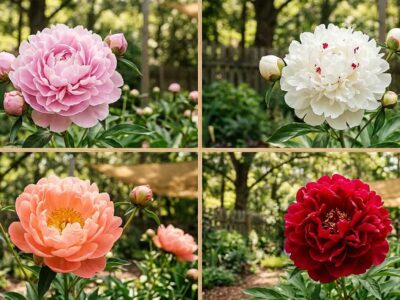
Types of Peonies Flowers: Beautiful Varieties for Your Garden
Temporary Wilting vs. Permanent Damage
UPSIDES
- ✓ Leaves droop mostly during peak afternoon heat.
- ✓ Plant recovers fully by the following morning.
- ✓ No visible leaf scorch (brown edges) or leaf drop.
- ✓ Occurs strictly on hot days, not continuously.
DOWNSIDES
- ✕ Leaves develop crispy, permanent brown edges (leaf scorch).
- ✕ Wilting does not improve overnight or in cool hours.
- ✕ Lower leaves begin to turn yellow and drop off.
- ✕ Plant looks weak and stressed for days after a heat wave.
If you see permanent damage: Provide afternoon shade immediately. Water deeply once (if soil is dry) then wait. Do not fertilize – fertilizing stressed plants can burn roots. Remove severely scorched leaves to reduce water demand. The plant should recover with cooler weather.
When Wilting Is NOT Heat Stress
If your peony wilts and does not recover overnight – even when temperatures are mild – investigate other causes:
ALTERNATIVE WILTING CAUSES
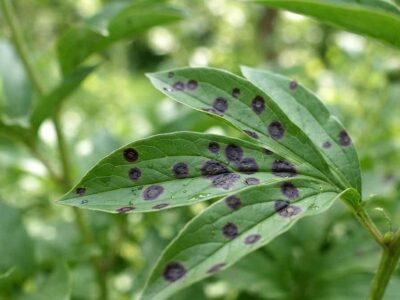
- Verticillium wilt: A soil‑borne fungus that clogs water‑conducting tissue. Leaves wilt, turn yellow, then brown, often on one side of the plant. There is no cure; remove and destroy the plant.
- Stem rot (botrytis or phytophthora): Lower stems turn black or brown, and the whole stem collapses. Remove infected stems and improve drainage.
- Crown rot: The crown (where stems meet roots) becomes soft and mushy. Dig up and discard the plant; do not replant peonies in that spot for several years.
If you suspect a disease, cut a wilted stem at the base. If you see brown or black discoloration inside the stem (not just the outer layer), vascular disease is likely. Contact your local extension office for confirmation.