KEY TAKEAWAYS
- Crispy edges: usually indicate heat stress or underwatering; the plant is likely not dying.
- Circular spots: suggest fungal issues (botrytis/blotch) and require immediate cleanup.
- Limp, browning leaves: are a primary warning sign of overwatering and root rot.
- Gradual, uniform browning: in late summer is often just natural end-of-season dormancy.
You step into your garden on a July morning and notice something unsettling: the once‑lush green leaves of your peony bush are turning brown. Edges are crispy. Spots are spreading. You wonder if the plant is dying.
Take a breath. Brown leaves on peonies do not always mean disease – and they rarely mean the end of your plant. In many cases, the cause is environmental: heat stress, watering issues, or simply the natural end of the growing season.
This guide walks you through every possible reason why peony leaves turn brown, from summer scorch to fungal infections to soggy roots. By the end, you’ll know exactly what is happening and whether you need to take action.
Heat Stress During Hot Summers
Peonies love warm weather – but there is a limit. When temperatures climb above 90°F (32°C) for several consecutive days, peony leaves can develop crispy, brown edges without any disease present. This is heat stress, also called leaf scorch.
What it looks like: Brown, dry patches along leaf margins, often starting on the side of the plant that faces afternoon sun. The rest of the leaf may stay green.
Why it happens: Peonies lose water faster than their roots can replace it during extreme heat. The leaf edges dry out and die first.
What to do: Provide afternoon shade in hot climates (Zones 7–8). A shade cloth or a nearby taller plant can help. Water deeply during heat waves, but never let the soil become soggy. Affected leaves will not recover, but new growth in cooler weather will be fine.
QUICK FACTS
- Watering Requirement : ~1 inch per week during the growing season.
- Spacing : Ensure 3–4 feet between plants for essential airflow.
- Sun Needs : 6+ hours of full sun; afternoon shade is recommended for gardeners in Zones 7 and warmer, where summer temperatures are more intense.
🌍 For gardeners in warm regions, see our guide on peonies in Arizona for heat‑specific tips.
Fungal Diseases and Leaf Spot
EXPERT TIP
- Never compost diseased peony leaves! Fungal spores can survive and re-infect your garden next spring. Always bag and trash affected foliage immediately to break the cycle.
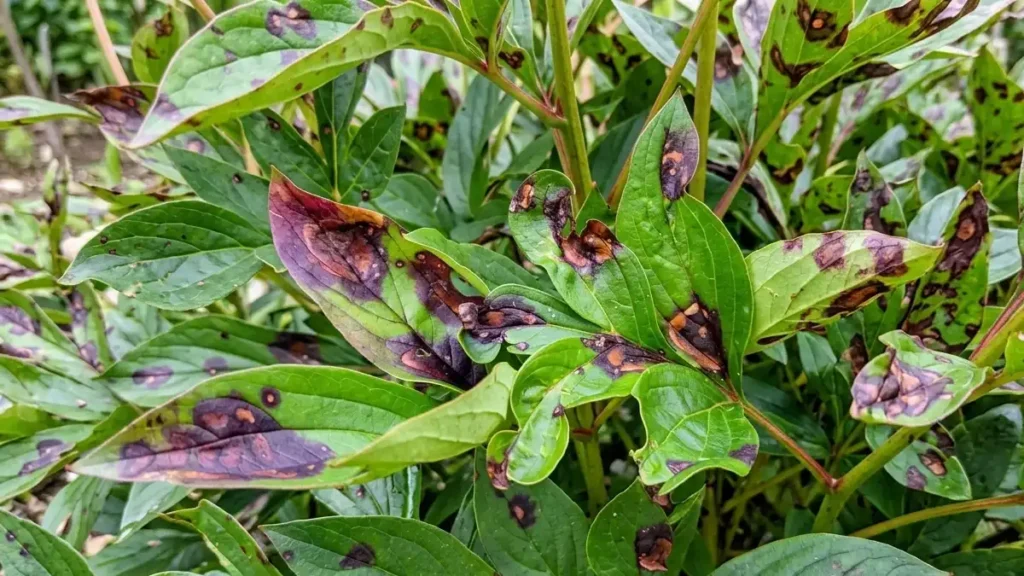
Fungal infections are the second most common cause of brown leaves on peonies. The two main culprits are botrytis blight and leaf blotch (also called measles or red spot).
1. Botrytis blight
Brown or black spots appear on leaves, stems, and flower buds. In wet weather, you may see gray, fuzzy mold. Young shoots can rot at the base and collapse.
2. Leaf blotch
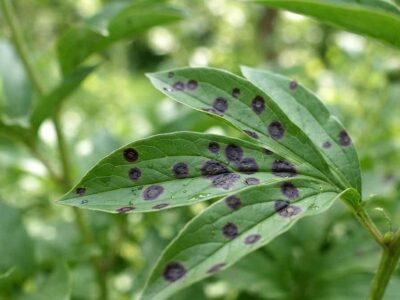
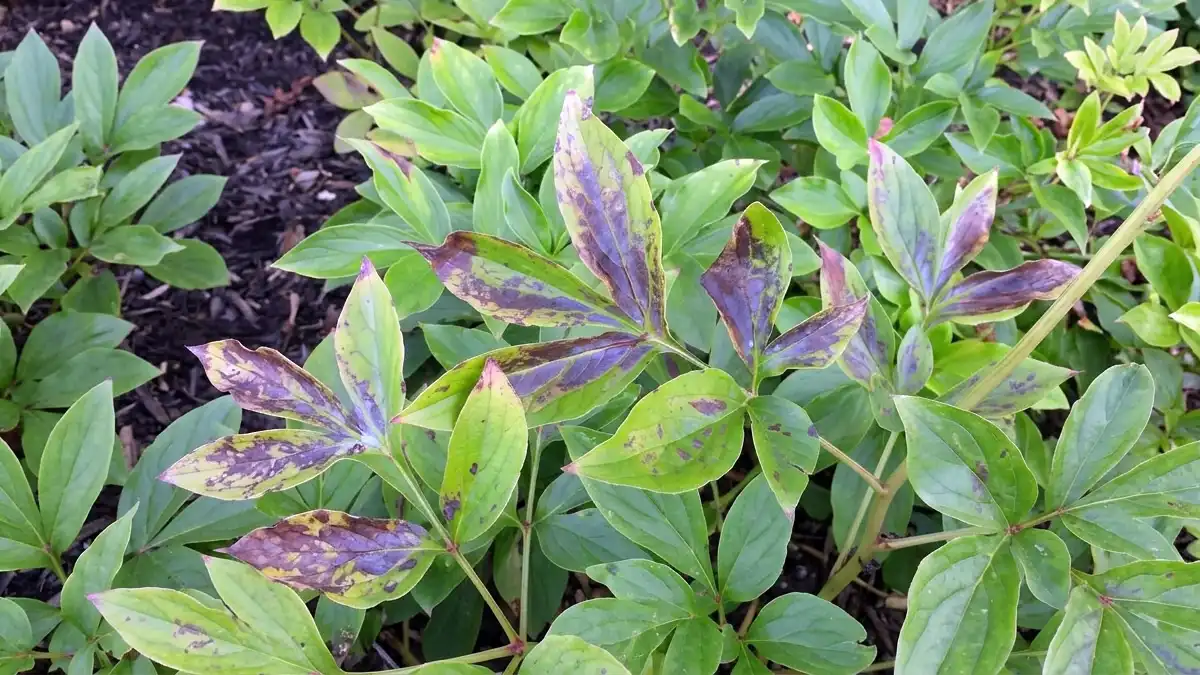
Circular purple‑brown spots that merge into larger brown patches. Unlike heat stress, these spots have defined edges and often appear on lower leaves first.
Why it happens: Prolonged leaf wetness, poor air circulation, and humid weather create perfect conditions for fungus. Spores overwinter on fallen leaf debris.
What to do: Remove and trash (do not compost) all affected leaves immediately. Improve airflow by spacing plants 3–4 feet apart and pruning nearby shrubs. Water at the base of the plant, never overhead. In severe cases, apply a copper‑based fungicide in early spring as new shoots emerge.
🔬 For a wider look at plant health, check our general plant care archive.
Overwatering and Root Stress
Peonies are drought‑tolerant once established – but they are extremely sensitive to wet feet. Overwatering or planting in poorly draining soil leads to root rot, and the first symptom is often brown, wilted leaves.
What it looks like: Lower leaves turn yellow, then brown, and become limp rather than crispy. The plant may look generally unhealthy. In advanced cases, the root crown feels soft and mushy.
Why it happens: Soggy soil suffocates roots, preventing them from taking up nutrients and water (ironically causing drought‑like symptoms even when the soil is wet).
What to do: Stop watering immediately. Check soil drainage – if water pools after rain, you need to improve drainage by amending with compost or sand, or moving the peony to a raised bed. If root rot has set in, dig up the plant in fall, cut away rotten sections, and replant in a better location.
💧 For proper watering guidelines, review our watering tips for all plant types.
Underwatering During Dry Weather
While less common than overwatering, underwatering can also cause brown leaves – especially during extended dry spells or for first‑year plants with shallow roots.
What it looks like: Leaves curl inward, turn brown and crispy (not limp), starting from the edges. The soil feels dry several inches down.
Why it happens: Peonies need about 1 inch of water per week during the growing season. Mature plants tolerate some dryness, but prolonged drought stresses them.
What to do: Water deeply at the base – a slow soak for 20–30 minutes. Then apply a 2‑inch layer of mulch (keeping it away from the crown) to retain moisture. After the plant recovers, resume normal watering.
Poor Airflow Around the Plant
Peonies need breathing room. When planted too close to walls, fences, or other shrubs, air becomes stagnant. Moisture lingers on leaves, inviting fungi – and the resulting brown spots.
What it looks like: Brown spots concentrated on inner or lower leaves where air moves the least. The plant may also have powdery mildew (white coating) on leaves.
What to do: Prune surrounding plants to open up space. If your peony is crowded, plan to transplant it in fall to a spot with at least 3 feet of clearance on all sides. For now, remove any nearby weeds or low branches that block airflow.
Natural End‑of‑Season Browning
Not all browning is a problem. In late summer and early fall, peony leaves naturally begin to die back as the plant prepares for dormancy.
What it looks like: Gradual yellowing and browning that starts on older leaves and spreads evenly. The brown is uniform, not spotty or edge‑only. This happens from late August through October, depending on your climate.
Why it happens: The plant redirects energy from leaves to roots for winter storage. Leaves senesce (age) and die.
What to do: Nothing. This is completely normal. Do not cut the leaves prematurely – let them fully brown after the first hard frost, then cut them to ground level.
Should You Cut Off Brown Leaves?
The answer depends on the cause:
| Situation | Action |
|---|---|
| Heat stress or underwatering (crispy brown edges) | Leave them – damaged leaves still photosynthesize. Remove only when fully dead. |
| Fungal disease (spots, mold) | Cut and trash immediately to prevent spread. Do not compost. |
| Overwatering (limp brown leaves) | Remove severely affected leaves. Fix drainage first. |
| Natural end‑of‑season browning | Leave until after first hard frost, then cut to ground. |
General rule: Never remove more than one‑third of the plant’s leaves at once. Peonies need foliage to store energy for next year’s blooms.
How to Prevent Brown Leaves Next Year
Use this prevention checklist for healthy green leaves season after season:
- ✅ Plant in full sun (6+ hours) – morning sun is especially valuable.
- ✅ Space plants 3–4 feet apart for good airflow.
- ✅ Water at the base – never overhead.
- ✅ Mulch lightly (1–2 inches) but keep mulch away from the crown.
- ✅ Clean up all fallen leaves in fall – trash them, don’t compost.
- ✅ Avoid high‑nitrogen fertilizers – they encourage tender, disease‑prone growth.
- ✅ Provide afternoon shade only if you live in Zone 7 or warmer.
🌸 Quick Answer: Why are my peony leaves turning brown?
Most common reasons: heat stress (crispy edges, hot weather), fungal leaf spot (circular brown patches, humid conditions), or overwatering (limp brown leaves, soggy soil). Check your watering habits and local weather first.
Once your leaves are healthy again, make sure your peony is planted at the right depth to encourage blooms. Read our guide: [Why Is My Peony Bush Not Blooming?](internal link – Article 1 of this cluster). For more seasonal peony care, explore early‑blooming peonies for Massachusetts or late‑blooming varieties.