
You have a peony bush with lush, healthy green leaves – but not a single flower bud in sight. Few gardening frustrations match the disappointment of waiting all year for blooms that never arrive.
The good news is that non‑blooming peonies almost always have a fixable cause. In most cases, the plant is perfectly healthy; it just needs a specific condition corrected.
Peonies can take time to mature, but if yours is older than three years and still refuses to bloom, something is interfering. The most common mistake? Planting depth. Let’s walk through every possible reason – from sunlight to fertilizer to winter chill – so you can finally enjoy those massive, fragrant flowers.
Peony Bushes Sometimes Need Patience
Newly planted peonies rarely bloom in their first year. In fact, it often takes three to four years for a young peony to produce its first real flush of flowers.
- Year 1: Sleep – the plant focuses on root growth. You may see only a few small leaves.
- Year 2: Creep – stronger foliage appears, but blooms are still uncommon.
- Year 3 onward: Leap – mature root systems reward you with flowers.
If your peony is less than three years old, no action is needed. Just wait. But if it’s been longer than that and you still see zero blooms, move down this checklist.
Planting Too Deep Is the #1 Cause
This is the single most common reason peonies fail to bloom – and it’s entirely preventable.
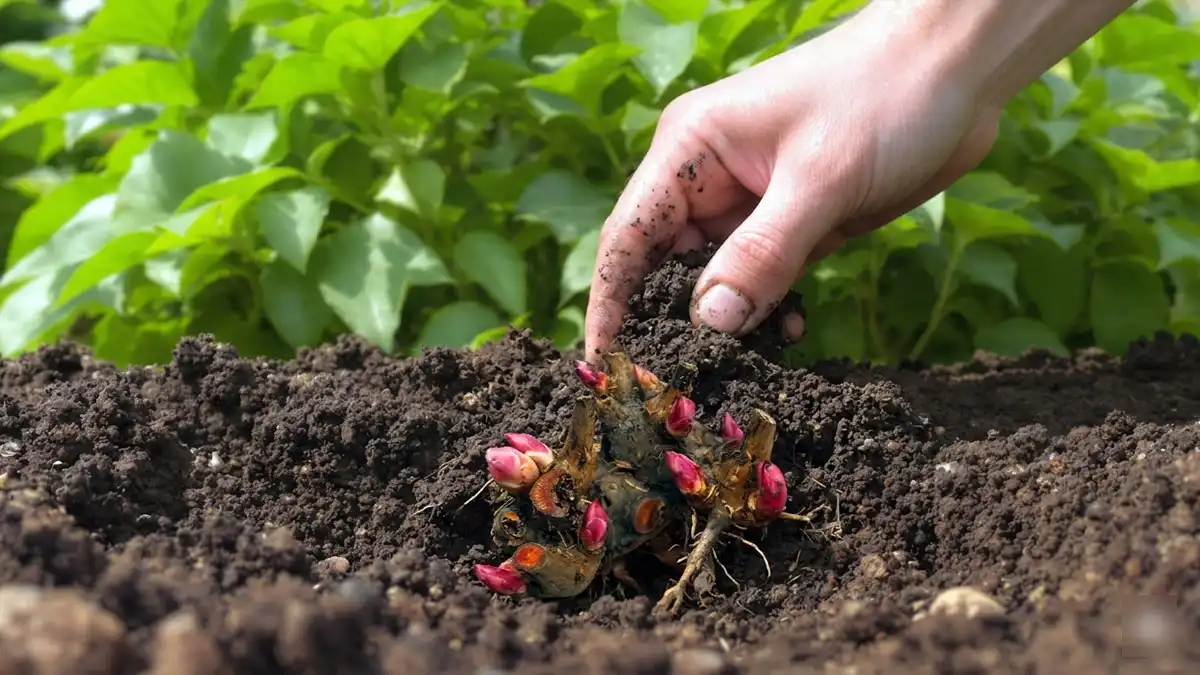
Peony roots have small pink buds called “eyes.” For a peony to flower, those eyes must sit no more than 2 inches below the soil surface. When planted deeper, the plant produces plenty of healthy leaves but refuses to flower.
Why depth matters: Deep planting encourages leaf growth but suppresses the hormonal signal that triggers flower bud formation. It’s the plant’s natural response to being “buried.”
What to do: Carefully dig around your peony in early spring before growth starts. Locate the eyes. If they are more than 2 inches deep, gently lift the root clump and replant it at the correct depth. Add soil amendments only as needed – never pile mulch on top.
⚠️ Soil settling can deepen planting over time. Recheck depth after heavy rain or a few watering cycles.
Not Getting Enough Sunlight
Peonies are sun lovers. They need at least 6 hours of direct sunlight daily to bloom well. Even one hour less can cut flower production by 50% or more.
- Full sun ideal: Morning sun is especially valuable because it dries dew and reduces fungal risk.
- Partial shade problems: In shaded spots, peonies stretch toward light, producing weak stems and few – if any – buds.
- Hot climates: Afternoon shade is acceptable (Zones 7–8), but morning sun is still non‑negotiable.
What to do: Track sun exposure for a few days. If your peony receives less than 6 hours of direct sun, consider transplanting it to a sunnier location in fall. For gardeners in warm states, choose early‑blooming varieties that flower before intense summer heat arrives.
🌍 For region‑specific advice, see our guides on peonies in Arizona and peonies in California.
Too Much Nitrogen Fertilizer
It’s easy to think “more food = more flowers.” With peonies, the opposite is true – especially with nitrogen.
High‑nitrogen fertilizers (like lawn fertilizers or general‑purpose 20‑20‑20) push peonies to grow leaves, leaves, leaves – at the expense of blooms. The plant becomes lush and green but completely flowerless.
The fix: Switch to a low‑nitrogen fertilizer such as 5‑10‑10 or 10‑20‑20. Bone meal is an excellent natural option. Apply only in early spring as shoots emerge, and avoid any fertilizer after midsummer. If you already over‑fertilized, simply skip feeding for a full season to let the plant rebalance.
Warm Winters Can Reduce Blooming
Peonies require a cold winter rest – roughly 30 to 40 days with temperatures below 40°F (4°C). Without that chill period, the plant may grow leaves but will not set flower buds.
This issue is most common in:
- USDA Zones 8 and warmer (parts of Texas, Georgia, California’s central valley)
- Mild winter years even in cooler zones
What to do: If you garden in a warm region, look for low‑chill peony varieties specifically bred for southern climates. Alternatively, consider tree peonies, which often tolerate warmer winters better than herbaceous types.
📘 For Texas gardeners, read our guide on the best peonies for Texas climate.
Cutting Foliage Too Early

Peonies store energy in their roots through their leaves. If you cut back the foliage immediately after blooming (or worse, in midsummer), the plant cannot replenish its reserves for next year’s flowers.
The rule: Leave the leaves alone until after the first hard frost in fall. Only then should you cut the stems to ground level. Yellowing or browning leaves in late summer are still photosynthesizing – don’t remove them early.
Exception: Leaves severely infected with fungal disease can be removed early, but do so sparingly and always discard them in the trash, not compost.
Transplant Shock After Moving a Peony
Peonies hate being moved. If you recently dug up and replanted a mature peony, it will often skip blooming for one to two years while the root system re‑establishes.
What to expect: In the first season after transplant, you may see only a few small stems and zero flowers. By the second or third year, normal blooming should resume – provided you replanted at the correct depth.
💡 For more on transplanting peonies successfully, stay tuned for our upcoming guide on moving established plants (internal link coming soon).
Can Overcrowding Affect Blooms?
Yes. Peonies planted too close together – or crowded by nearby shrubs, trees, or perennials – compete for water, nutrients, and light. Over time, root competition weakens the plant and reduces flowering.
Signs of overcrowding: Stunted growth, smaller leaves, and a gradual decline in bloom count over several years.
The solution: Space peonies 3 to 4 feet apart. If yours are crowded, dig and divide the clumps in fall (September or October) and replant them at proper spacing. Dividing also rejuvenates very old plants that have stopped flowering.
Quick Checklist to Get Blooms Back Next Season
Use this checklist before next spring:
| Possible Cause | Action |
|---|---|
| Planted too deep | Replant so eyes are 1.5–2 inches below soil surface |
| Not enough sun | Move to a spot with 6+ hours of direct light |
| Too much nitrogen | Switch to low‑nitrogen fertilizer (5‑10‑10 or bone meal) |
| Warm winter | Choose low‑chill varieties for your zone |
| Foliage cut too early | Leave leaves until after hard frost |
| Recent transplant | Wait 1–2 years; ensure correct depth |
| Overcrowding | Divide and space 3–4 feet apart |
| Plant under 3 years old | Be patient – maturity takes time |
🌸 Quick Answer: Why is my peony bush not blooming?
Most commonly: planting depth too deep (eyes buried more than 2 inches), insufficient sunlight (less than 6 hours daily), or too much nitrogen fertilizer. Check these three first before looking at winter chill or transplant shock.
Once your peony starts blooming, learn how to keep flowers upright in our guide on [drooping peony stems and support rings](internal link – future article). For variety inspiration, browse which peony matches your birth month or explore types of peonies for your garden.