
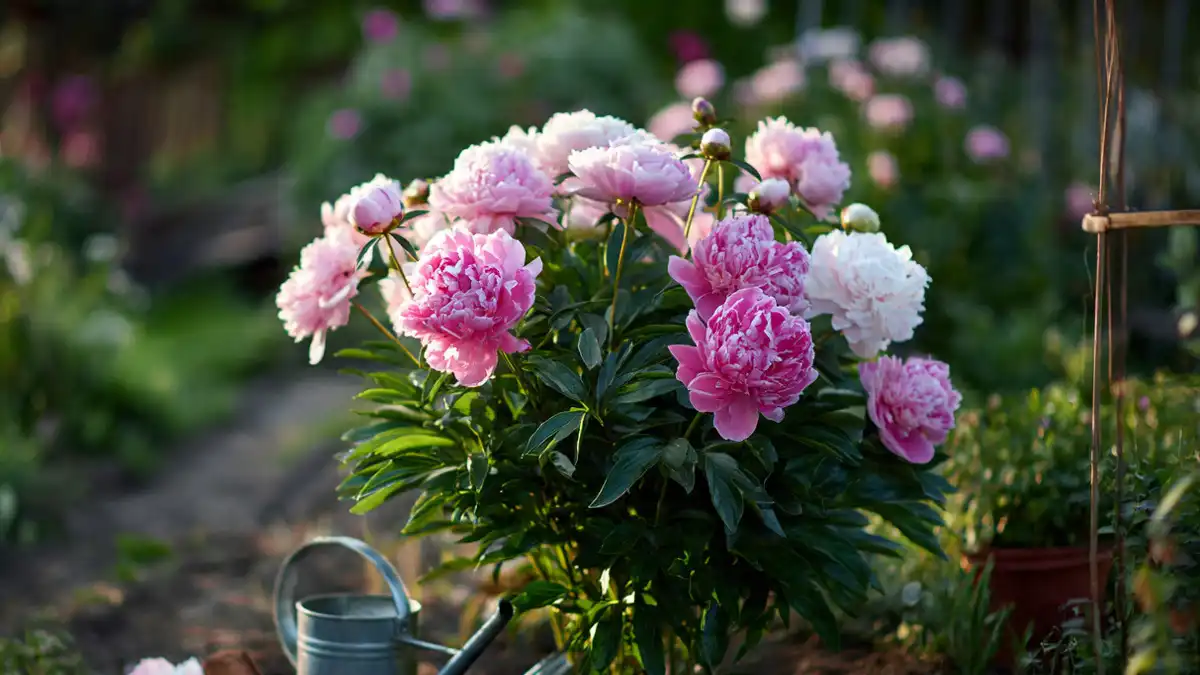
Peony bushes are among the most beloved flowering plants in home gardens—and for good reason. With their massive, fragrant blooms and lush green foliage, they create a stunning display every spring. But what truly sets peonies apart is their incredible lifespan. Some peony bushes can bloom for decades, outliving the gardeners who plant them.
However, many beginners struggle with common mistakes: planting too deep, choosing the wrong location, or wondering why their bush refuses to flower. The good news? Once you understand a few key principles, peony care becomes straightforward and deeply rewarding.
In this guide, you’ll learn exactly how to grow healthy peony bushes year after year—from planting depth to seasonal maintenance, with practical tips that actually work.
What Is a Peony Bush?
A peony bush (often simply called a peony) is a herbaceous perennial that dies back to the ground each winter and re-emerges in spring. Unlike tree peonies, which have woody stems that persist year-round, herbaceous peonies produce soft, green growth annually.
- Bloom season: Late spring to early summer, typically May through June depending on your climate.
- Common flower colors: White, pink, red, coral, and even soft yellow.
- Typical height: 2 to 4 feet tall and wide.
- Lifespan: 30 to 50 years or more with proper care.
Herbaceous peonies are the classic garden peony—the ones your grandmother probably grew. They require winter chill to bloom well, which is why they thrive in regions with cold winters.
💡 For a deeper look at different peony types, see our guide on types of peonies flowers.
Are Peony Bushes Hard to Grow?
Not at all. Once established, peony bushes are actually low-maintenance plants. They don’t demand frequent watering, constant fertilizing, or complex pruning.
That said, they are slow starters. In the first year, you might see only a few small stems and no blooms. By the second or third year, you’ll get a handful of flowers. By year four or five, you’ll have a spectacular show.
The key is patience. Peonies reward gardeners who wait. If you’re the type who wants instant gratification, plant annuals alongside your peony while it matures. But if you’re willing to invest a little time, you’ll earn a plant that outlasts almost everything else in your garden.
Best Climate for Growing Peony Bushes
This is where many gardeners go wrong. Peonies need cold winters to set flower buds. They require a period of winter chill (roughly 30–40 days below 40°F / 4°C) to trigger blooming.
- USDA Zones: 3 to 8 are ideal. Zones 2 and 9 can work with careful variety selection.
- Cold climates (Zones 2–4): This is Peony Paradise – especially across the Canadian Prairies, Northern Ontario, Quebec, and the northern US states. Unlike gardenias or camellias, peonies are one of the few luxury flowers that actually thrive where winters are harsh. The deep cold gives them the rest they need to produce massive blooms.
- Cold climates (Zones 3–5): Peonies thrive here. Snow cover helps insulate the roots.
- Mild winters (Zones 7–8): Still possible, but choose early-blooming varieties and provide afternoon shade.
- Warm humid regions (Zone 8+): Peonies struggle. They may grow foliage but fail to bloom. Consider tree peonies or special low-chill herbaceous varieties instead.
🌍 Living in a warm state? Read our region-specific advice: peonies in Arizona and peonies in California.
Where to Plant a Peony Bush
Location determines 80% of your success. Peonies are not forgiving of poor placement.
Sunlight: Full sun is best—at least 6 hours of direct light daily. In hot southern climates, morning sun with light afternoon shade works well.
Airflow: Good circulation prevents fungal diseases. Don’t crowd peonies against walls, fences, or other shrubs.
Spacing: Plant each bush 3 to 4 feet apart. This gives room for mature size and air movement.
Avoid soggy soil: Peonies hate wet feet. Never plant in low spots where water pools after rain.
Near fences or walls: Avoid planting tight against a south-facing wall. The reflected heat can stress the plant and reduce winter chill.
Front yard vs. backyard: Either works, but front yard peonies often get admired by neighbors. Just ensure they won’t be blocked by cars or foot traffic.
Soil Requirements for Healthy Peony Bushes
Peonies aren’t fussy about soil—as long as it drains well.
- Drainage: The most important factor. Heavy clay soil that stays wet will rot peony roots. Amend clay with compost, coarse sand, or gravel.
- Compost: Mix 2–3 inches of organic compost into the planting area before planting.
- pH: Slightly acidic to neutral (6.5–7.0). Most garden soils are fine.
- Heavy clay warning: If your soil is pure clay, plant peonies in raised beds or large mounds.
- Overfertilizing warning: Too much nitrogen creates lush leaves but few flowers. We’ll cover fertilizer separately.
🪴 For more on soil preparation across different plant types, check our comprehensive watering and soil guide.
When to Plant a Peony Bush
Fall planting is almost always better than spring. Here’s why:
- Fall (September–October): The soil is still warm, encouraging root growth before winter. The plant establishes itself over cool months and emerges stronger in spring.
- Spring (March–May): Possible, but riskier. Spring-planted peonies often lag a year behind in blooming. They also need more careful watering during hot summer months.
If you must plant in spring, buy potted peonies (not bare-root) and water consistently through the first summer.
How to Plant a Peony Bush Properly
This is the #1 beginner mistake section. Planting depth makes or breaks your peony.
The golden rule: Peony roots (specifically the “eyes” or pink buds) should be no more than 2 inches below the soil surface.
- Too deep: You’ll get beautiful leaves but zero flowers.
- Too shallow: Roots may heave out of the ground over winter.
Step-by-step planting:
- Dig a hole 12–18 inches wide and deep.
- Mix compost into the removed soil.
- Place the peony root so the eyes face upward.
- Backfill so the eyes are covered by only 1.5–2 inches of soil.
- Water thoroughly after planting.
- Mulch warning: Apply only a light layer (1 inch) of mulch. Heavy mulch effectively deepens the planting depth and reduces blooms.
⚠️ Important – Soil Settling: After your first heavy rain or several waterings, the soil naturally settles. What was once 2 inches deep may become 3 or 4 inches. Recheck the depth a week after planting and again after a hard rain. Gently pull back any sunken soil or add a little more if the eyes are exposed.
Spacing reminder: 3–4 feet between plants.
How Much Sunlight Does a Peony Bush Need?
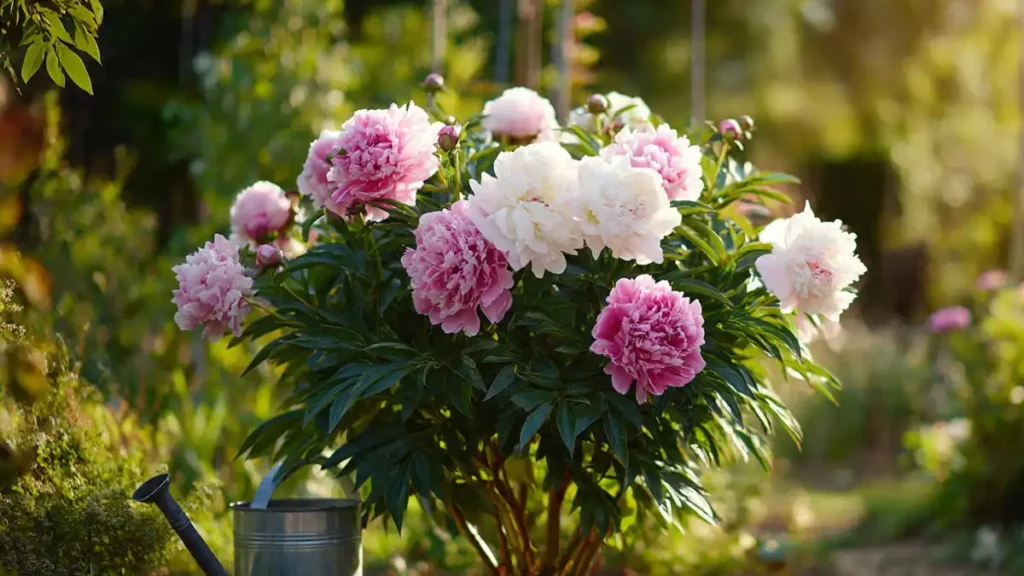
Full sun is ideal for peonies—that means 6+ hours of direct sunlight. But nuance matters:
- Morning sun advantage: Morning light dries dew quickly, reducing fungal diseases like botrytis.
- Partial shade in hot climates: In Zones 7–8, afternoon shade (starting around 2 PM) prevents leaf scorch without ruining blooms.
- Shade reduces blooms: Even one hour less than 6 hours of sun can cut flower production by 50% or more.
If your garden is shady, peonies probably aren’t for you. Consider hostas or astilbes instead.
Watering a Peony Bush the Right Way
Peonies prefer deep but infrequent watering.
| Plant Age | Watering Need |
|---|---|
| First year (especially first summer) | Keep soil consistently moist (not wet) – about 1 inch per week. In hot Midwest or Southern Ontario summers, check soil every few days. Consistent moisture until first frost helps roots establish. |
| Mature (2+ years) | Drought-tolerant – water only during dry spells. |
| Rainy climates | Almost no supplemental watering needed. |
Overwatering dangers: Saturated soil leads to root rot. Signs include yellowing lower leaves, wilting despite wet soil, and eventual plant death.
How to water: Apply water at the base of the plant, not overhead. Wet leaves invite fungus.
🌸 Quick Answer: How often should you water a peony bush?
Water a mature peony bush only when the top 3 inches of soil feel dry. In most climates, that means once every 7–10 days during summer, and rarely at all in spring or fall. Overwatering kills more peonies than underwatering.
Best Fertilizer for Peony Bushes
Less is more with peonies.
- When to fertilize: Early spring as shoots emerge. A second light feeding after blooming (optional).
- Best fertilizer: Low-nitrogen formula like 5-10-10 or 10-20-20. Bone meal is excellent.
- Compost vs. synthetic: Compost (1–2 inches) applied annually is safer and more balanced than synthetic fertilizers.
- Beginner mistake: Using high-nitrogen lawn fertilizer on peonies. This forces leaf growth at the expense of flowers.
Don’t fertilize in fall. Late-season growth is tender and gets damaged by frost.
Peony Bush Care Through the Seasons
🌸Spring
- As red shoots emerge, gently remove winter mulch.
- Apply a handful of low-nitrogen fertilizer around the base (not touching stems).
- Install support rings (peony hoops) before leaves get too tall.
☀️Summer
- Deadhead spent blooms to keep the plant tidy (cut just below the flower head).
- Water only during drought.
- Watch for powdery mildew on leaves—improve airflow if needed.
🍂Fall
- Cut back foliage to ground level after the first hard frost. This prevents overwintering diseases.
- Remove all fallen leaves and debris from around the plant.
- Critical tip: Do not compost peony foliage. Peony leaves often carry Botrytis (gray mold) and other fungal spores that survive home composting and will reinfect your plants next year. Discard foliage in the trash or burn it if local regulations allow.
❄️Winter
- Peonies are fully dormant. No care needed.
- In very cold, snowless climates, apply 2 inches of straw or pine needles after the ground freezes. Remove in early spring.
Peony Ants – A Separate Note
🐜 Why are there ants on my peony buds?
This is one of the most common questions gardeners ask. The short answer: ants are harmless to peonies. They are attracted to the sweet nectar secreted by the flower buds. They do not harm the plant, nor do they help it open (that’s a garden myth). You can simply ignore them. If you cut peonies for bouquets, turn the flower heads upside down and gently shake or rinse off the ants before bringing them indoors.
Common Problems With Peony Bushes (Quick Overview)
Here’s what you might see—each with a note on where to find detailed solutions.
- No blooms: Usually caused by planting too deep or too much shade. (See Section 7 on planting depth.)
- Drooping flowers: Heavy rain or lack of support rings. Staking fixes this.
- Brown leaves: Likely a fungal disease (botrytis or leaf blotch). Improve airflow and cut back foliage in fall (see Section 11).
- Fungal spots: Circular brown or purple spots on leaves. Remove affected leaves and avoid overhead watering.
- Ants on peony buds: See Section 12 above.
🔬 For a full breakdown of peony diseases and treatments, check our general plant care and problem-solving archive. More specific peony disease guides are coming soon.
🌸 Quick Answer: Do peony bushes come back every year?
Yes. Peonies are herbaceous perennials. They die back to the ground each winter and regrow from their root system every spring. A single peony bush can return and bloom for 50 years or more with minimal care.
🌸 Quick Answer: Why is my peony bush not blooming?
The most common reasons: 1) Planted too deep (eyes more than 2 inches below soil). 2) Not enough sun. 3) Too much nitrogen fertilizer. 4) The plant is still young (under 3 years old). 5) Mild winter with insufficient chill hours.
How Long Does a Peony Bush Last?
Peonies are heirloom plants. Once established, they can outlive the gardener who planted them.
- Typical lifespan: 30–50 years.
- Record lifespan: Peonies planted in the 1800s still bloom today in some old farmhouse gardens.
- Transplanting carefully: Moving a mature peony is risky. If you must, do it in fall and replant at exactly the same depth.
There’s something special about tending a plant that your grandchildren might inherit. Peonies carry memories. Many gardeners keep them for sentimental reasons as much as for the flowers.
Peony Bush vs Tree Peony (Quick Comparison)
| Feature | Peony Bush (Herbaceous) | Tree Peony |
|---|---|---|
| Growth habit | Dies back in winter | Woody stems stay year-round |
| Height | 2–4 feet | 4–6 feet |
| Bloom size | Medium to large | Very large (up to 10 inches) |
| Hardiness | Zones 3–8 | Zones 4–8 |
| Lifespan | 30–50 years | 50–100 years |
For most home gardens, herbaceous peonies are easier and more reliable. Tree peonies are a specialty plant for enthusiasts.
Can Peony Bushes Grow in Pots?
Yes, but with limitations. Peonies in containers need:
- A very large pot (at least 18 inches deep and wide).
- Extra winter protection (wrap the pot or move to an unheated garage).
- More frequent watering and fertilizing.
Container peonies rarely bloom as heavily as in-ground plants. For best results, plant in the ground if you have space. If you must use a pot, choose a dwarf variety.
Final Tips for Bigger and Healthier Peony Blooms
Use this as your quick checklist:
- ✅ Don’t plant too deep – eyes at 1.5–2 inches below soil. Recheck after rain.
- ✅ Avoid too much nitrogen – use low-nitrogen or organic fertilizer.
- ✅ Give winter chill – peonies need cold weather to bloom. Cold climates (Zones 2–4) are ideal.
- ✅ Be patient – first-year sleep, second-year creep, third-year leap.
- ✅ Provide support rings before the plant gets tall.
- ✅ Cut back foliage in fall – remove every stem to ground level and throw away (do not compost).
Follow these steps, and your peony bush will reward you with decades of breathtaking spring color.
Looking for more peony inspiration? Browse our peony flower delivery guide for Canada or discover which peony matches your birth month.