Your washing machine works hard to keep your clothes fresh and clean, but over time, it can become a breeding ground for mold, bacteria, and limescale. Detergent residue, fabric softener, and trapped moisture create a damp environment where odors and grime can accumulate. A dirty washing machine can eventually transfer these smells to your laundry, leaving your clothes feeling less than fresh.
To maintain peak performance and extend the lifespan of your appliance, a deep clean once a month is recommended. This guide provides a step-by-step approach to cleaning both front-loading and top-loading washing machines, ensuring your laundry always comes out smelling great and your machine stays in top condition. If you’ve already tried cleaning but the smell persists, check out our troubleshooting guide on why Affresh might not be working and how to fix washer smell fast.
Step 1 – Run a Hot Service Wash
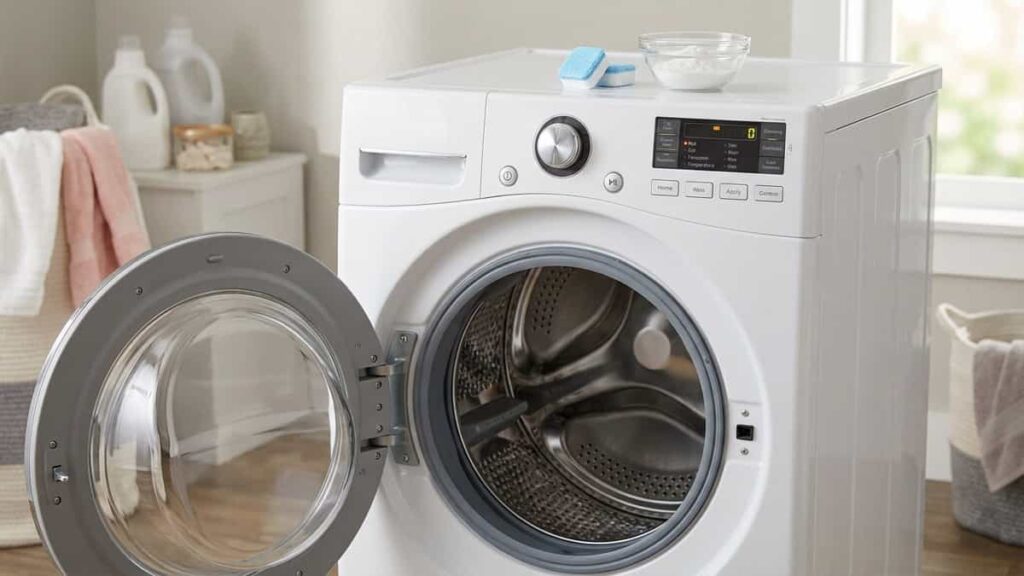
The most effective way to clean the drum and internal pipes of your washing machine is to run a “service wash” at the highest temperature possible (usually 60°C or 90°C).
- Empty the Machine: Ensure there are no clothes in the drum.
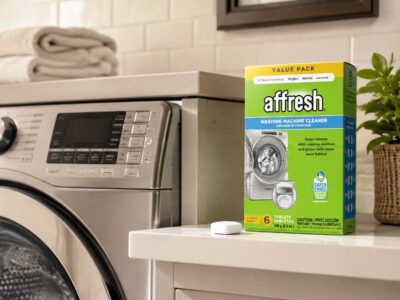
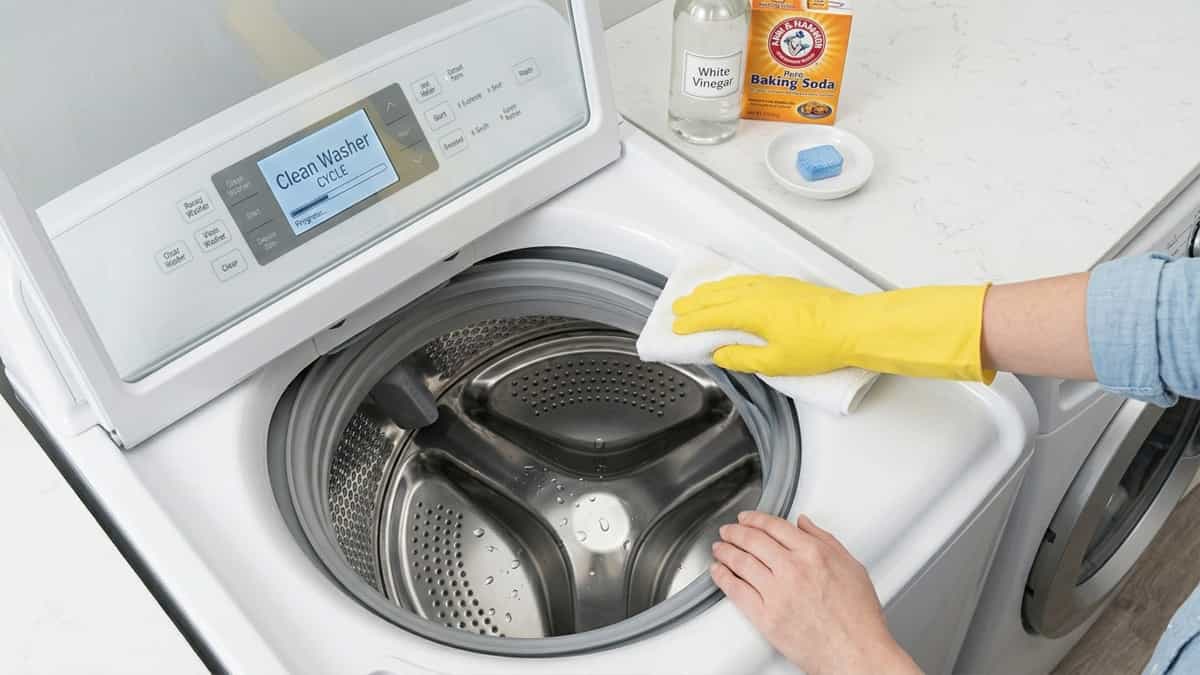
- The Cleaner: Use a dedicated washing machine cleaner tablet like Affresh or pour two cups of white vinegar directly into the drum. For a more intensive clean, you can add 1/2 cup of bicarbonate of soda (baking soda) as well.
- Select the Cycle: Choose the longest, hottest cycle available. If your machine has a “drum clean” or “tub clean” setting, use that.
- Let It Run: The combination of high heat and the cleaning agent will dissolve detergent residue, kill bacteria, and break down limescale.
Step 2 – Clean the Detergent Drawer
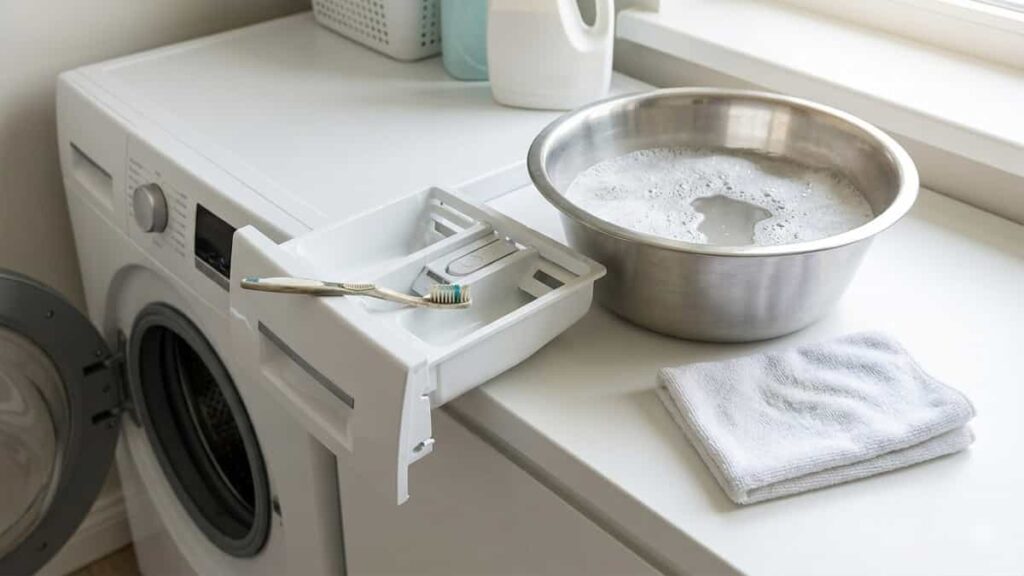
The detergent drawer is a hidden hotspot for mold and slime, as moisture and leftover detergent create a perfect environment for growth.
- Remove the Drawer: Most detergent drawers can be easily removed by pressing a small release tab.
- Soak and Scrub: Soak the drawer in a basin of warm, soapy water. Use an old toothbrush to scrub away any mold or hardened detergent from every corner and crevice.
- Clean the Housing: Use a damp cloth to wipe inside the drawer housing (the space where the drawer sits in the machine). Mold often grows on the “ceiling” of this area.
- Dry and Reinstall: Rinse and dry the drawer completely before sliding it back into place.
Step 3 – Focus on the Door Seal (Front Loaders Only)
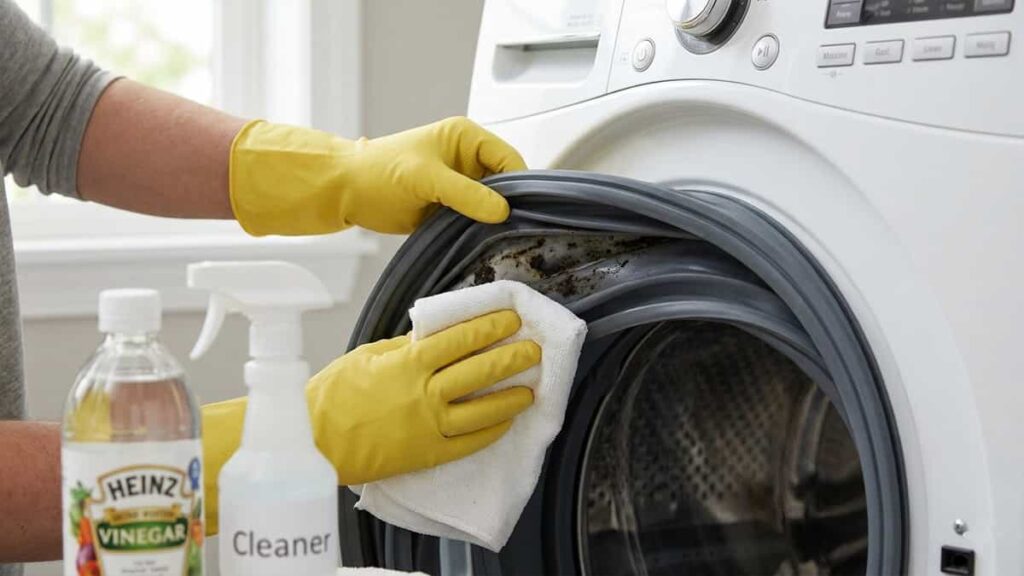
The rubber door seal (gasket) on front-loading machines is the most common place for mold and unpleasant odors to develop, as water can easily pool in the folds.
- Inspect and Wipe: Gently pull back the rubber seal and use a damp cloth and a mild cleaning solution (like white vinegar and water) to wipe away any slime, hair, or trapped items.
- Stubborn Mold: For persistent mold, you can use a diluted bleach solution (1 part bleach to 10 parts water) or a dedicated mold-remover spray. (Always wear gloves and rinse the area thoroughly with clean water afterward.)
- Dry Completely: Use a dry towel to wipe the seal dry. To prevent future mold growth, always leave the washing machine door slightly ajar between washes to allow the drum and seal to air dry.
Step 4 – Clean the Filter (Front Loaders Only)
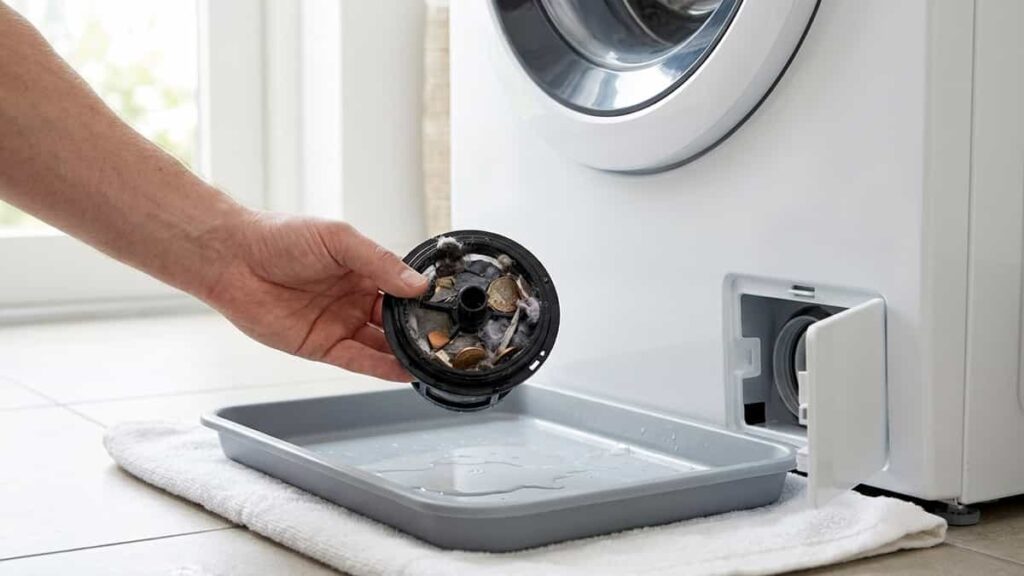
The pump filter (usually located behind a small flap at the bottom of a front-loading machine) catches lint, coins, and other debris. If it becomes clogged, your machine may struggle to drain or start to smell.
- Prepare for Water: Place a shallow tray or an old towel on the floor beneath the filter flap, as a small amount of water will always drain out when you open it.
- Open and Drain: Open the flap and unscrew the filter slowly. Allow any trapped water to drain into your tray.
- Remove Debris: Take out the filter and remove any lint, coins, or other items. Rinse it thoroughly under a running tap.
- Check the Housing: Reach inside the filter housing and ensure there are no obstructions in the pump impeller.
- Replace and Secure: Screw the filter back in tightly and close the flap.
Step 5 – Special Considerations (for Top Loaders)
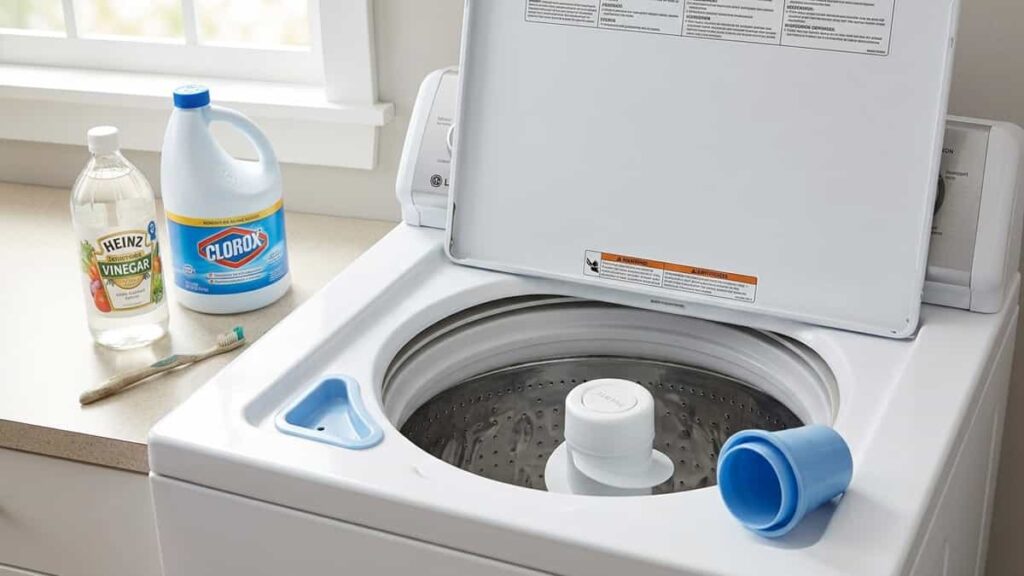
While top-loading machines don’t have large rubber door seals or pump filters in the same way, they still require careful cleaning of the wash tub and agitator. If you’re curious how eco-friendly cleaners perform in top loaders, see our comparison of Affresh vs Eco-Gals Eco Swirlz.
- The Vinegar Wash: Run a hot wash with 4 cups of white vinegar. Stop the machine once it’s full and let the solution soak for an hour before finishing the cycle.
- The Bleach Wash: Run a second hot wash with 1 cup of bleach to kill any lingering bacteria or mold. Again, let it soak for an hour.
- Agitator and Rim: Use an old toothbrush and a vinegar-water solution to clean around the top of the wash tub, the agitator, and the rim of the lid, where detergent and fabric softener often splash and harden.
- Fabric Softener Dispenser: Remove and clean any removable dispensers in warm, soapy water.
General Tips for Washing Machine Maintenance
✅ Use the Correct Amount of Detergent:
Using too much detergent leads to excess suds and residue buildup. Follow the manufacturer’s recommendations.
✅ Avoid Fabric Softener Overload:
Fabric softener is oily and can leave a film on the inside of your machine and your clothes. Consider using white vinegar in the rinse cycle as a natural alternative.
✅ Leave the Door Open:
This is the simplest and most effective way to prevent mold and odors. Always leave the door (and the detergent drawer) slightly open between washes.
✅ Wipe the Seal Regularly:
Do a quick wipe of the door seal after your final wash of the day to remove moisture.
✅ Choose the Right Cleaner:
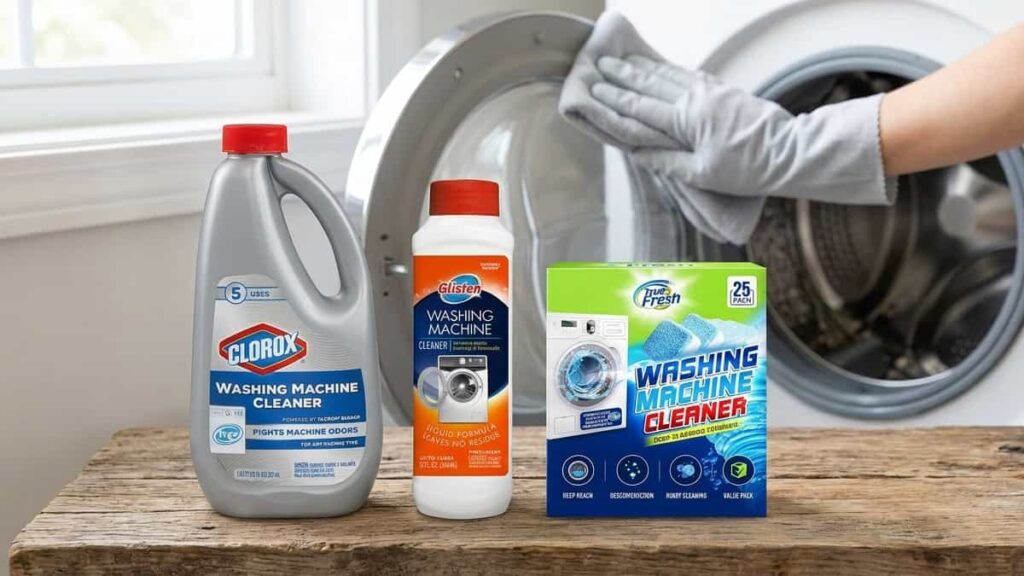
Not all cleaners are equal. For a detailed breakdown, read our premium brand comparison of Affresh, Tide, and OxiClean or the budget showdown of Clorox, Glisten, and True Fresh.
Keeping Your Home in Top Shape
Maintaining a clean washing machine is a vital part of your overall home hygiene. To help you stay on top of your room-by-room maintenance, visit our Daily, Weekly, Monthly Home Cleaning Checklist for a complete guide.
The health of your appliances often depends on managing hard water. If you’re struggling with limescale in your washing machine or other areas of your home, our guide on How to Remove Hard Water Stains is an essential read.
For more expert tips on maintaining a fresh and efficient home, explore our guides on How to Clean Refrigerator Properly and even How to Clean Ceiling Fans Properly to ensure your living spaces stay dust-free.
By spending just a few minutes each month to deep clean your washing machine, you ensure your laundry stays fresh, your appliance lasts longer, and your home remains a healthy environment for everyone.
Extra Winter Care for Washing Machines in Freezing Climates
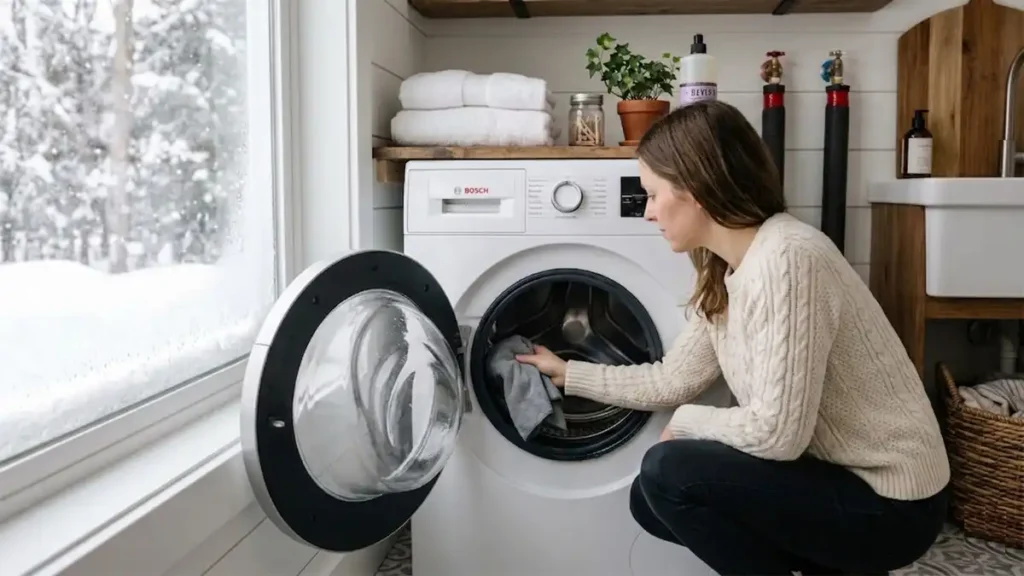
Winter in Canada and the northern United States doesn’t just test your furnace—it punishes your washing machine. Sub-zero temperatures, frozen drain lines, and near-constant indoor moisture turn routine appliance care into a fight against mold, odors, and mechanical failure. If you’re washing in a chilly basement, mudroom, or unheated garage, the rules change. Here’s how to deep-clean and protect your washer when the mercury plummets.
❄️ Why Winter Creates Extra Washing Machine Problems
During warm months, residual water evaporates quickly and laundry rooms stay ventilated. In freezing weather, four things happen simultaneously:
- Water lingers in the drum, pump, and hoses—ideal for bacteria and biofilm.
- Cold surfaces cause condensation inside the machine, encouraging mold on gaskets and dispensers.
- Detergent and fabric softener residue thickens rather than rinsing completely away.
- Drain lines or standpipes can freeze, leading to backups that leave standing water inside the washer for hours or days.
Without a seasonal adjustment, your machine can go from freshly cleaned to musty in a single cold snap.
🇨🇦 Why This Is Common in Canada & Cold US States
Across Ontario, Quebec, the Prairies, the Midwest, upstate New York, New England, and the northern Plains, laundry spaces are often located in unheated or semi-heated areas—basements that drop to 40°F (4°C), utility rooms built onto the back of the house, or cottages that aren’t continuously heated. High-efficiency front-loaders are particularly vulnerable because their airtight seals trap moisture. Combined with indoor clothes drying (a winter necessity), relative humidity skyrockets, feeding the very mold you’re trying to eliminate.
⚠️ Signs Your Washer Needs Cleaning During Winter
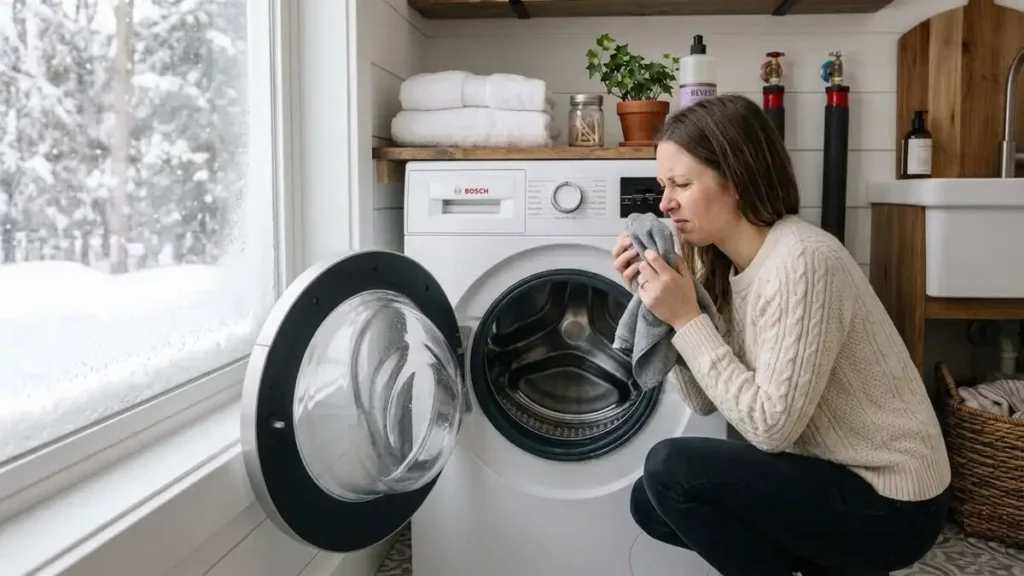
- A sour or mildew odor that gets worse when the heat kicks on.
- Visible black spots on the door gasket or detergent drawer.
- Slow draining or water pooling in the drum after a cycle.
- Clothes smell musty right out of the washer, even when dried immediately.
- Ice-cold standing water in the drum, indicating a frozen drain.
These aren’t just nuisances—they signal that biofilm and possibly ice blockages are present, and a quick wipe-down won’t fix them.
🧼 Step-by-Step: How to Clean a Washing Machine in Freezing Weather
Before you start, review your machine’s manual and follow the standard cleaning steps outlined in the first part of this guide. Then add this cold-weather protocol:
- Ensure the room is above freezing (at least 50°F / 10°C) during cleaning. If your laundry space is colder, heat it with a safe space heater for a few hours before you begin.
- Run the tub on the longest, hottest cycle while empty. If your hot water supply is limited, use the sanitize cycle or add very hot water manually (making sure not to scald plastic components). Hot water dissolves winter detergent sludge.
- Use a high-quality washing machine cleaner, not just bleach. Bleach can damage seals in concentrated cold conditions and doesn’t always cut through detergent buildup. If you’re using Affresh tablets, our step-by-step Affresh washer cleaner tutorial shows exactly which cycle to select and how to handle temperature constraints in winter.
- Scrub the gasket, dispensers, and filter by hand. Cold air causes hard-water scale and mildew to cling to rubber. Use a soft brush with white vinegar or a manufacturer-approved cleaner. Dry all accessible parts with a microfiber cloth immediately to prevent freezing.
- Run a second rinse and drain cycle to flush loosened debris.
- Leave the door and dispenser drawer open for at least 24 hours to allow complete drying—but only if the room stays above 32°F (0°C). If it drops below freezing, skip this step and dry manually instead.
Pro-Tip: If your laundry room is on a concrete slab in a basement, the floor acts as a “heat sink.” Even if the air is 50°F (10°C), the water in the pump near the floor might be much colder. Always prioritize the manual drain-and-dry method in these setups.
🧊 How to Prevent Frozen Hoses & Drain Lines
- Insulate hot and cold water supply lines with foam pipe insulation, especially where they run along exterior walls.
- Install a frost-free wall hydrant or relocate the washer to an interior wall if possible.
- Keep the laundry room door open to the rest of the house to raise ambient temperature.
- Drain the drain hose entirely after each use in extremely cold conditions; elevate it so water can’t pool.
- Add a small amount of RV antifreeze (propylene glycol, non-toxic) to the drain trap if the washer will be unused for weeks in an unheated cottage. Never use automotive antifreeze.
🦠 Why Winter Causes More Mold, Odors & Moisture Build-Up
Cold machines grow mold more aggressively than warm ones. Bacteria thrive at the interface between water and air—exactly where condensation collects on the door glass and gasket. When outside air is dry but laundry-room air is moist from drying racks, surfaces stay damp for hours longer. The airtight design of modern washers, meant for efficiency, becomes a greenhouse in winter.
If you’ve already run multiple cleaning cycles and still smell a stubborn odor, it’s not your imagination. Our troubleshooting guide for when Affresh isn’t working walks you through hidden mold pockets, clogged pressure switches, and internal hoses that often keep the smell alive even after a normal clean.
🚫 Winter Washing Machine Cleaning Mistakes to Avoid
- Using only cold water for cleaning cycles. Detergent residue and mold require heat to break down. Cold water cleaning is useless in freezing temperatures.
- Closing the door tightly after a cycle. In a cold room, this seals in moisture. Instead, wipe the gasket dry and prop the door open only when safe from freezing.
- Pouring boiling water directly into a frozen drum. The thermal shock can crack porcelain or plastic. Thaw gradually.
- Ignoring the drain pump filter. In winter, lint and sludge combine into a frozen plug. Clean the filter monthly.
- Running a self-clean cycle before thawing frozen drain lines. If the washer can’t drain, the cleaning solution sits in the drum, potentially damaging components.
🏠 Best Laundry Room Setup for Cold Climates
- Install a thermostatically controlled baseboard heater or an oil-filled radiator set to maintain 45–50°F (7–10°C) minimum.
- Use a dehumidifier to offset indoor drying, keeping relative humidity below 50%.
- Place foam insulation board under the washer to isolate it from a concrete floor that stays below freezing.
- Mount the machine on a drip pan to catch any condensation or small leaks before they ice over.
- Insulate the entire drain standpipe with a heat cable if it is located on an exterior wall.
🔧 What to Do If Your Washer Won’t Drain in Freezing Temperatures
- Don’t force a cycle. Turn off and unplug the machine.
- Check the drain hose for kinks or ice. A hair dryer on low heat (held at a safe distance) can thaw exterior sections.
- Place a space heater near the machine’s drain pump area (not directly against plastic) for 30–60 minutes.
- If water is standing in the drum, bail it out manually to reduce weight and pressure.
- Once thawed, run a rinse-only cycle and observe drainage. If sluggish, the drain pump filter may be clogged with frozen debris—clean it immediately.
- After resolution, run a hot empty cleaning cycle with a quality washer cleaner to kill any bacteria that blossomed during the backup.
📅 Winter Washing Machine Maintenance Checklist
- Weekly: Wipe door gasket, leave door ajar if room above freezing, check for odd smells.
- Monthly: Run a cleaner tablet through the hot cycle, clean the drain pump filter, inspect hoses for frost.
- Seasonally (early winter): Insulate pipes, test drain flow, deep-clean detergent dispenser, and apply a protective coat of manufacturer-approved gasket conditioner (check your manual first; some oils can cause gaskets to lose their shape over time).
- Late winter or after extreme cold snap: Repeat full deep-cleaning process, check all line connections, and evaluate need for additional heating.
🇺🇸 Cold US States & Canadian Regions Most Affected
All Canadian provinces, especially those with prolonged sub-freezing temperatures—Québec, Manitoba, Saskatchewan, Alberta, and the Atlantic provinces—face these challenges. In the US, trouble spots include Minnesota, North Dakota, Wisconsin, Michigan, upstate New York, Vermont, New Hampshire, Maine, and parts of the Rockies. If your laundry lives in a basement that requires a sweater in December, this guide is for you.
🏆 Best Washing Machine Cleaners for Winter Maintenance
Select a cleaner that excels at dissolving detergent buildup and killing mold in short, hot cycles. Popular choices include:
- Affresh – Effervescent tablets designed for high-efficiency machines; effective in both hot and warm cycles, though hot is ideal in winter.
- Tide Washing Machine Cleaner – Oxygen-based powder that tackles residue in all water temperatures, good for cold-weather homes with limited hot water.
- OxiClean Washing Machine Cleaner – A powder that’s budget-friendly and works well against mold, though it requires a reliably hot fill to fully dissolve in cold rooms.
For a detailed, side-by-side breakdown of these three, see our comparison of Affresh vs. Tide vs. OxiClean washing machine cleaner to choose the one that matches your winter water temperature and machine type.
❓ FAQs (Canada & Cold Climate Questions)
Q: Can I use bleach instead of a washer cleaner in freezing temperatures?
A: Only if your machine is fully operational and can reach a proper hot rinse. Bleach doesn’t cut through detergent buildup and can damage rubber seals when left undiluted in cold conditions. A dedicated cleaner plus physical scrubbing is safer and more effective.
Q: My laundry room frequently dips to 30°F (-1°C). Is it safe to run the washer?
A: Running the washer is possible if the water supply lines haven’t frozen and water flows freely, but cleaning and drying afterward will be compromised. Install a heater to maintain at least 45°F (7°C) for the cleaning process and for allowing the interior to dry.
Q: How do I stop the door gasket from freezing shut?
A: Wipe the gasket completely dry after each use with a microfiber cloth. A very light coating of silicone-based gasket conditioner (specifically for washing machines) can help, but avoid petroleum-based products that degrade rubber. The real solution is keeping the room temperature above freezing.
Q: Is it safe to leave the washer door open in a cottage that gets down to 20°F (-7°C) while I’m away?
A: No. Residual water in the gasket and pump could freeze, expand, and crack components. Instead, drain the pump and hoses completely, leave the door slightly ajar with a towel draped to catch condensation, and consider using non-toxic RV antifreeze in the drain trap. Deep-clean before you leave so you return to a fresh machine.
A little winter-specific vigilance goes a long way. By matching your cleaning routine to the reality of freezing temperatures, you’ll keep your washer odor-free, draining perfectly, and ready for the mountain of snow gear it faces every week.