A power outage can happen without warning, leaving many people wondering whether the food in their refrigerator is still safe to eat. The good news is that your groceries do not spoil immediately. By keeping the doors sealed, you can preserve safe internal temperatures far longer than you might think.
This guide serves as a quick, definitive reference tool to help you identify what to salvage, what to discard, and how to avoid the hidden risks of foodborne illness.
The Emergency Time Matrix
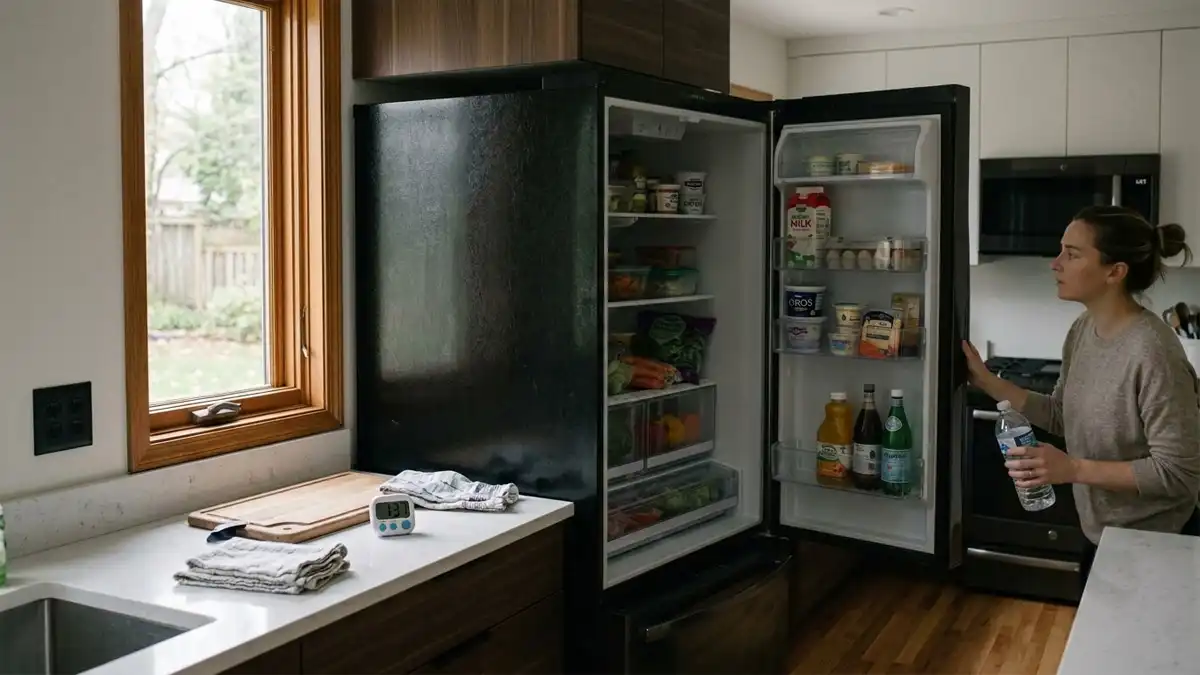
Your primary line of defense is keeping your appliance doors closed. Every single time you open the door, trapped cold air escapes, accelerating the warming process. Under optimal sealed conditions, your appliances protect food within these exact windows:
| Appliance Type | Maximum Safety Window (Doors Fully Sealed) |
|---|---|
| Standard Refrigerator | Up to 4 hours |
| Half-Full Freezer | Approximately 24 hours |
| Completely Full Freezer | Approximately 48 hours |
What Happens After 4 Hours?
Once your refrigerator’s internal temperature climbs above 4°C (40°F) and stays there for more than a few hours, harmful bacteria can multiply rapidly on perishable items. If you are ever uncertain how long your items have sat above this thermal threshold, do not risk it—toss them out.
THE KEEP VS. THROW AWAY BREAKDOWN
- ✓ Hard Cheese: Stays safe if kept cool.
- ✓ Butter & Margarine: Highly resilient for longer periods.
- ✓ Fresh, Whole Fruits: Safe unless visibly degraded.
- ✓ Raw Vegetables: Safe unless moldy or slimy.
- ✓ High-Acid Condiments: Jams, ketchup, mustard, and pickles hold up well due to natural preservatives.
- ✓ Unopened Fruit Juices: Safe if they remain reasonably cool.
CONS
- ✕ Dairy Essentials: Milk, yogurt, and soft cheeses must be discarded after 4 hours.
- ✕ Proteins & Seafood: Raw chicken, beef, pork, fish, and deli meats pose high risks and must be thrown away.
- ✕ Cooked Leftovers: Prepared meals, casseroles, pizza, soups, rice, and pasta spoil quickly and are unsafe.
- ✕ Eggs: Must be discarded if the fridge stays warm for several hours.
Managing Frozen Inventory
Freezers function on thermal mass, meaning tightly packed frozen food acts like an ice block to keep the surrounding air cold. Your frozen inventory remains entirely safe to consume or refreeze if it meets these specific criteria:
Safe Refreezing Criteria
- ✓ Visible Ice Crystals: The item still contains physical ice crystals throughout the packaging.
- ✓ Solid Core: The food still feels completely solid and frozen to the touch.
- ✓ Sealed Environment: The freezer door remained completely shut throughout the entire outage window.
⚠️ Important Safety Warning: If frozen food thaws completely and remains warm for more than a few hours, do not attempt to refreeze it. Discard it immediately to prevent severe food poisoning.
Proactive Action Plan During Outages
If your neighborhood loses power, execute these steps immediately to safeguard your investment:
Outage Mitigation Protocol
- ✓ Seal the Units: Keep refrigerator and freezer doors tightly closed; avoid the urge to browse or check contents.
- ✓ Consolidate Frozen Mass: Group frozen items tightly together inside the freezer to help them retain cold longer.
- ✓ Introduce Cold Blocks: Place supplemental ice packs or bags of ice around high-risk perishables if available.
- ✓ Evaluate Upon Return: Once the grid comes back online, audit your inventory systematically before preparing any meals.
The Ultimate Rule: Never Rely on Smell
One of the most dangerous mistakes you can make is smelling or tasting food to determine its safety.
The pathogenic bacteria responsible for severe foodborne illness do not alter the smell, flavor, or visual appearance of food. An item can look completely normal, smell perfectly fresh, and still carry dangerous levels of contamination.
Protect your household by committing this universal rule to memory: When in doubt, throw it out. Replacing your groceries is a minor expense compared to the physical toll and medical costs of severe food poisoning.