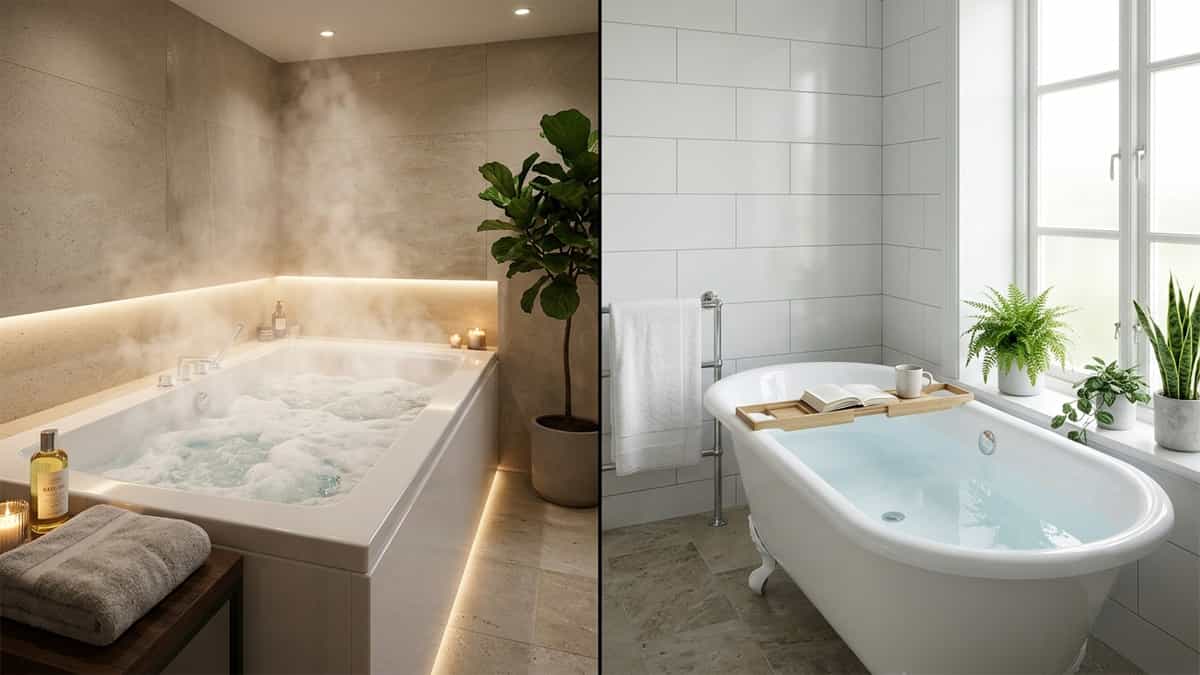
The biggest difference is that a whirlpool tub uses powered water jets for a massage experience, while a regular bathtub is simply designed for soaking. Your choice depends on budget, maintenance, comfort, and how often you’ll actually use the extra features.
Quick Comparison Table
| Feature | Whirlpool Tub | Regular Bathtub |
|---|---|---|
| Water Jets | ✔ | ✘ |
| Massage Function | ✔ | ✘ |
| Electricity Required | ✔ | ✘ |
| Purchase Price | Higher | Lower |
| Maintenance | More | Less |
| Noise Level | Pump noise | Silent |
| Cleaning Time | Longer | Faster |
| Installation | More complex | Simple |
Massage Experience

A whirlpool tub delivers a therapeutic massage through strategically placed water jets that circulate water at high pressure. These jets target specific muscle groups, providing relief from tension and soreness. Regular bathtubs, by contrast, offer no massage function—they’re simply vessels for soaking in warm water. If you’re looking for hydrotherapy benefits, the whirlpool is the clear winner. For basic bathing needs, a regular tub does the job perfectly.
Cleaning & Maintenance
This is where many buyers underestimate the commitment. Whirlpool tubs require regular maintenance to keep those jets functioning properly. Water and soap residue can accumulate inside the jet lines, leading to bacteria growth and unpleasant odors. You’ll need to periodically run cleaning solutions through the system and scrub each jet individually.
Regular bathtubs are far simpler to maintain. A quick wipe-down after each use and a weekly scrub with standard bathroom cleaner keeps them sparkling. No hidden pipes to flush, no nozzles to disassemble, and no special cleaning products required.
Trending
Arm & Hammer vs Molly’s Suds vs Nellie’s: Which Laundry Booster Works Best for Sensitive Skin?
Installation Requirements
Installing a whirlpool tub is a more involved process. Beyond standard plumbing connections, you’ll need:
- A dedicated electrical circuit with GFCI protection
- Proper pump placement with adequate access
- Additional plumbing for the jet system
- Reinforced flooring to support the extra weight
Regular bathtubs install with standard plumbing only. They connect to existing hot and cold water lines and a standard drain—simple and straightforward for any professional plumber.
Running Costs
Whirlpool tubs come with ongoing expenses that regular tubs don’t. Each use draws electricity to power the pump, and over time, components like seals, gaskets, and the pump itself may need replacement. Repair costs can quickly add up.
Regular bathtubs have virtually no operating costs beyond the water you use. No electricity, no mechanical parts to wear out, and no expensive service calls. Once installed, they just work.
Noise Level
This is a factor many buyers overlook until it’s too late. Whirlpool tubs generate noticeable noise from the pump and water circulation system. The hum and whir of the motor can range from a gentle background sound to a distracting roar, depending on the model.
Regular bathtubs are completely silent. The only sounds are the water filling the tub and the peaceful stillness of your soak. If you value tranquility during your bath, this difference matters more than you might think.
Durability & Repairs
Fewer moving parts mean fewer things to break. A whirlpool tub relies on:
- A pump motor
- Multiple jet assemblies
- Seals and gaskets
- Control systems
Each of these components has a lifespan and can fail. When they do, repairs require specialized knowledge and parts.
Regular bathtubs have no mechanical components. The only potential issues are plumbing-related—drain clogs or faucet drips—which are easy and inexpensive to fix.
Best For
Whirlpool Tub:
- People with muscle tension or chronic pain
- Spa enthusiasts who want luxury at home
- Those with a higher budget for initial purchase and maintenance
- Homeowners planning a master bathroom upgrade
- Individuals who will actually use the jets regularly
Regular Bathtub:
- Daily bathing needs without extra features
- Families with kids (easier to clean and maintain)
- Rental properties (fewer things to break)
- Budget-conscious buyers
- Anyone who prefers a simple, quiet bathing experience
- Smaller bathrooms with limited space
Choose a whirlpool tub if you genuinely value the massage experience and are willing to accept the higher costs, maintenance demands, and noise that come with it. A regular bathtub is the smarter choice for anyone who wants simplicity, reliability, and a quieter bathing experience without ongoing expenses. Consider your lifestyle honestly—if you’ll use the jets daily, a whirlpool might be worth it. If you’re like most people who just want a relaxing soak without the hassle, stick with a regular tub.