
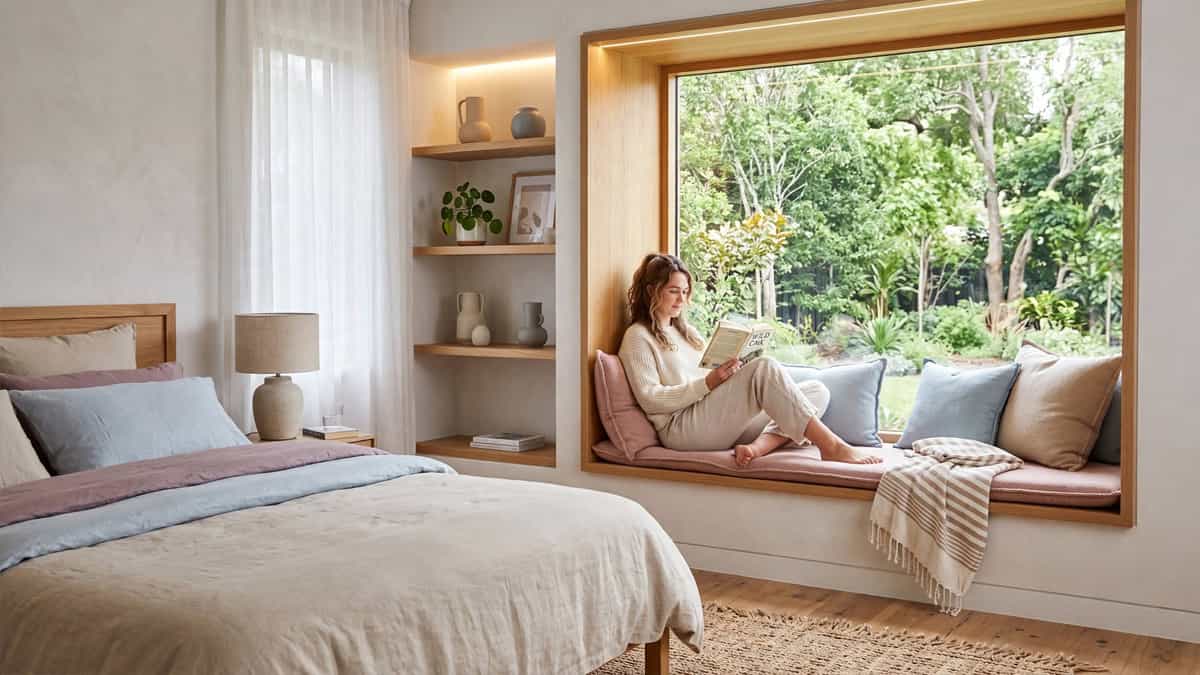
There was something about this plain corner by the window that kept catching my attention. It wasn’t a bad space — just one of those slightly awkward areas that seemed to have plenty of potential but no clear purpose. The natural light was already there, and I kept thinking it could become something much more inviting.
That is when I started imagining it as a reading nook: somewhere soft, comfortable and a little removed from the rest of the room. Not a major renovation or an elaborate home library, but a small place to sit with a book, a cup of coffee or simply enjoy a quiet few minutes by the window.
What I like about a reading nook is that it gives an overlooked part of the home a proper job. A bench, a comfortable chair, nearby shelves or a little storage can be enough to make the space feel intentional without making it look overly styled.
If you have a bare window, an unused corner or a small area that has never quite felt finished, these 12 ideas can help you turn it into a reading nook that feels warm, practical and personal.
Key Takeaways
- ✓ An unused window corner can become a practical reading space without a major renovation.
- ✓ Comfortable seating, natural light and nearby storage are the main ingredients.
- ✓ Built-in benches work especially well in small, awkward or poorly organized spaces.
- ✓ Cushions, throws, books and plants can make the nook feel more personal and lived-in.
- ✓ The best reading nook is one that looks good but is comfortable enough to use regularly.
10 Cozy Window Reading Nook Ideas
1. Turn an Empty Window Corner Into a Built-In Reading Nook
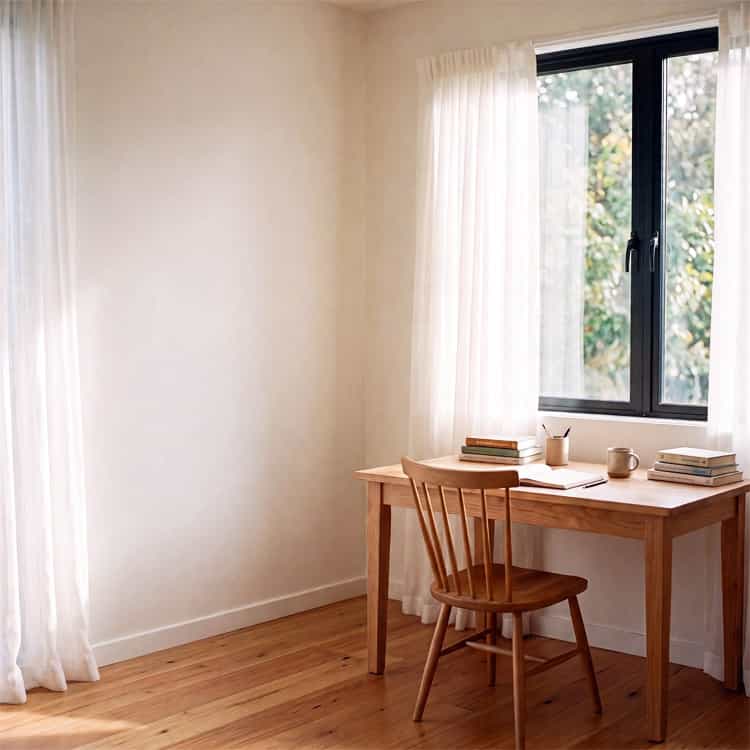

This design began with a window-side space that felt calm and full of promise, but not especially useful. There was natural light, a pleasant view and enough room for a desk, yet the corner still felt a little flat — the sort of area that looks fine at first glance but never quite becomes part of daily life. That made it a perfect candidate for a reading nook.
Instead of leaving the space as a simple workstation, the idea here is to give it a softer, more inviting purpose. A built-in bench instantly makes the corner feel more settled, while built-in shelving helps the nook feel integrated into the room. Add a few generous cushions, a knitted throw and a couple of trailing plants, and the whole area begins to feel warmer, quieter and far more personal.
What I like most about this approach is that it does more than just look cozy. It also makes the room feel better organized. The shelving keeps books and decorative pieces close at hand, the seat turns an awkward stretch by the window into something genuinely usable, and the overall layout gives the space a clearer identity. Even in a larger room, that kind of definition can make a big difference.
If you have a plain window corner that feels slightly underwhelming, this is a smart way to transform it. It creates a place to read, pause and unwind, while also giving the room a finished, lived-in quality that a simple desk setup may not create on its own.
Why this idea works
- ✓ It makes use of natural light already available by the window
- ✓ Built-in seating helps define the area more clearly
- ✓ Shelving adds storage without making the nook feel crowded
- ✓ Soft textiles make the space feel comfortable rather than purely decorative
- ✓ It works in both small rooms and larger spaces that feel poorly organized
2. Turn a Wide Window Wall Into a Reading-and-Storage Zone
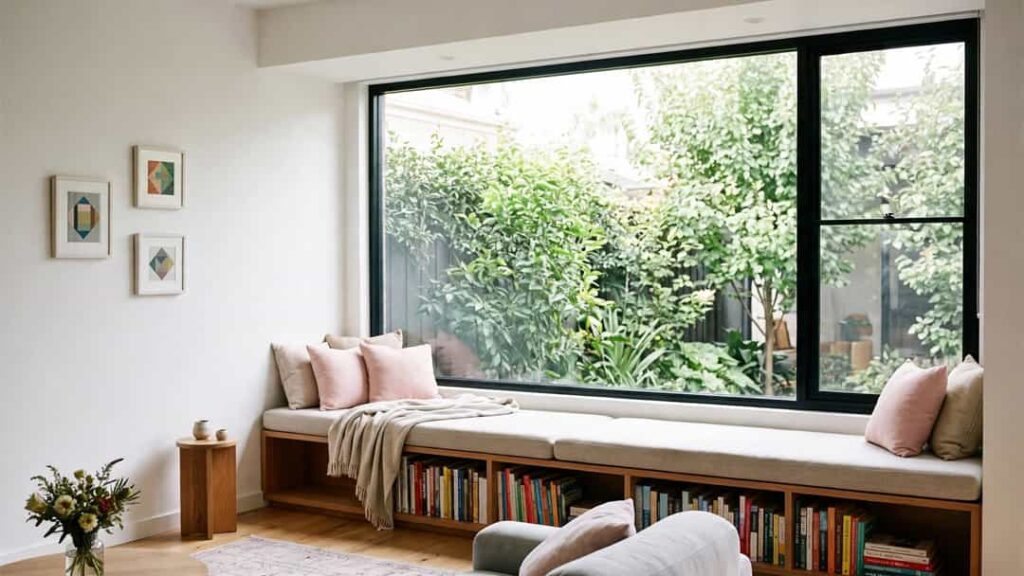
A wide window can become a relaxed reading nook with one simple move: add a long cushioned bench underneath it. The open book storage keeps everything close at hand, while the garden view, soft pillows and throw make the nook feel calm and naturally connected to the room.
3. Make the Reading Nook Work for Kids Too

A window nook can double as a quiet reading and activity spot for children. Here, soft seating keeps it comfortable, while the deep drawers underneath give books, art supplies and toys a proper home instead of letting the area become cluttered.
4. Build the Nook Into the Living Room
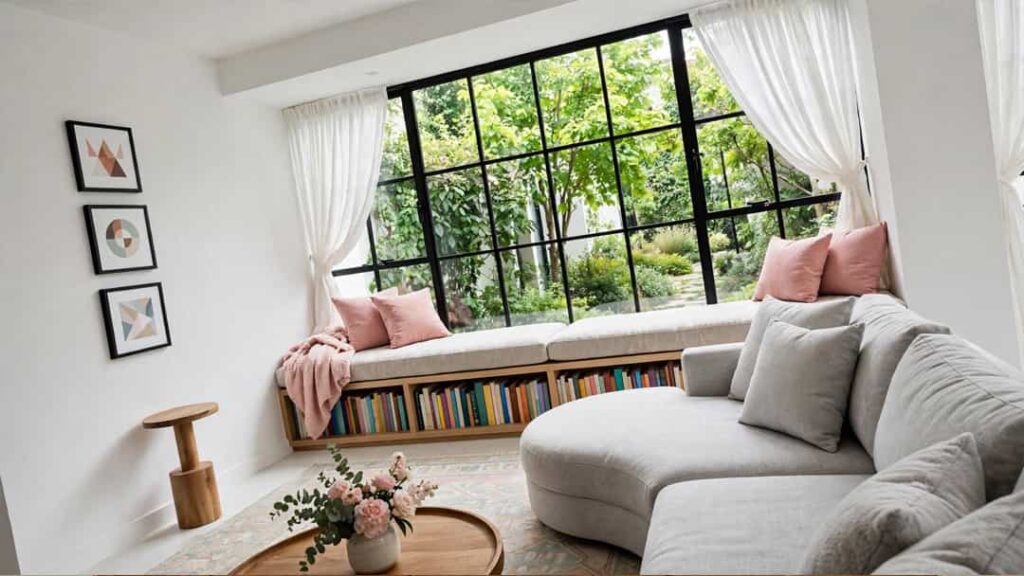
A reading nook does not have to feel separate from the rest of the room. Here, the window seat runs naturally alongside the main seating area, while books stored underneath keep the nook useful without making the living room feel crowded.
5. Turn a Bright Corner Room Into a Window Nook
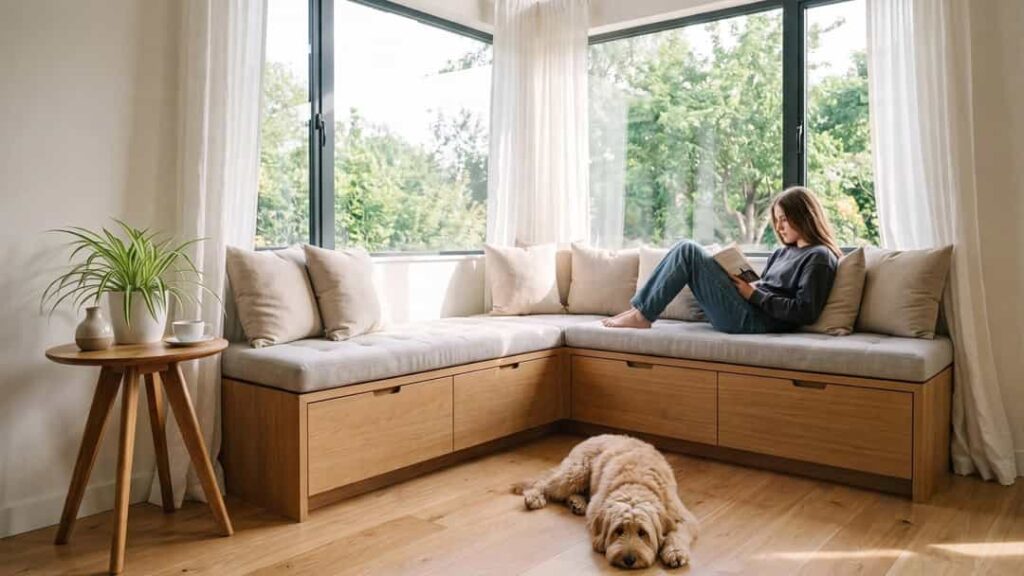
If you have a corner room with large windows — whether it is a living room, drawing room or sunroom — an L-shaped window nook can make excellent use of the space. Built-in seating keeps the views open, while storage underneath gives blankets, books or everyday clutter a place to disappear.
6. Add a Reading Nook to a Tight Space
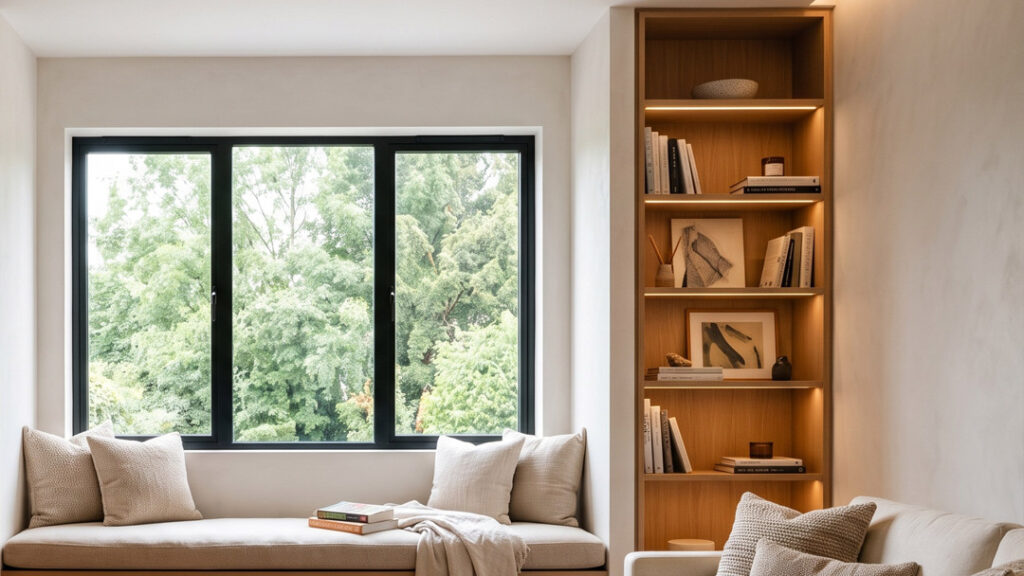
Even a tight space can hold a comfortable reading nook when the layout stays simple. Here, a cushioned window seat makes use of the compact footprint, while the slim built-in shelving adds storage without making the corner feel crowded.
7. Add a Reading Nook Beneath a Slanted Ceiling
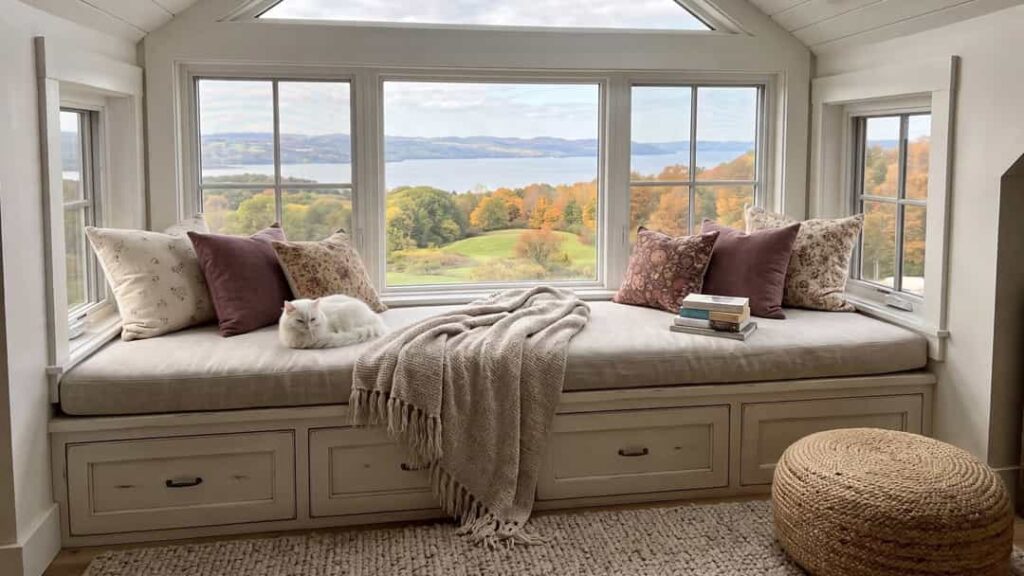
A slanted ceiling can feel tricky to furnish, but it often creates the perfect spot for a reading nook. Here, the built-in window seat fits neatly into the alcove, while drawers below add extra storage and the wide view makes the space feel like a proper retreat.
8. Create an Instant Reading Nook With a Deep Sofa

You do not always need custom carpentry to create a window nook. If you already have a recessed window space, a deep sofa or daybed-style seat can do the job just as well. Add a few cushions, and the area becomes an easy, family-friendly spot for reading, lounging or quiet play.
9. Use a Sofa in a Rounded Window Nook
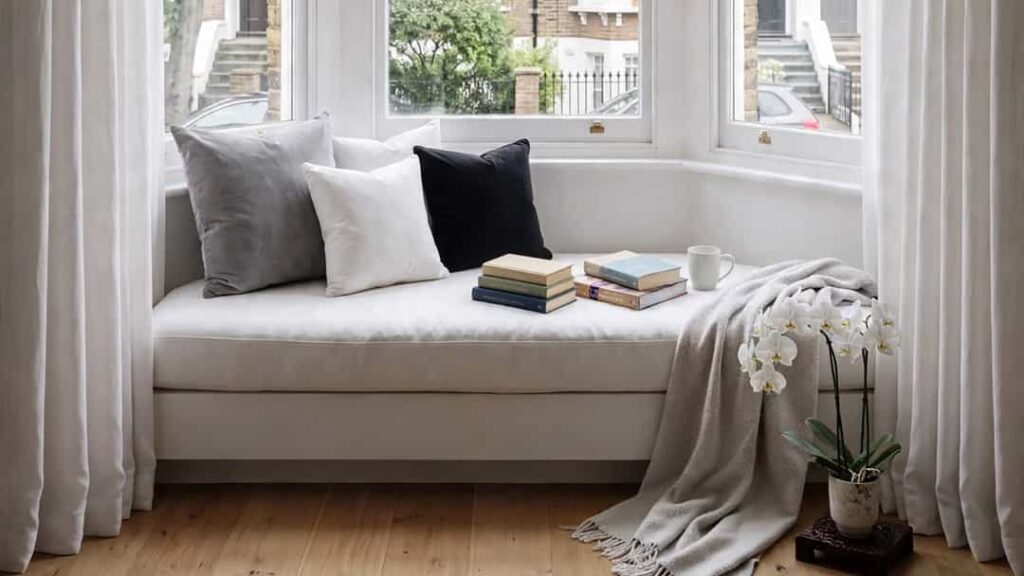
If your window space has a slightly rounded or bay-style shape, a fitted sofa can be an easier and more affordable option than custom carpentry. It softens the shape of the nook, adds comfort straight away, and lets you create a cozy reading spot without a long renovation.
10. Turn a Round Window Feature Into a Cozy Reading Nook

If you have a circular or porthole-style window, treat it as the focal point and build the reading nook around it. A fitted seat, layered cushions and a little surrounding storage can turn an unusual architectural feature into a cozy nook that feels private, dramatic and hard to ignore.
11. Turn an Awkward Window Recess Into a Reading Nook
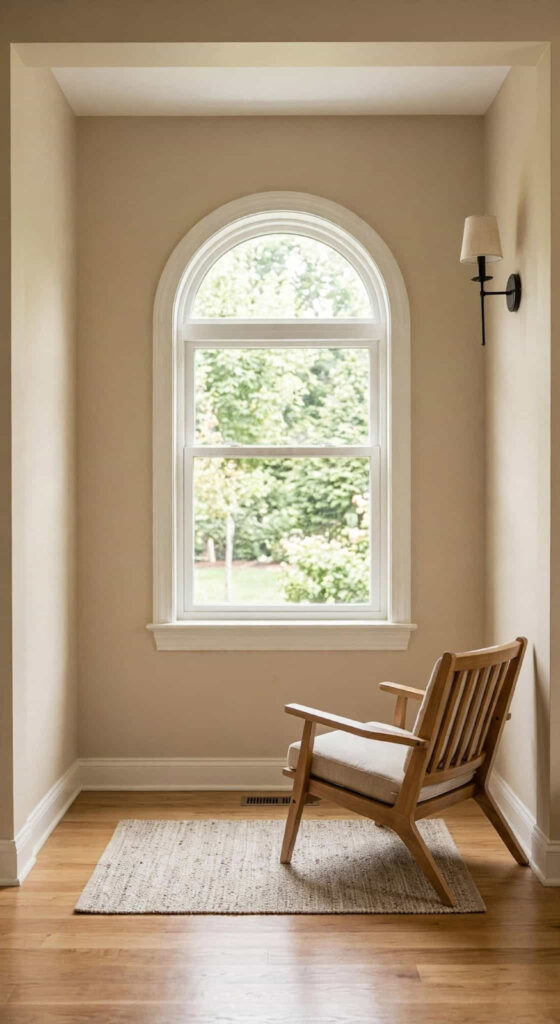
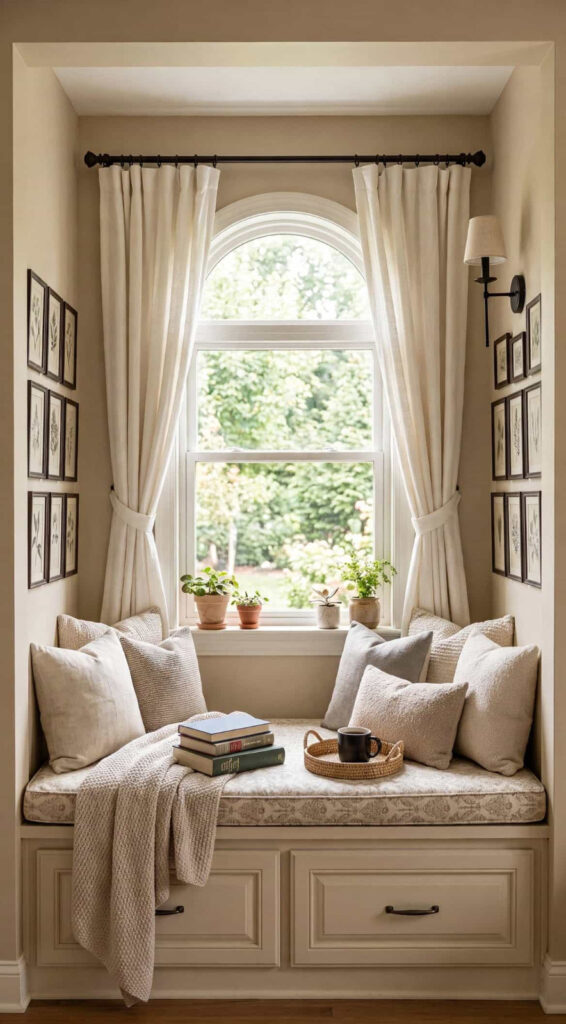
An awkward window recess can look too narrow or unfinished to be useful, but it may already have everything a reading nook needs. Here, a simple chair gives way to built-in seating, storage, curtains and soft layers — turning an overlooked space into a comfortable little retreat.
WINDOW READING NOOK TIPS
- Start with the space, not the furniture. Measure the width, depth and window height before deciding whether a chair, sofa, daybed or built-in seat will fit best.
- Use awkward architecture to your advantage. Recesses, bay windows, slanted ceilings and unused corners can often create a more natural nook than an open wall.
- Keep natural light, but control glare. Sheer curtains, blinds or layered window treatments can make the nook comfortable at different times of day.
- Add storage where it makes sense. Drawers beneath the seat, open book cubbies or slim shelving can help the nook earn its space instead of becoming another decorative corner.
- Think about how you will actually use it. A reading nook for adults may need a side table and reading light, while a family nook may benefit more from toy, book or blanket storage.
- Do not overfill the space. A comfortable seat, a few cushions, a throw and somewhere for a book or drink are often enough to make the nook feel finished.
- If custom carpentry stretches the budget, look for a deep sofa, daybed or freestanding seat that fits the space. A good nook does not have to be built in.