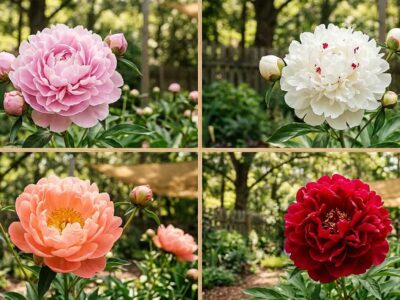
🌸 Quick Answer
Yes, but with adjustments. Choose low‑chill or intersectional (Itoh) varieties, plant in morning sun with afternoon shade, improve soil drainage, and accept fewer blooms. Avoid tropical climates (Zone 9b+). For best results, try ‘Early Scout’, ‘Coral Charm’, or any Itoh peony.
You live in Texas, Georgia, Arizona, or Southern California. You have seen photos of lush peony blooms and dreamed of growing them yourself. But every gardening guide says peonies need cold winters. Does that mean you are out of luck?
Not entirely. While peonies are traditionally cold‑climate plants, warm‑region gardeners can grow them – with the right expectations and strategies. You will not get the massive, 20‑bloom displays of a Minnesota garden. But you can enjoy respectable flowers if you choose the right varieties, select the perfect microclimate, and adjust your care.
This guide is written specifically for gardeners in USDA Zones 7b through 9. It covers why peonies struggle in heat, which varieties tolerate warmth, site selection tricks, and what you should realistically expect.
Why Peonies Need Winter Chill
Peonies have a biological requirement called vernalization. They need a period of cold temperatures to trigger flower bud formation.
The chill requirement: Approximately 30–40 days with temperatures below 40°F (4°C). During this time, the plant undergoes physiological changes that prepare it for spring blooming.
What happens without enough chill:
- The plant grows leaves – often lush and healthy.
- But flower buds either do not form at all, or form but fail to open (bud blast).
- Over multiple warm winters, the plant gradually weakens.
In warm climates (Zones 8–9): Natural winter chill is often insufficient. Some winters may provide barely 10–15 days below 40°F. That is not enough for standard peony varieties.
Can Peonies Grow in Southern States?
Yes – but success depends on where in the South you live.
| Region | Typical Zone | Peony Success |
|---|---|---|
| Northern Texas, Oklahoma, Arkansas | 7a–7b | Possible with morning sun, afternoon shade, low‑chill varieties |
| Central Texas, Georgia, Alabama, South Carolina | 7b–8a | Challenging – focus on tree peonies or intersectional types |
| Southern Texas, Florida, Louisiana, coastal SoCal | 8b–9b | Very difficult – most standard peonies will not bloom |
| Arizona low desert, inland SoCal | 8b–9b | Requires afternoon shade, extra water, and low‑chill varieties – blooms may be sparse |
The best Southern states for peonies: Northern Virginia, Tennessee, North Carolina (mountains), northern Georgia (foothills). Areas with elevation or cooler microclimates.
The worst: Florida, southern Texas, coastal Louisiana, low deserts of Arizona. In these areas, gardeners should consider alternative flowering shrubs.
🌵 For Arizona‑specific advice, see our guide: peonies in Arizona – challenges and growing tips.
Best Warm‑Climate Peony Varieties
Not all peonies handle heat equally. Choose these types for better success in warm regions:
Low‑Chill Herbaceous Peonies
These varieties have been selected for southern gardens. They need fewer chill hours.
| Variety | Flower Color | Bloom Type | Notes |
|---|---|---|---|
| ‘Early Scout’ | Red | Single | Very early bloom – flowers before heat builds |
| ‘Coral Charm’ | Coral pink | Semi‑double | Famous for heat tolerance |
| ‘Pink Hawaiian Coral’ | Coral to pink | Semi‑double | Excellent for warm climates |
| ‘Flame’ | Red | Single | Reliable in Zone 7–8 |
| ‘Krinkled White’ | White | Single | Old variety, surprisingly heat‑tolerant |
Intersectional (Itoh) Peonies – Best Choice
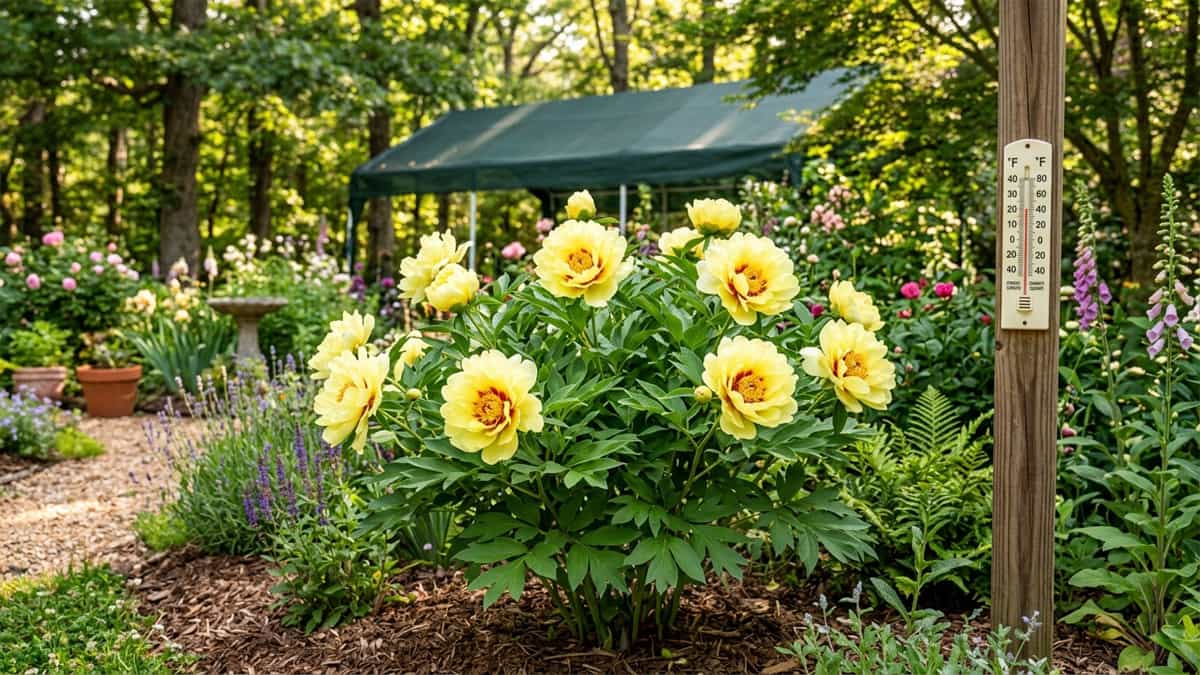
Itoh peonies are hybrids between herbaceous and tree peonies. They combine large, colorful blooms with better heat tolerance and stronger stems.
- ‘Bartzella’ (yellow) – one of the most reliable for warm climates.
- ‘Cora Louise’ (white with lavender center).
- ‘Kopper Kettle’ (copper orange).
- ‘Morning Lilac’ (lavender pink).
Tree Peonies
Tree peonies have woody stems and larger, more durable leaves. They tolerate heat better than herbaceous types – but they still need some winter chill.
- ‘Kamata‑nishiki’ (red).
- ‘High Noon’ (yellow).
- ‘Renkaku’ (white).
🌸 For more variety information, see our guide on types of peonies flowers.
How Heat Affects Bloom Production
Heat impacts peonies in multiple ways, even if they receive enough winter chill.
| Heat Effect | What Happens | Consequence |
|---|---|---|
| Rapid bud development | Buds swell and open too quickly | Smaller flowers, shorter bloom period |
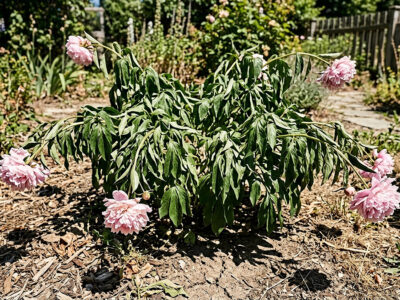
| Heat stress during flowering | Petals wilt or crisp within hours | Blooms last 1–2 days instead of 7–10 |
| Reduced energy storage | High temperatures increase respiration; plant burns more energy | Fewer buds next year |
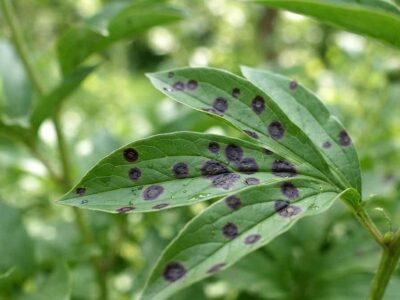
| Increased disease pressure | Heat + humidity = fungal explosion | Leaf blotch, botrytis more common |
What you can control: Site selection (afternoon shade), watering (consistent, not soggy), and variety choice (heat‑tolerant types).
What you cannot control: The overall climate. Accept that peonies in warm regions will never match the performance of those in Vermont or Michigan.
Choosing Cooler Garden Locations
In warm climates, microclimate is everything. The right 10‑foot patch of your yard can make the difference between a few blooms and none.
Best locations:
- East side of the house or a large tree – morning sun, afternoon shade.
- North‑facing wall – stays cooler, receives indirect light.
- Under high, open tree canopy (e.g., pecan or live oak) – dappled light protects from harsh afternoon sun.
- Raised beds – improve drainage, keep roots slightly cooler than ground level.
Worst locations:
- South‑ or west‑facing walls – reflected heat bakes the plant.
- Low spots in the yard – cold air pools here (good for chill), but heat also settles, and drainage may be poor.
- Next to concrete or asphalt driveways – radiates heat day and night.
If you have no naturally cooler spots: Consider planting in large containers that you can move to shade during summer afternoons (see Article 2 of this cluster).
🏠 For more placement tips, read our guide: [Best Place to Plant a Peony Bush for Maximum Blooms](internal link – Article 1 of this cluster).
Morning Sun vs Harsh Afternoon Heat
In warm climates, following the standard “full sun” advice will cook your peonies.
The warm‑climate rule: Morning sun is essential. Afternoon shade is mandatory. Avoid all‑day sun entirely.
Why:
- Morning sun (until 11 AM) provides enough light for photosynthesis and bloom formation.
- Afternoon sun (1 PM onward) drives leaf temperature above 95°F, causing scorch, wilting, and flower collapse.
- Peonies in afternoon shade can stay 10–15°F cooler than those in full sun.
How to achieve morning sun + afternoon shade:
- Plant on the east side of a building, tall fence, or dense evergreen hedge.
- Use shade cloth (30–40%) suspended over the plants from June through August.
- Plant tall, airy companion plants (e.g., ornamental grasses) to the west of your peonies.
☀️ For more on sunlight nuance, see our guide: [Do Peony Bushes Need Full Sun or Partial Shade?](internal link – Article 3 of this cluster).
Soil and Moisture Challenges in Warm Areas
Warm climates often come with additional soil and water challenges.
Poor drainage + heat = root rot: Many southern soils are heavy clay. When you add summer heat, the combination can rot peony roots. Solution: plant in raised beds or amend clay heavily with compost and coarse sand.
Rapid drying: Sandy soils in coastal areas or deserts dry out quickly. Peonies need consistent moisture. Solution: apply 2–3 inches of organic mulch (straw, pine bark) to retain moisture – but keep mulch away from the crown.
Water quality: In some arid regions, tap water is alkaline or high in salts. Peonies prefer slightly acidic to neutral pH (6.5–7.0). Solution: test your water; if alkaline, collect rainwater or use a pH‑balancing product.
Morning watering only: In warm, humid climates, water at the base early in the day. Evening watering leaves leaves wet overnight, inviting fungus.
💧 For more watering guidance, see our watering tips for all plant types.
Can Peonies Grow in Tropical Climates?
No. True tropical climates (Florida Keys, Hawaii lowlands, Puerto Rico, Southeast Asia) are not suitable for peonies.
Why not:
- No winter chill – temperatures rarely drop below 60°F.
- High humidity year‑round leads to relentless fungal disease.
- Peonies require a dormancy period that tropical conditions prevent.
What to grow instead: Look for plants with similar flower forms that tolerate tropics: hibiscus, plumeria, lotus, or tropical roses.
If you must try: Grow peonies in a pot and give them artificial winter chill – place the potted plant in a refrigerator (not freezer) for 6–8 weeks, then move to a cool, shaded outdoor spot. This is experimental and rarely successful long‑term.
What Warm‑Climate Gardeners Should Expect
Set realistic expectations to avoid disappointment.
| Expectation | Reality |
|---|---|
| Dozens of blooms per plant | 3–8 blooms per plant is good for warm climates |
| Large, dinner‑plate flowers | Flowers may be smaller (3–5 inches across) |
| Long bloom period (2+ weeks) | Blooms may last only 3–5 days before heat wilts them |
| Robust, disease‑free foliage | Some leaf spot and scorch is normal; manage with fall cleanup |
| Peonies live for decades | With care, 10–15 years is realistic in warm climates (vs 50+ in cold) |
If you are frustrated: Remember that southern gardeners have amazing plants that northerners envy – camellias, gardenias, citrus, bougainvillea. Peonies are not your region’s strength, but you can still enjoy a few.
🌺 For peony alternatives and companion planting, see our garden decor and art guide.
Alternatives if Peonies Struggle in Your Region
If you have tried everything and peonies still will not bloom, consider these beautiful alternatives that thrive in warm climates:
| Plant | Bloom Appearance | Climate Preference |
|---|---|---|
| Camellia japonica | Large, rose‑like blooms, winter/spring | Zones 7–9, part shade |
| Gardenia | White, intensely fragrant, summer | Zones 8–10, morning sun |
| Double hibiscus | Huge, ruffled blooms, summer/fall | Zones 9–11, full sun |
| Rose ‘Knock Out’ | Continuous blooms, disease‑resistant | Zones 5–9, full sun |
| Plumeria (frangipani) | Clusters of fragrant flowers, summer | Zones 9–11, full sun |
For true peony lovers: Plant low‑chill varieties in large pots. Move them to a cool garage or basement for 6–8 weeks in winter to artificially provide chill. Then move them outside in spring. This is labor‑intensive but possible.