
🌸 Quick Answer:
After the first hard frost, cut stems to 1–2 inches above ground, remove all debris, and trash it. In cold, snowless climates (Zones 3–5), apply 2–3 inches of straw or pine needles after the ground freezes. In mild or wet climates, skip mulch. Potted peonies need extra protection – bury the pot or move to an unheated garage.
Winter is coming – and your peony bush needs to be ready. Unlike tropical plants that you drag indoors, peonies actually want cold weather. They require winter chill to bloom well. But that does not mean you should ignore them completely until spring.
Proper winter preparation protects your peony from rot, freeze‑thaw damage, and disease while ensuring it emerges healthy and ready to flower. The right steps depend on your climate – a gardener in Minnesota prepares differently than one in Georgia.
This guide walks you through exactly what to do (and what to skip) to get your peony safely through winter, from cutting back to mulching to protecting young plants.
Do Peony Bushes Need Winter Protection?
Generally, no – mature peonies are extremely cold‑hardy. They can survive temperatures as low as -40°F (-40°C) when planted in the ground. In fact, they need cold dormancy to flower.
However, some situations do require protection:
| Situation | Need Protection? |
|---|---|
| Mature peony in Zones 3–7 | No – hardy as is |
| Mature peony in Zone 8 (warm winter) | No – but you may struggle with chill hours |
| First‑year or newly planted peony | Yes – roots not fully established |
| Peony in a container | Yes – roots freeze faster |
| Garden with freeze‑thaw cycles (no consistent snow) | Light mulch helps |
| Wet, heavy soil that stays soggy | Improve drainage; avoid mulch |
The bottom line: Most peonies need no winter protection beyond standard fall cleanup. But if you are in a very cold, snowless area or have young plants, a little care goes a long way.
❄️ For climate‑specific advice, see our guides on peonies in Arizona and best peonies for Texas climate.
When to Start Winter Prep
Timing depends on your first hard frost. Follow this schedule:
| Step | Timing |
|---|---|
| Stop fertilizing | By August 1 (no later than mid‑August) |
| Reduce watering | Late September – let soil dry slightly |
| Cut back foliage | After first hard frost (typically October–November) |
| Remove debris | Same day as cutting back |
| Apply mulch (if needed) | After ground freezes – usually 2–4 weeks after cutting back |
| Winter inspection | Periodically check for standing water or rodent damage |
Do not start winter prep too early. Cutting back before frost or mulching unfrozen soil invites rot and confuses the plant.
Cutting Back Before Winter
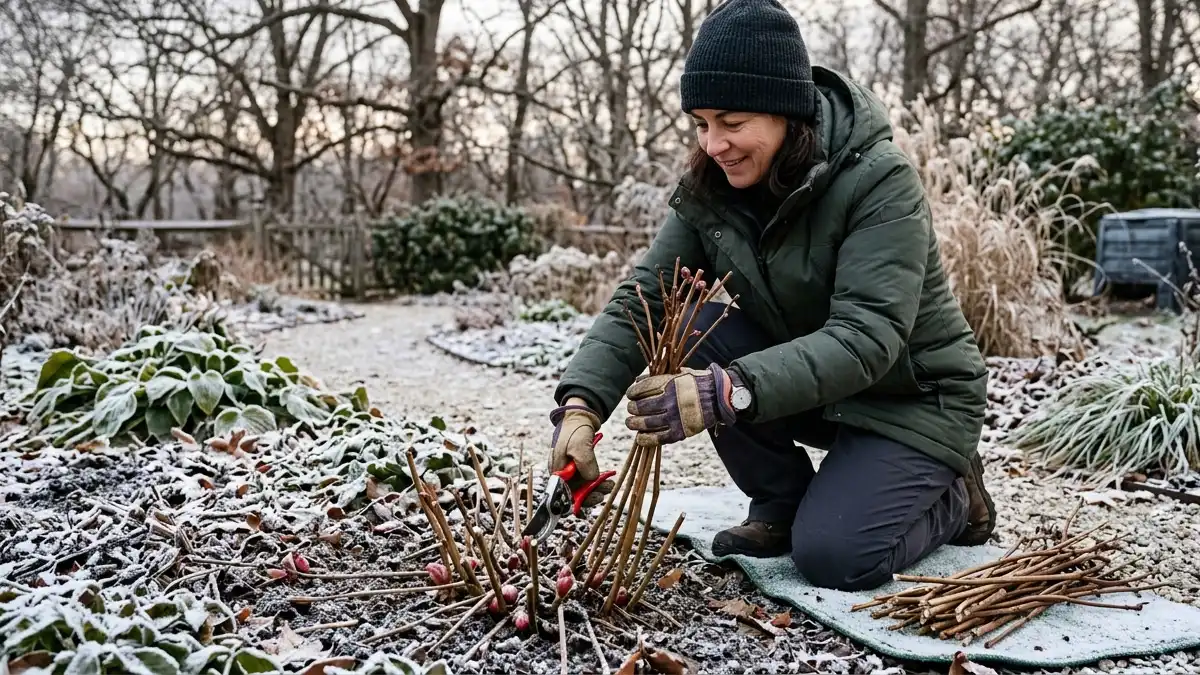
This is the most important winter preparation task. Cut back your herbaceous peony after the first hard frost when foliage is fully dead (blackened or brown and crispy).
How to cut back for winter:
- Use clean, sharp bypass pruners.
- Cut each stem to 1–2 inches above ground.
- Remove every single stem and leaf from the garden bed.
- Discard all debris in the trash – never compost.
Why cutting back matters for winter:
- Removes fungal spores that would otherwise overwinter.
- Prevents rodents from nesting in dead foliage.
- Keeps the crown dry – wet, matted leaves cause crown rot.
Do not: Leave stubs taller than 2 inches. Do not cut into the fleshy crown. Do not skip cleanup.
✂️ For detailed cutting instructions, see our guide: When to Cut Back a Peony Bush Without Hurting Next Year’s Blooms.
Should You Mulch a Peony Bush? (Climate‑Dependent)
Mulching peonies for winter is not always necessary – and in some climates, it is harmful.
Cold Climates (Zones 3–5, especially with little snow)
Yes – apply light winter mulch. Snow cover insulates the ground, but if your area has cold, dry winters without reliable snow, a thin mulch protects the crown from freeze‑thaw cycles.
What to use:
- 2–3 inches of straw, pine needles, or shredded leaves.
- Do not use heavy bark mulch or compost (holds too much moisture).
When to apply: After the ground has frozen (usually 2–4 weeks after cutting back). Mulching unfrozen soil traps heat and can cause premature sprouting.
When to remove: Early spring, as soon as the ground thaws and shoots begin to emerge.
Mild or Wet Climates (Zones 7–8, or rainy winters)
No – do not mulch. Mulch in wet winters keeps the crown damp, encouraging rot. Peonies in these areas are better off with bare soil over the crown.
Instead: Ensure good drainage. If your soil stays soggy, consider planting peonies in raised beds.
Transitional Climates (Zone 6)
Use your judgment. If winters are consistently cold with snow, mulch lightly. If winters are wet and mild, skip mulch.
Key rule: Never pile mulch directly against the peony crown. Leave a 2‑inch bare circle around the crown for airflow.
🌾 For more on mulching decisions, stay tuned for our upcoming guide: Should You Mulch Around a Peony Bush?
Protecting Young Peony Plants
First‑year peonies have smaller root systems and are more vulnerable to winter kill. They need extra care.
For young peonies (planted this fall or last spring):
- Apply a 3–4 inch layer of loose mulch (straw or pine needles) after the ground freezes, regardless of your climate zone.
- Mark the location with a stake so you do not accidentally disturb it in spring.
- Do not use heavy, wet mulch like leaves or grass clippings – they mat down and rot the crown.
For very young peonies in harsh climates (Zones 3–4):
- Consider covering with an overturned bucket or cardboard box for the first winter – remove on mild days and after the last frost.
Winter Problems to Watch For
Even with good preparation, winter can cause issues. Monitor your peony bed every few weeks.
| Problem | Signs | Solution |
|---|---|---|
| Crown rot | Mushy, black, or foul‑smelling crown when snow melts | Caused by wet mulch or poor drainage. Remove rotting tissue. Improve drainage. |
| Standing water | Puddles around the crown area | Dig a small trench to divert water. Consider moving peony in spring. |
| Freeze‑thaw heaving | Crown pushed partially out of soil (eyes exposed) | Gently press back into soil. Add light mulch. Replant at correct depth in spring. |
| Rodent damage | Chewed stems, missing eyes, or tunnels near crown | Avoid organic mulch (straw attracts voles). Use wire mesh barrier if severe. |
| Ice encasement | Thick ice over crown for weeks | Rare. Break up ice gently with a tool – do not use salt or chemicals. |
Most common problem: Crown rot from wet mulch. When in doubt, skip mulch.
Can Peonies Survive Snow and Frost?
Yes – peonies thrive with snow and frost. Snow is an excellent insulator, keeping soil temperatures stable. Frost signals the plant to go fully dormant.
What peonies can handle:
- Temperatures down to -40°F (-40°C) when properly planted and established.
- Multiple freeze‑thaw cycles (though heaving can occur).
- Heavy snow cover – it protects, not harms.
What they cannot handle:
- Prolonged flooding or standing water over the crown.
- Heavy, wet mulch that never dries out.
- Being dug up and left exposed over winter.
If you live in a region with very deep snow (2+ feet): No special care needed. The snow is your peony’s winter blanket.
🌨️ For more on peonies in cold climates, see our guide on best types of peonies for Massachusetts climate.
Winter Care for Potted Peonies
Peonies in containers are not as cold‑hardy as in‑ground plants. Roots freeze much faster in pots.
Options for overwintering container peonies:
| Method | Best For | How To |
|---|---|---|
| Bury the pot | Any cold climate | Dig a hole in the garden and sink the pot to rim level. Cover with soil and 2–3 inches of mulch. |
| Unheated garage or shed | Zones 5–7 | Move pot inside before first hard freeze. Water very lightly (once a month) to prevent drying out. |
| Wrap the pot | Mild winters (Zone 7–8) | Wrap pot with bubble wrap or burlap. Place against an exterior wall. |
| Leave exposed (not recommended) | Zone 8+ only | Potted peonies in warm zones may survive but will struggle to bloom without chill. |
Important: Potted peonies need winter chill too. Do not bring them into a heated garage or basement. They need temperatures below 40°F (4°C) for 30–40 days.
Spring after winter: Unbury or unwrap pots in early spring. Water thoroughly. Resume normal care.
Signs Your Peony Survived Winter
By early spring (March–April), you will see signs that your peony made it through.
Good signs:
- Bright red or pink shoots (eyes) emerging from the crown.
- Firm, not mushy, crown when gently touched.
- No foul odor from the soil.
Bad signs (peony may have died):
- No shoots by late spring (Zone‑dependent – wait until May in cold zones).
- Crown is soft, black, or crumbly.
- Shoots emerge but quickly wilt and rot (botrytis or crown rot).